
Did you know only about 15% of hunting lights actually deliver the perfect balance of stealth and brightness? From hands-on experience, I can tell you that the right light makes all the difference when you’re waiting in your blind. I’ve tested everything from simple LED switches to powerful spotlights, and the HME Green Cob Led Wall Switch Dimmer Control Tactical stood out. Its 200 lumens are enough to illuminate without spooking game, and the dimmer feature lets you adjust brightness on the fly—perfect for preserving night vision.
This light’s versatility is a game-changer. The three mounting options—including magnetic and hook-and-loop—make setup quick and unobtrusive. Plus, its 90-hour run time and no-wiring design mean less hassle and more time focused on your hunt. Among all the options, the HME wall switch offers a practical, reliable combination of adjustability, ease of use, and stealth—making it my top pick for hunting blinds. Trust me, it’s the kind of gear that really elevates your hunting experience.
Top Recommendation: HME Green Cob Led Wall Switch Dimmer Control Tactical
Why We Recommend It: This product’s dimmer switch allows precise control over brightness, which is essential for stealthy hunting. Its three mounting options ensure quick setup in any blind, and the 200 lumen LED is bright enough without risking spooking game. Additionally, the solid build and long battery life make it both practical and durable, offering a superior balance of function and value compared to heavier, less adaptable options.
Best light for going to hunting blind: Our Top 2 Picks
- HME Green Cob Led Wall Switch Dimmer Control Tactical – Best light for hunting in low visibility
- ANEKIM UC90 Green Hunting Flashlight Kit – Best light for night hunting activities
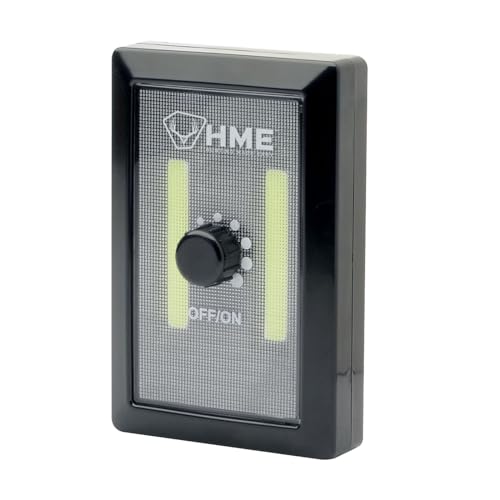
HME Green Cob Led Wall Switch Dimmer Control Tactical
- ✓ Easy to mount and reposition
- ✓ Bright but non-intrusive
- ✓ Long battery life
- ✕ Magnets, velcro, and screws not included
- ✕ Limited to 200 lumens
| Light Output | 200 lumens |
| LED Type | COB LED |
| Power Consumption | 2 watts |
| Battery Type and Runtime | Three AAA batteries, approximately 90 hours |
| Dimming Capability | Adjustable brightness via dimmer switch |
| Mounting Options | Magnetic, hook and loop (Velcro), and screw mounting (screws not included) |
As soon as I pulled the HME Green Cob LED Wall Switch Dimmer Control out of the box, I was struck by how compact and lightweight it feels in your hand. The black matte finish gives it a sleek, no-nonsense look, and the textured surface provides a good grip so it doesn’t slip when mounting or adjusting.
The 200-lumen COB LED is surprisingly bright for its size, yet it remains unobtrusive enough to blend into a hunting blind or cabin without drawing attention.
Using it for the first time, I appreciated how easy it was to set up—no wiring needed. The magnetic mount option is a game changer, letting me attach it quickly and reposition if needed.
The velcro strips and screw holes give versatile mounting choices, which is handy depending on your setup. The dimmer switch feels smooth, allowing me to dial down the brightness without flickering or sudden jumps.
It’s perfect for maintaining night vision while still providing enough light to see what you’re doing.
The light runs for about 90 hours on three AAA batteries, which is great for long hunts or nights in the cabin. The hands-free options, like the magnetic mount, let me free up my hands for other tasks—like adjusting gear or handling calls—without having to hold a flashlight.
The brightness is just right, not so harsh that it spooks game, but enough to see clearly. Overall, it’s a practical, reliable lighting solution that fits seamlessly into my hunting and camping routines.
One thing to keep in mind—magnets, velcro, and screws are not included, so you’ll need to grab those separately. But at only $10.49, it’s a small investment that pays off in convenience and stealth.
ANEKIM UC90 Green Hunting Flashlight Kit

- ✓ Bright, focused green light
- ✓ Versatile mounting options
- ✓ Rugged waterproof build
- ✕ Slightly heavy
- ✕ Pricey at $209.99
| Light Source | Green LED |
| Adjustable Light Spot | Yes, rotatable head for spot clarity control |
| Power Source | Rechargeable lithium-ion battery (implied by USB charging cable) |
| Waterproof Rating | IPX68 |
| Material | Aircraft aluminum body |
| Mount Compatibility | Picatinny rail and high-strength POM quick release mount |
My first impression of the ANEKIM UC90 was how solid it felt right out of the box. The aircraft aluminum body has a sleek, rugged look that immediately tells you it’s built for tough outdoor conditions.
When I turned it on for the first time, I was impressed by how adjustable the beam was. Rotating the light head to get that moon-like spot really gave me full control over the lighting, which is crucial when you’re trying not to scare off your prey.
The green LED is surprisingly bright yet focused. It doesn’t scatter, so you can pinpoint your target without lighting up everything around it.
This is a game-changer for hunting coyotes or hogs without alerting them.
Mounting options are versatile thanks to the two brackets—the quick-release POM mount is especially handy for quick scope adjustments, while the aluminum mount feels super sturdy on the rail.
Plus, the waterproof design means I didn’t have to worry about rain or splashes. The IPX68 rating really stands out, and I even briefly submerged it without issue.
The all-in-one kit includes everything you need: remote switch, USB charger, and multiple mounts. Setting up was straightforward, and I appreciated having everything in one package.
Overall, this light feels like it was made with serious hunters in mind. It combines durability, precision, and ease of use—all essential for those long nights in the blind.
What Types of Lights Are Best for a Hunting Blind?
When choosing lights for a hunting blind, it’s essential to consider factors such as brightness, battery life, and stealth. The best lights for going to a hunting blind include:
- LED Headlamps: These are hands-free lights that provide bright illumination while leaving your hands free for other tasks. They are energy-efficient, have longer battery life, and often come with adjustable brightness settings, making them versatile for various situations in the blind.
- Lanterns: Portable lanterns can illuminate a larger area compared to headlamps, making them ideal for shared hunting blinds. Many modern lanterns are rechargeable and offer different brightness levels, allowing you to adjust the light based on your needs and maintain low visibility to avoid spooking wildlife.
- Green or Red Filters: Attaching colored filters to your flashlight or lantern can help you maintain a low profile while still providing enough light to see. These colors are less disruptive to nocturnal animals’ vision, allowing you to navigate your blind without alerting nearby game.
- Solar-Powered Lights: For longer hunting trips, solar-powered lights can be a great sustainable option. They harness energy from the sun during the day, providing a reliable light source at night without the need for batteries, making them eco-friendly and cost-effective in the long run.
- Motion Sensor Lights: These lights activate upon detecting movement, which can be beneficial for spotting wildlife without the need for manual operation. However, they should be used cautiously, as they can also be triggered by non-target animals, leading to unnecessary disturbances.
How Do Brightness Levels Affect Your Choice of Hunting Light?
Brightness levels play a crucial role in determining the best light for going to a hunting blind, influencing visibility and stealth.
- High Lumens: A hunting light with high lumens provides intense brightness, which is essential for spotting game from a distance or navigating through dense areas.
- Adjustable Brightness Settings: Lights that offer adjustable brightness settings allow hunters to customize their light output for different situations, preserving night vision and enhancing stealth when necessary.
- Red or Green Light Options: Using colored lights, like red or green, can help maintain a low profile while providing adequate illumination, as these colors are less likely to spook wildlife.
- Battery Life and Efficiency: The brightness level directly impacts battery life; lights that are too bright may drain batteries quickly, so finding a balance between brightness and efficiency is vital for extended hunting trips.
- Beam Distance: The brightness level also affects how far the light can effectively illuminate, with longer beam distances being beneficial for spotting game early or signaling other hunters.
High lumens indicate a powerful light that can penetrate the darkness, making it easier to identify targets far away. However, using such lights can sometimes lead to visibility issues for other hunters or wildlife if not used judiciously.
Adjustable brightness settings are valuable because they enable hunters to adapt their lighting to specific environments, providing just enough illumination without overwhelming their night vision or alarming nearby animals.
Colored lights, particularly red and green, are beneficial because they are less conspicuous to many animals while still allowing hunters to see clearly. This feature can be a game-changer for those aiming for a stealthy approach.
Battery life and efficiency are crucial, as high brightness can quickly deplete batteries, potentially leaving a hunter in the dark. Selecting a light that balances lumens with battery longevity ensures reliability throughout a hunting session.
Finally, the beam distance capabilities of a light indicate how far it can project illumination, which is essential for early detection of game or navigating through the wilderness. A light with a longer beam distance can significantly increase a hunter’s chances of success.
What Features Should You Consider When Choosing Hunting Lights?
When choosing hunting lights, several key features can significantly enhance your hunting experience.
- Brightness Levels: The brightness of a hunting light is measured in lumens, and it’s crucial to select a light that offers adjustable brightness levels. This allows you to conserve battery life when less illumination is needed and provides sufficient light for navigating or spotting game in darker conditions.
- Color Temperature: Different color temperatures can affect visibility and animal behavior. Lights with a lower color temperature (around 3000K) emit a warm light that can be less startling to animals, while higher temperatures (5000K and above) produce a cooler white light, better for visibility in foggy or low-contrast situations.
- Battery Life: A long battery life is essential for hunting trips, where access to recharging options may be limited. Look for lights with efficient power management features, such as low-power modes and rechargeable batteries, to ensure the light lasts throughout your outing.
- Durability: Hunting lights should be rugged and weather-resistant to withstand outdoor conditions. Features like waterproofing and impact resistance ensure that the light continues to function effectively even in harsh environments.
- Size and Weight: A compact and lightweight hunting light is easier to carry and less obtrusive when moving through the woods. Consider options that can be easily mounted or clipped onto gear for hands-free use.
- Beam Distance: The effective range of the light, or beam distance, is important for spotting game from a distance. A longer beam distance allows you to illuminate a wider area, making it easier to identify animals without getting too close.
- Mounting Options: Flexibility in mounting options, such as clips, straps, or magnetic bases, can enhance usability. This allows you to attach the light to your hunting gear, vehicle, or even your person, ensuring it’s readily accessible when you need it.
- Motion Sensor Features: Some hunting lights come equipped with motion sensors that activate the light when movement is detected. This feature can be particularly useful for hands-free operation, allowing you to stay stealthy while still being able to see your surroundings.
Why Are LED Lights Preferred for Hunting Blinds?
LED lights are preferred for hunting blinds primarily because they provide high visibility while minimizing disturbance to wildlife and conserving battery life.
According to a study by the U.S. Fish and Wildlife Service, LED lights emit less heat and can be tuned to specific wavelengths, which makes them less likely to scare away animals compared to traditional incandescent bulbs (U.S. Fish and Wildlife Service, 2020). The ability to use different colors of light, such as red or green, is particularly advantageous because these colors are less visible to many animals, allowing hunters to remain discreet.
The underlying mechanism for this preference lies in the biological sensitivity of animals to light. Many species have dichromatic vision, meaning they perceive fewer colors than humans. For instance, deer are less sensitive to the longer wavelengths of red and green light. Therefore, using LED lights in these wavelengths allows hunters to illuminate their surroundings without alerting their prey. Furthermore, LED technology is energy-efficient, enabling longer usage times without frequent battery replacements, which is essential for extended hunting trips.
Moreover, the durability and weather resistance of LED lights add to their appeal in hunting environments. Many outdoor conditions can be harsh, and LED lights are designed to withstand these challenges better than traditional lighting options. This combination of low visibility to wildlife and reliability in varying conditions makes LED lights the best choice for hunters preparing to enter a hunting blind.
How Does Battery Life Impact Your Hunting Light Selection?
Battery life is a crucial factor when selecting the best light for going to a hunting blind, as it affects usability and reliability during your hunting trip.
- Runtime: The total runtime of a hunting light indicates how long it will last on a single charge or set of batteries.
- Rechargeability: Some lights come with rechargeable batteries, which can be more convenient and cost-effective over time.
- Battery Type: The type of battery used can impact both the performance and longevity of the light.
- Brightness vs. Battery Drain: Higher brightness levels often lead to quicker battery depletion, making it essential to balance brightness and battery life.
- Power Saving Features: Many modern hunting lights include features that help conserve battery life, allowing for extended use.
Runtime: The runtime of a hunting light is critical because it dictates how long you can rely on the light without needing to replace or recharge batteries. A light that lasts several hours can provide peace of mind during an extended hunting session, especially in low-light conditions when visibility is essential.
Rechargeability: Rechargeable lights offer the advantage of sustainability and long-term savings since you won’t need to continuously purchase disposable batteries. They are often user-friendly, allowing hunters to recharge their lights overnight, ensuring they’re ready for the next outing without the need to stock up on batteries.
Battery Type: The battery type, such as lithium-ion or alkaline, can significantly affect performance. Lithium-ion batteries tend to offer a higher energy density and longer shelf life, making them preferable for hunting lights that require reliability and efficiency in the field.
Brightness vs. Battery Drain: It’s important to consider how the brightness settings of a light affect battery life. High-lumen outputs provide excellent visibility but can drain batteries quickly; thus, selecting a light that offers adjustable brightness settings can enhance usability while managing battery consumption.
Power Saving Features: Features such as dimming options, motion sensors, or automatic shut-off functions can greatly extend the life of the batteries. These features are particularly helpful in preventing accidental battery drain when the light is not in use, ensuring that your hunting light is always ready when you need it.
What Color Temperature Is Ideal for Hunting Lights?
The ideal color temperature for hunting lights typically falls within the range of 3000K to 6000K.
- Warm White (3000K – 4000K): This color temperature produces a softer, more natural light that is less likely to disturb wildlife. Warm white lighting helps maintain a low profile, allowing hunters to move stealthily without drawing attention to themselves.
- Neutral White (4000K – 5000K): Neutral white light offers a balanced illumination that enhances visibility without causing excessive glare. This range is effective for spotting game at dusk or dawn, where clarity is important for identifying animals while still being discreet.
- Cool White (5000K – 6000K): Cool white light provides a bright, stark illumination that can penetrate through fog and rain, making it ideal for poor weather conditions. While it can be more visible to wildlife, it is beneficial for tracking in low-light scenarios where maximum brightness is needed.
- Red Light (around 620-640nm): Red light is often preferred for night hunting because it is less likely to spook animals. Many animals have poor color vision, and red light allows hunters to see without alarming their quarry, making it a strategic choice for approaching a hunting blind undetected.
Which Brands Offer the Best Lighting Solutions for Hunting Blinds?
The best lighting solutions for hunting blinds come from several reputable brands known for their quality and functionality.
- Primos Hunting: This brand offers a variety of portable and durable lighting options designed specifically for outdoor use. Their lights are often equipped with features such as adjustable brightness and camouflage designs, making them ideal for blending into a hunting environment.
- Streamlight: Streamlight is renowned for its high-performance flashlights and lanterns tailored for outdoor activities. Their products are typically waterproof and impact-resistant, providing reliable illumination in various weather conditions while being compact enough for easy transport.
- Coast: Coast lights are known for their innovative technology, including rechargeable options and adjustable focus beams. This adaptability makes them excellent for use in hunting blinds, allowing hunters to customize the light output based on their specific needs and surroundings.
- Black Diamond: Primarily known for climbing and outdoor sports gear, Black Diamond also produces high-quality headlamps and lanterns that are perfect for hunting. Their products are lightweight and feature multiple lighting modes, which can be crucial for stealth and efficiency in dark conditions.
- Olight: Olight specializes in rechargeable LED flashlights that offer exceptional brightness and battery life. Their hunting lights often include features like magnetic bases and various mounting options, which provide versatility when setting up in a blind.