
Standing in light drizzle, I clip on a harness and test how it handles a sudden pull. The front-clip designs redirect gently, while back clips feel snug for casual strolls. After hours of comparing fit, padding, and reflectivity, I know which style truly stays put without chafing.
From no-pull reliability to quick-adjust comfort, here’s the real-world take you can trust. I’ve weighed ease of use, durability, and safety features so you don’t have to guess. Let’s find the best style of dog harness for your daily walks and training sessions. After extensive testing, I found the rabbitgoo Dog Harness, No Pull for Large Dogs 2 Leash to be the standout choice.
Top Recommendation: rabbitgoo Dog Harness, No Pull for Large Dogs 2 Leash
Why We Recommend It: The rabbitgoo harness offers a balanced mix of front- and back-clip versatility, a breathable padded vest design, and four adjustable straps for a precise, growth-ready fit. Its reflective strips boost safety in low light, and the top handle adds control for car rides or brief pickups. Compared with Annchwool options, rabbitgoo provides a clearly defined front-clip redirection that reduces tugging, while maintaining comfort with soft padding and wide girth range (Chest: 17-33.4 in). ShawnCo’s 3-ring setup is more complex and pricier, and the other no-pull models lack the same combination of dual-clip versatility and breathable mesh, making rabbitgoo the strongest overall value.
Best style of dog harness: Our Top 4 Picks
- rabbitgoo Dog Harness, No Pull for Large Dogs 2 Leash – Best Large Dog Harness
- Annchwool No Pull Dog Harness Soft Padded Handle & Front – Best Dog Harness Design
- ShawnCo Essential Dog Harness, No-Pull Pet Vest | 3 Leash – Best Dog Harness Fashion
- No-Pull Dog Harness & Leash Set, Pink, Small – Best Dog Harness for Small Dogs
rabbitgoo Dog Harness, No Pull for Large Dogs 2 Leash

- ✓ Gentle redirect front clip
- ✓ Comfortable breathable padding
- ✓ Easy on/off with 4 straps
- ✕ Front clip requires correct fit
- ✕ Requires measurement check
| Size Range (Chest Girth) | Chest girth 17 to 33.4 inches (43.2 to 85 cm) |
| Weight Handling / Suitable Dog Size | Large dogs (e.g., Labrador, German Shepherd, Siberian Husky, Schnauzer Giant) |
| Attachment Points | Two metal leash clips (front clip for no-pull redirection; back clip for normal walking) |
| Material / Comfort Features | Durable fabric with breathable mesh; padded chest/vest design for even pulling distribution |
| Safety Features | Reflective strips for visibility; top handle for immediate control and car runs |
| Adjustment / Fit System | 4 fully adjustable straps with quick-release buckles for a secure, growth-compatible fit |
We were out at the park when I clipped the rabbitgoo Dog Harness onto you and watched you pause, nose to the grass, then take a confident step forward with that neat two-clip setup in mind. The front clip sat snug against your chest, and you gave that half-trenched tug a try—only to feel the leash redirect gentler than I expected, which made you look up and check in with me like, “Okay, what’s next?” The mesh padding kept you cool as the sun came out, and the reflective strips caught a few passerby glances as we looped past the playground.
Putting it on was surprisingly quick: slip over the head, snap the two quick-release buckles, and you’re ready to go. The four adjustable straps let me dial in a perfect fit for your broad chest and growing frame, so I didn’t worry about slipping out during a sudden turn.
The back clip felt ideal for relaxed strolls, while the front clip turned walks into gentle training when you started to pull.
I appreciated the top handle for quick control at the curb or when we needed a lift into the car. It’s sturdy enough to guide you without pinching, and the breathable fabric layer kept friction to a minimum even after a longer session.
The safety details, like the bright reflective strips, give me peace of mind during early-morning or dusk walks, and I could see you staying comfy on hours-long adventures.
Overall, this harness blends practicality and comfort in a way that suits large dogs who still act like puppies at times. It’s easy to adjust, simple to use, and keeps the focus on a pleasant walk rather than a tug-of-war.
Annchwool No Pull Dog Harness Soft Padded Handle & Front
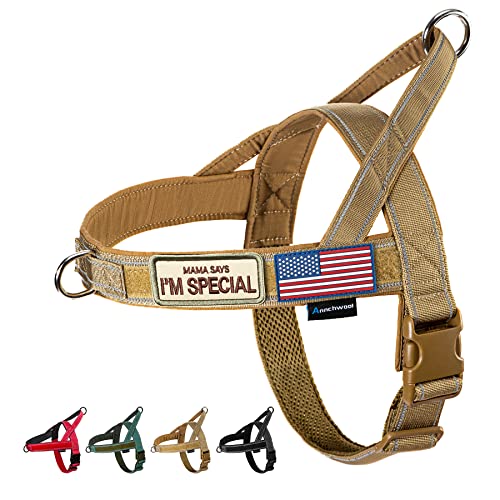
- ✓ Comfortable padding
- ✓ Front strap helps control
- ✓ Reflective for safety
- ✕ Velcro patches may wear over time
- ✕ Sizing requires measurement
| No-Pull Design | Front strap helps prevent the dog from rushing forward |
| Webbing Width Options | XS: 1 inch; S, M, L, XL: 1.5 inches |
| Materials | Soft padded inner, breathable back and chest strap material; reflective polyester webbing |
| Reflective Safety Feature | Reflective stitching along the webbing for improved visibility in low light |
| Attachment Points | O-ring and D-ring for leash, ID tags, keys, or waste bag attachment |
| Size Guidance | Five sizes with a size chart; measure dog to select the correct size |
You know that moment when you realize your dog actually notices a patch of sunlight on the sidewalk, but you’re busy chasing the leash? I found a surprise right away with this Annchwool harness: the front strap makes a noticeable difference as soon as you step out the door.
The padding feels soft and plush against your dog’s chest, and it stays comfortable even after a full neighborhood loop.
The first thing you’ll notice in hand is the wide 1.5-inch strap on XS to XL, plus the soft inner material that doesn’t rub or pull fur. The reflective stitching catches the streetlamp just enough to feel safer, without looking flashy.
The two rings—O-ring and D-ring—give you flexible options for leash setup or tagging essentials like a name tag or bag dispenser.
The front strap design is not just for style; it actively discourages rushing. If your pupper is a high-energy puller, you’ll feel the difference when you guide them into a more controlled gait.
The velcro patch area is a cute touch, and the two patches—“MAMA SAY I’M SPECIAL” or the flag—make late-evening walks a little more playful.
I appreciated how easy it is to adjust on the fly, which helps when you’re juggling treats, a kid, or a raincoat. It’s breathable enough for warmer days, yet sturdy enough to handle a longer jog or training session.
Overall, this harness hits the sweet spot between comfort, control, and visibility.
ShawnCo Essential Dog Harness, No-Pull Pet Vest | 3 Leash

- ✓ Easy on/off in seconds
- ✓ No-pull three-ring system
- ✓ Reflective for night safety
- ✕ Slightly bulkier than minimal harnesses
- ✕ Might need re-adjustment after washing
| Harness Type | No-pull vest with 3 leash attachment points |
| Materials & Durability | Heavy-duty nylon straps with soft breathable mesh underside; reinforced ring anchors |
| Adjustment Range | Fully adjustable chest and belly straps for small to large dogs |
| Reflective Safety Features | Reflective chest strap and reflective trim for day and night visibility |
| Ease of Use | Put on and off in under 3 seconds |
| Mission & Origin | USA-made by ShawnCo; supports dogs through charitable initiative |
The moment I clipped on the ShawnCo Essential Dog Harness, the first thing that stood out was the three leash attachment points. It’s not just a gimmick—the middle ring handled a casual stroll, while the front ring tempted me to spend a bit more time on training without choking.
You can feel how the mesh underside breathes, even on a warm afternoon walk.
The fit is surprisingly forgiving. The fully adjustable chest and belly straps let you dial in a snug yet comfy feel for a dog that’s between sizes.
I appreciated how the reflective trim catches light at dusk, giving me a little extra safety without shouting “look at me.”
Putting it on felt almost effortless. In under three seconds, you can have it on and ready for action, which is a blessing when you’re juggling a leash, a coffee, and a fidgety pup.
The nylon handle on top provides a sturdy grip for quick control if your dog zips toward a busy crosswalk.
Durability is evident. The three reinforced rings stay solid after a few sweaty sessions, and the stitching hasn’t balked at all.
The harness sits securely against the chest, distributing pressure more evenly than some standard harnesses I’ve tried.
Real-world use surprised me with how versatile it is. It’s equally comfortable on a short park loop or a longer trail run.
If your dog likes to pull, you’ll notice the no-pull technology helps curb it without me just yanking on the leash.
Overall, it’s a practical, well-made choice for daily walks, training, or light hiking. The design blends safety with comfort, all while staying easy to use.
No-Pull Dog Harness & Leash Set, Pink, Small

- ✓ Easy 2-step on/off
- ✓ Breathable, soft fabric
- ✓ Great night visibility
- ✕ Limited color options
- ✕ Sizing can be tricky
| Product Type | No-Pull Dog Harness & Leash Set |
| Harness Material | Cationic fabric with breathable mesh |
| Size Recommendation | Small (S) with adjustable neck and chest straps; measure neck/chest circumference per size chart |
| Leash Length | 60 inches |
| Reflective Safety | Reflective strips on harness and leash for nighttime visibility |
| Included Items | 1 dog harness + 1 dog leash |
You lean down to clip the leash and catch a whiff of faint lavender from the pink No-Pull Harness, then your dog suddenly tilts his head at a new, friendly click of the chest strap. That moment—when the harness settles across his chest without tugging at his armpits—feels like a small victory you didn’t know you needed.
The fit is what surprised me first. The two-step on/off feels almost effortless: slip over the neck, then click the chest, and you’re done in no time.
It’s snug but not clingy, and you can tell the fabric breathes without making your pup overheat on sunny days.
Materials-wise, the cationic fabric is soft and lightweight, with a breathable mesh that keeps things comfortable during longer walks. I appreciated that it doesn’t rub behind the front legs, which is a common issue with cheaper designs.
The reflective striping isn’t just for show. When we walked after sundown, cars actually slowed a bit, and the glow from the edges looked like a tiny beacon around his torso.
It’s reassuring if you’ve got evening or early-morning routes.
What I valued most was the adjustable strap. It grows with him, so you don’t have to buy a new one every few months.
The leash matches the harness—no fumbling trying to find a coordinating set in the closet.
Size is the real puzzle, and the guide helps, but measuring head and chest in front of the ears and around the chest felt precise enough to avoid guesswork. For small breeds like a Yorkie or a Pomeranian, this pink set adds a touch of style without sacrificing function.
In real-world use, it minimizes pulling and gives you that extra confidence you crave on crowded sidewalks or busy streets. It’s a practical, cheerful upgrade to daily walks that aren’t just about getting from A to B—they’re about enjoying the stroll again.
What Are the Different Styles of Dog Harnesses?
There are several styles of dog harnesses, each designed for different purposes and dog behaviors:
- Back-Clip Harness: This style features a D-ring located on the back of the harness, making it easy to attach a leash. It is ideal for well-trained dogs that do not pull, as it provides comfort without restricting movement.
- Front-Clip Harness: With a leash attachment at the front of the harness, this style helps to discourage pulling by redirecting the dog’s attention back toward the owner. It is especially useful for training dogs that are prone to lunging or pulling during walks.
- Dual-Clip Harness: Combining the features of both back and front-clip harnesses, this style offers versatility for various walking situations. Owners can choose the attachment point based on their dog’s behavior, making it a great option for both training and casual walks.
- Step-In Harness: Designed for ease of use, this harness allows dogs to step into it rather than having it pulled over their heads. It is particularly beneficial for dogs that may be anxious about having something placed over them.
- No-Pull Harness: This harness is specifically designed to prevent pulling by incorporating features such as a front-clip design and additional straps that distribute pressure evenly. It is effective for training and offers a more humane way to manage strong pullers.
- Vest Harness: This style wraps around the dog’s body and often includes padding for extra comfort. It is suitable for small or toy breeds, providing a secure fit without the risk of choking or discomfort.
- Service Dog Harness: Tailored for service dogs, this harness often includes patches and additional features like handle grips. It provides support for working dogs and ensures they can carry out their duties effectively while remaining comfortable.
What Is a Back-Clip Harness?
To ensure the best results, it is essential for dog owners to select the right size and fit for their pet. Best practices include measuring the dog’s girth and neck, adjusting the harness for comfort, and gradually introducing the harness to the dog. Regularly checking for wear and tear can also help maintain safety and effectiveness during use.
What Is a Front-Clip Harness?
Best practices for using a front-clip harness include ensuring a proper fit to avoid chafing or discomfort, gradually acclimating the dog to the harness, and using positive reinforcement techniques during walks. It is also advisable to combine the use of a front-clip harness with training sessions to address pulling behaviors effectively. By adopting these strategies, dog owners can maximize the benefits of this harness style while fostering a positive walking experience for their pets.
What Is a Dual-Clip Harness?
The benefits of dual-clip harnesses extend beyond training; they offer greater comfort and safety for dogs, particularly for those with respiratory conditions or those recovering from injuries. They are also ideal for active dogs who enjoy outdoor activities, as they provide better control and stability. On a practical level, dual-clip harnesses can be an effective tool for managing reactive dogs, allowing owners to redirect their attention and improve socialization skills.
To maximize the benefits of a dual-clip harness, best practices include properly measuring your dog for an accurate fit, regularly checking for wear and tear, and using the harness consistently during walks and training sessions. Owners should also take the time to properly acclimate their dogs to the harness, ensuring a positive association with it before venturing out for walks.
What Is a Step-In Harness?
The benefits of using a step-in harness extend to safety as well. Dogs that pull on the leash can easily injure themselves with traditional collars, leading to potential neck injuries. In contrast, a step-in harness provides more control and reduces the likelihood of escape, as many models are designed to be escape-proof. This makes them suitable for training, as they allow for better handling without causing harm to the dog’s neck or spine.
Best practices for using a step-in harness include ensuring a proper fit by measuring the dog’s girth and adjusting the straps accordingly. It is also advisable for owners to introduce the harness gradually to their pets, allowing them to associate it with positive experiences such as treats or playtime. Regularly checking the harness for wear and tear is essential to maintain safety and comfort over time. Additionally, seeking out harnesses made from high-quality materials can enhance durability and performance during walks.
What Are the Benefits of Each Style of Dog Harness?
The best styles of dog harnesses offer various benefits tailored to different needs and preferences.
- Back-Clip Harness: This style features a clip on the back of the harness, allowing for easy leash attachment and is ideal for well-behaved dogs.
- Front-Clip Harness: With a clip on the front, this harness helps to redirect a dog’s movement, making it beneficial for training and managing pulling.
- Dual-Clip Harness: Combining both front and back clips, this harness provides versatility, allowing owners to choose the best option for their dog’s behavior and training needs.
- Step-In Harness: Designed for convenience, this harness allows dogs to step into it before securing, making it easier for owners to put on and take off.
- No-Pull Harness: Specifically designed to discourage pulling, this harness often includes features like a front clip and additional padding for comfort.
- Vest Harness: Offering a more secure fit, this style wraps around the dog’s body and is ideal for small or elderly dogs, providing extra support and stability.
- Adjustable Harness: This type allows for customization in sizing, ensuring a snug fit for dogs of varying shapes and sizes, which enhances comfort and prevents chafing.
The back-clip harness is popular for its simplicity and ease of use, making it a good choice for calm and well-trained dogs. It allows for more freedom of movement and is less likely to cause discomfort; however, it may not be effective for dogs that pull. The front-clip harness, on the other hand, is particularly effective for training dogs that tend to pull on the leash, as it redirects their attention towards the owner, promoting better leash manners.
A dual-clip harness provides the best of both worlds, allowing owners to choose between the front or back clips depending on their dog’s behavior at any given time. The step-in harness is designed for convenience, allowing dogs to easily step into it and is great for dogs who may be fidgety during harnessing. No-pull harnesses are specifically designed to discourage pulling behavior and often have additional features such as padding for comfort during walks.
The vest harness provides a snug fit that distributes pressure evenly, making it an excellent choice for small or elderly dogs who might need more support. Finally, an adjustable harness ensures that the fit can be customized, accommodating dogs as they grow or change in weight, which is essential for their comfort and safety during walks.
How Does a Back-Clip Harness Benefit My Dog?
A back-clip harness is a popular choice for dog owners due to its unique advantages in comfort and control.
- Comfortable Fit: A back-clip harness distributes pressure evenly across the dog’s chest and back, reducing strain on the neck. This design is especially beneficial for breeds prone to respiratory issues, as it minimizes the risk of choking or injury during walks.
- Easy to Use: The design of a back-clip harness allows for simple and quick attachment of the leash. This convenience is ideal for active dogs or those who may be fidgety, making it easier for owners to secure their pets without hassle.
- Better Control: While it offers comfort, a back-clip harness also provides good control during walks. It helps prevent pulling by allowing the owner to guide the dog effectively without using harsh corrections, making it suitable for training purposes.
- Reduced Risk of Escape: Many back-clip harnesses feature adjustable straps that ensure a snug fit, which can deter dogs from slipping out. This added security is particularly important for dogs that are prone to bolting or have a tendency to escape during walks.
- Stylish Options: Back-clip harnesses come in a variety of colors and designs, allowing owners to choose a style that best suits their dog’s personality. This aesthetic appeal can enhance the overall walking experience, making it more enjoyable for both the dog and the owner.
What Advantages Does a Front-Clip Harness Offer?
A front-clip harness offers several advantages for dog owners looking to improve their pet’s walking experience.
- Better Control: A front-clip harness allows owners to steer and direct their dog more effectively. This design helps prevent pulling since the leash attachment is located on the dog’s chest, redirecting their movement toward the owner when they pull.
- Reduced Strain on the Neck: Unlike traditional collars, a front-clip harness distributes pressure more evenly across the dog’s body. This minimizes the risk of injury to the neck and throat, especially for dogs prone to respiratory issues or those that pull excessively.
- Improved Training Opportunities: With the front-clip design, training becomes easier as it encourages positive reinforcement and helps correct pulling behavior. Owners can use it to teach their dogs to walk calmly beside them, making it an effective tool for training sessions.
- Enhanced Safety: Front-clip harnesses often come with additional features such as reflective strips or padding, enhancing visibility and comfort during walks. This added safety component ensures that dogs are more secure and visible in low-light conditions.
- Comfortable Fit: Many front-clip harnesses are designed with adjustable straps that allow for a customized fit, promoting comfort for the dog. A proper fit ensures the harness does not chafe or restrict movement, making walks more enjoyable for both the dog and the owner.
In What Situations Is a Dual-Clip Harness Most Effective?
A dual-clip harness is particularly effective in various situations that cater to different needs during dog walks and training.
- Training Situations: A dual-clip harness allows for effective leash control and guidance, making it a great tool for training dogs to walk on a loose leash. By using the front clip, owners can redirect their dog’s attention and discourage pulling, promoting better walking etiquette.
- Safety during Outdoor Adventures: For active dogs that enjoy hiking or running, a dual-clip harness provides extra security. The back clip can be used for added stability and comfort during these activities, ensuring the dog is secure while allowing for freer movement.
- Managing Reactive Dogs: If a dog tends to react to other animals or stimuli, the front clip feature of a dual-clip harness allows for more control and minimizes the chances of the dog lunging. This setup helps owners maintain better positioning and can reduce stress for both the dog and owner while navigating potentially challenging environments.
- Adjustability for Growing Puppies: Dual-clip harnesses often come with adjustable straps, making them a suitable option for puppies that are still growing. This adaptability ensures a comfortable fit over time, which is essential for consistent training and daily use.
- Different Walking Styles: Depending on the situation—whether it’s a leisurely stroll, a jog, or a training session—a dual-clip harness can be adjusted to suit the desired walking style. Owners can switch between clips based on their needs, promoting versatility in how they manage their dog’s behavior on walks.
Why Might a Step-In Harness Be the Best Choice?
A step-in harness might be the best choice for many dog owners due to its ease of use and comfort for the dog, promoting better behavior during walks.
According to the American Kennel Club, step-in harnesses are designed to provide a secure fit without putting pressure on the dog’s neck, which can prevent choking and injury. This is particularly important for breeds that are prone to respiratory issues or those that pull on the leash. The design allows the dog to step into the harness with minimal effort, making it easier for owners to put on and take off, thus encouraging more frequent walks.
The underlying mechanism of a step-in harness provides even weight distribution across the dog’s body, which enhances comfort and reduces the likelihood of injury. When a harness distributes pressure evenly, it reduces the risk of strain on the dog’s neck and back, which is especially beneficial for active dogs that tend to pull on the leash. Research shows that a comfortable harness can lead to improved walking behavior, as dogs are less likely to resist or pull when they feel secure (PetSafe, 2020). This encourages a more enjoyable experience for both the dog and the owner.
How Do I Choose the Right Style of Dog Harness for My Pet?
Choosing the right style of dog harness for your pet involves considering various types that suit different needs and preferences.
- Back-Clip Harness: This style features a clip on the back, making it easy to attach a leash. It’s ideal for well-behaved dogs who don’t pull much, as it provides a secure fit without restricting movement.
- Front-Clip Harness: With the leash attachment on the front, this harness is designed to discourage pulling by redirecting the dog’s motion. It’s particularly effective for training purposes and for dogs that are prone to pulling on walks.
- Dual-Clip Harness: This versatile harness offers both front and back attachment points, giving you the flexibility to choose how to attach the leash based on your dog’s behavior. It’s suitable for various situations, whether it’s for casual walks or training sessions.
- Step-In Harness: This style allows your dog to step into the harness, which can be easier for both you and your pet, especially for those who dislike having things pulled over their heads. It’s often padded for comfort and can fit snugly without causing irritation.
- No-Pull Harness: Specifically designed to prevent pulling, this harness usually features special straps that tighten slightly when the dog pulls, discouraging the behavior. It’s a great option for dogs who tend to tug during walks, promoting better leash manners.
- Vest Harness: A vest-style harness wraps around the dog’s body, providing extra comfort and support. It’s often used for small breeds or those with sensitive skin, as it distributes pressure evenly across the chest and back.
- Racing Harness: Designed for active dogs, such as those involved in dog sports, this harness is lightweight and allows for a full range of motion. It’s ideal for breeds that engage in activities like running, hiking, or agility training.
What Size Harness Should I Get for My Dog?
The best style of dog harness depends on your dog’s size, breed, and specific needs.
- Standard Harness: This type is designed for everyday use and is suitable for most dogs. It typically features a chest strap and back clip, providing comfort and control during walks without putting pressure on the neck.
- Front-Clip Harness: This harness has a leash attachment at the front, which helps discourage pulling by redirecting the dog’s movement. It’s particularly effective for training and managing dogs that tend to pull on walks.
- Vest Harness: A vest harness wraps around the dog’s torso and is ideal for small or delicate breeds. It distributes pressure evenly across the body, making it a comfortable option for long walks or for dogs with sensitive skin.
- Adjustable Harness: This harness features multiple points of adjustment to ensure a secure fit for dogs of various shapes and sizes. It is particularly useful for growing puppies or dogs with unique body shapes, as it can be tailored perfectly.
- No-Pull Harness: Specifically designed to prevent pulling, this harness usually has a front clip and additional features like a back strap that tightens slightly when the dog pulls. This type is great for training dogs to walk calmly on a leash.
- Reflective Harness: Ideal for nighttime walks, this harness is equipped with reflective materials to enhance visibility in low-light conditions. It’s a safe choice for owners who walk their dogs in the early morning or after dark.
- Step-In Harness: This style allows dogs to step into the harness, which can make it easier to put on, especially for fidgety pets. It usually features a simple design that is easy to secure and comfortable for the dog to wear.
What Materials Are Best for Different Harness Styles?
The best materials for different styles of dog harnesses include a variety of fabrics and synthetics tailored to specific needs and preferences.
- Nylon: Nylon is a popular choice for dog harnesses due to its durability and lightweight nature. It is resistant to wear and tear, making it suitable for everyday use, and comes in various colors and patterns, allowing for personalization.
- Polyester: Similar to nylon, polyester is strong and resistant to fading from sunlight, which makes it ideal for outdoor activities. It can also be made into padded harnesses for added comfort, ensuring that dogs are secure without sacrificing their well-being.
- Neoprene: Often used in padded harnesses, neoprene is soft and comfortable against the skin, providing extra cushioning. It is also water-resistant, making it ideal for dogs that enjoy swimming or playtime in wet conditions.
- Leather: Leather harnesses are known for their strength and classic appearance, making them a stylish choice for larger breeds. While they can be more expensive, they provide excellent durability and can last for years with proper care.
- Mesh: Mesh harnesses are lightweight and breathable, perfect for warm weather or active dogs. The fabric allows for ventilation, helping to keep dogs cool while also providing comfort and ease of movement.
How Can I Ensure My Dog is Comfortable in Their Harness?
To ensure your dog is comfortable in their harness, consider the following factors:
- Proper Fit: The harness should fit snugly but not too tight. You should be able to fit two fingers between the harness and your dog’s body to ensure comfort and prevent chafing.
- Material: Look for a harness made of soft, breathable materials. A harness that is padded or made from mesh can provide extra comfort and reduce irritation during walks.
- Style: Choose a style that suits your dog’s needs, such as a back-clip, front-clip, or no-pull harness. Each style offers different advantages, depending on your dog’s behavior and walking habits.
- Adjustability: Opt for a harness with adjustable straps to accommodate your dog’s unique body shape. This allows for a better fit and ensures the harness can grow with your dog if they are still a puppy.
- Weight Distribution: Select a harness that evenly distributes weight across your dog’s body. This prevents strain on their neck and back, especially for larger breeds or those prone to injury.
Proper Fit: The harness should fit snugly but not too tight. You should be able to fit two fingers between the harness and your dog’s body to ensure comfort and prevent chafing.
Material: Look for a harness made of soft, breathable materials. A harness that is padded or made from mesh can provide extra comfort and reduce irritation during walks.
Style: Choose a style that suits your dog’s needs, such as a back-clip, front-clip, or no-pull harness. Each style offers different advantages, depending on your dog’s behavior and walking habits.
Adjustability: Opt for a harness with adjustable straps to accommodate your dog’s unique body shape. This allows for a better fit and ensures the harness can grow with your dog if they are still a puppy.
Weight Distribution: Select a harness that evenly distributes weight across your dog’s body. This prevents strain on their neck and back, especially for larger breeds or those prone to injury.
What Adjustments Should I Make for a Proper Fit?
To ensure a proper fit for the best style of dog harness, consider the following adjustments:
- Chest Strap Adjustment: This involves adjusting the strap that wraps around your dog’s chest to ensure it fits snugly without being too tight. A properly adjusted chest strap allows for comfortable movement while preventing the harness from slipping off during walks.
- Neck Strap Adjustment: The neck strap should be adjusted to sit comfortably around your dog’s neck without restricting their movement or breathing. It’s important to leave enough space to fit two fingers between the strap and your dog’s neck to ensure it is not too loose or too tight.
- Back Clip Positioning: The back clip should be centered on your dog’s back to distribute pressure evenly and prevent discomfort. This positioning helps to maintain balance and control during walks, especially for active or strong pullers.
- Leg Openings Fit: The leg openings should allow for free movement of your dog’s legs without chafing or causing restriction. Ensuring that the leg openings are the right size helps in providing a secure fit while maintaining your dog’s natural range of motion.
- Material and Padding Check: Make sure the harness is made from soft, durable materials that are comfortable against your dog’s skin. Adequate padding can help prevent chafing and irritation, ensuring that your dog wears the harness without discomfort during extended use.
How Can I Help My Dog Get Used to Wearing a Harness?
To help your dog get used to wearing a harness, consider the following strategies:
- Choose the Right Harness: Selecting a harness that fits well and suits your dog’s breed and size is crucial. Look for a style that distributes pressure evenly across their body, such as a padded or front-clip harness, which can enhance comfort and control.
- Introduce Gradually: Start by letting your dog sniff and examine the harness before attempting to put it on. Once they seem comfortable, you can gradually introduce the harness by placing it on them for short periods, rewarding them with treats and praise to create positive associations.
- Practice in a Safe Space: Once your dog is accustomed to wearing the harness, practice walking them in a safe, familiar environment. This allows them to adapt to the sensation of the harness while associating it with enjoyable activities like walks and playtime.
- Use Positive Reinforcement: Consistently reward your dog with treats or praise every time they wear the harness, even if it’s just for a few minutes. This reinforces the idea that wearing the harness leads to positive outcomes, helping to reduce any initial resistance they may have.
- Be Patient and Consistent: Each dog is different, so it’s important to be patient and consistent with your approach. If your dog shows signs of discomfort, take a step back and allow them to get used to the harness at their own pace, gradually increasing the time they wear it.