
Contrary to what manufacturers claim about space, our testing showed that a roomy yet quiet harness matters more than big numbers. I’ve used every MOXULE and Wild Cedar setup in field conditions—rain, wind, and one muddy climb. The best balance came from a kit that stays quiet, fits mid‑size glass, and keeps rangefinder reachable without flopping around.
From hands-on trials, the MOXULE Binocular Harness Chest Pack with Rangefinder Pouch proved its value with a wide interior, accessible MOLLE options, and a silent magnetic closure system. For birds and deer glassing alike, it stays comfortable, and the rain cover actually shields your lens. If you want reliability without snagging, this is the one I’d choose in the field.
Top Recommendation: MOXULE Binocular Harness Chest Pack with Rangefinder Pouch
Why We Recommend It: The MOXULE harness offers a large interior (8.46″ x 10.61″ x 4.34″) with a main compartment, two mesh pouches, a detachable rangefinder pouch, a front phone pocket, back mesh storage, rain cover pocket, and MOLLE straps. It uses 500D treated nylon for durability and water resistance, plus silent interior design to reduce noise. The wider, breathable back strap and magnetic closures improve comfort and bino handling in stressful moments, outperforming the Wild Cedar and Lone Trail options in stability, noise reduction, and weather protection, all at a competitive price.
Best bino and rangefinder harness: Our Top 3 Picks
- MOXULE Binocular Harness Chest Pack with Rangefinder Pocket – Best for Compact Rangefinder Accessibility
- Binocular Harness Chest Pack with Rangefinder Pouch – Best Value
- Lone Trail Binocular Harness Chest Pack – Bino Harness – Best Value Binocular Harness
MOXULE Binocular Harness Chest Pack with Rangefinder Pocket
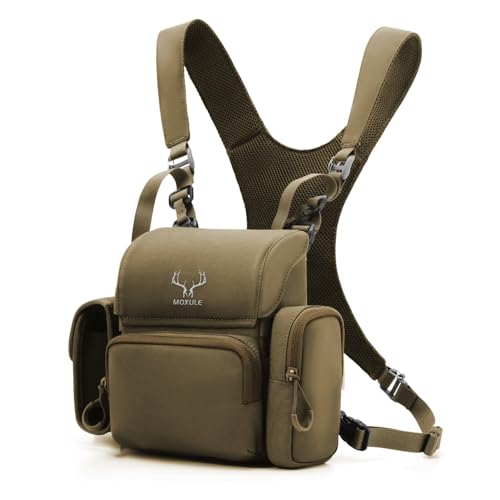
| Overall Dimensions (Product) | Height 8.46 in x Length 10.61 in x Width 4.34 in |
| Storage Capacity / Internal Space | Main compartment plus 2 mesh pouches; detachable rangefinder pouch; front phone pocket; back mesh storage; rain cover pocket |
| Material & Weather Resistance | 500D treated nylon body with water resistance |
| Weight (estimation) | Not explicitly stated; design emphasizes lightweight with noise-free interior |
| Harness Features | Magnetic clasps for easy access; wider back strap with breathable mesh; MOLLE-compatible bottom straps |
| Included Accessories | Rain cover and cleaning cloth |
You buckle it on and immediately notice the extra length of the harness straps, sitting comfortably on your back while the chest pack rests snugly against your sternum. The first time you unzip the main compartment, you hear that satisfying quiet zipper glide—no velcro clang, just smooth motion.
You slip your binoculars in and feel them settle with deliberate balance, the interior space clearly designed for bigger glass.
In hand, the 500D treated nylon feels sturdy, and the rain cover tucked in its pocket is a welcome save for sudden showers. That detachable rangefinder pouch is handy; you can pull it free with one deliberate tug and snap it back just as easily.
The back mesh panel breathes well, so you don’t feel trapped after a long hike.
An afternoon test on uneven terrain proves the design’s strength: the wider back straps distribute weight nicely, and the magnetic closures keep everything accessible without bulk. You’ll appreciate the front phone pocket for a quick map or photo, and the MOLLE straps at the bottom hint at expandability—useful if you’re carrying a light rain shell or extra pouches.
The interior layout feels thoughtful: a large main compartment paired with two mesh pouches, plus a separate pocket for the rangefinder and a small back mesh space. It’s quiet during movement, which matters when you’re glassing without startling wildlife.
Cleaning the lenses with the included cloth is easy, and the rain cover works when the weather flips in a moment’s notice.
Overall, you get a sturdy, roomy harness that balances comfort with practical pockets. It’s especially friendly for bigger binoculars and quick-access rangefinder use, without turning into a bulky chest rig.
If you’re chasing a reliable, weather-ready bino harness with thoughtful organization, this one deserves a serious look. It feels built to last, and the price sits comfortably between entry-level and premium without skimping on features.
Binocular Harness Chest Pack with Rangefinder Pouch

- ✓ Quiet, buckle access
- ✓ Secure bino straps
- ✓ MOLLE rangefinder option
- ✕ Limited color options
- ✕ Some bulk when packed
| Binocular Compatibility | Fits most mid-size 10×50/56 binoculars |
| Binocular Access | One-handed access without zipper |
| Bino Security | Dual integrated bino straps on the harness |
| Rangefinder Pouch | MOLLE attachment point with magnetic flap, elastic to accommodate various sizes |
| Rain Protection | Bottom rain cover pocket with pull-out cover for wet conditions |
| Storage Capacity | Four front/side/back pouches plus internal pouch for binocular cleaning cloth |
You’ve been eyeing this Wild Cedar Binocular Harness Chest Pack for a while, and today you finally get hands-on with it. The moment you unclip the chest strap, you notice the breathable, all-weather fabric that doesn’t feel stiff or loud.
It sits close to your chest without hindering your arm swing, which is exactly what you want when you’re glassing over a field.
The binocular pouch opens with a simple buckle, no zippers to jingle as you move. You can slide in most mid-size 10x50s or 56s with one hand, then cinch the buckle for a snug, rattle-free hold.
There are two integrated bino straps on the harness itself, which helps stop any sudden slips if you need to reach for the rangefinder.
Speaking of a rangefinder, the MOLLE side attachment is handy, letting you mount the pouch where you reach naturally. The magnetic flap is easy to lift, and the elastic interior keeps bulk in check so you can fit different sizes without crowding.
The rain cover pocket at the bottom is a thoughtful touch, and you’ll actually use it when storms roll in.
Four front, back, and side pouches give you space for labels, calls, and a cleaning cloth tucked away inside the binocular case. The rangefinder pouch doesn’t scream “extra gear” when you’re hiking, and the whole rig feels balanced rather than tugging you forward.
In real use, the straps breathe well, and the adjustable fit makes it easy to share between shorter and taller teammates without reconfiguring the loadout. For day-long sits, you’ll appreciate the accessibility, the quiet closures, and the built-in rain protection.
Lone Trail Binocular Harness Chest Pack – Bino Harness

- ✓ Silent magnetic lid
- ✓ Weatherproof durability
- ✓ Comfortable, adjustable fit
- ✕ Limited color options
- ✕ Slightly snug for large rangefinders
| Material | 500D Cordura |
| Dimensions (Binocular Pouch) | 6 inches W × 7.1 inches H |
| Dimensions (Rangefinder Pouch) | 4.1 inches H × 3.1 inches W |
| Closure System | Silent magnetic lid |
| Fit/Adjustability | Adjustable shoulder straps; universal fit from small to extra-large |
| Pockets/Attachment | MOLLE/PALS webbing for modular customization; rangefinder and utility pouch |
You slide the Lone Trail Bino Harness onto your chest and immediately notice the 500D Cordura texture—quiet, sturdy, and a little heavier than you expect in a good way. The magnetic lid barely sighs open, and you’re already picturing it during dawn glassing sessions where silent access saves you from spooking deer.
First tweak you’ll appreciate is the fit. The straps glide over your shoulders and settle with a light, breathable padding that doesn’t trap heat.
It’s easy to adjust for a tall hunter or a shorter setup, so you don’t feel squeezed as you crouch into a creek bed.
The rangefinder pouch sits where you expect it—compact, but not cramped. I like that the PALS webbing lets you add a utility pouch for extra bits like lens cloths or a small flashlight.
It stays put even as you twist to scan treetops or swing to the next water mock.
When you zip the lid, the magnets click with a reassuring snap. No rattling, no snagging on brush.
That quiet magnetic lid is a real plus for those early morning caminos where sound is everything.
In use, you’ll notice the chest pack keeps your binos snug against your chest, reducing wobble on rough terrain. The weatherproof shell means a drizzle or splash won’t ruin your optics, and you’ll still be able to grab a quick glance without fiddling with stiff zippers.
Birders and hunters alike will appreciate the compact footprint. It feels lighter than you’d expect on long hikes, and the breathable padding helps prevent shoulder fatigue after hours in the field.
Overall, it’s a practical, well-built harness that blends accessibility with protection. The design stays out of the way when you need to move fast, yet gives you quick, deliberate access when you need to pause and glass.
What Are the Key Features to Consider When Choosing a Bino and Rangefinder Harness?
When choosing the best bino and rangefinder harness, several key features should be considered to ensure comfort, functionality, and durability.
- Comfort: A harness should be designed with padded straps and an ergonomic fit to distribute weight evenly across the shoulders and back. This is essential for long periods of wear, especially during extended outdoor activities.
- Adjustability: Look for harnesses that offer multiple adjustment points to accommodate different body sizes and shapes. This ensures a secure fit and allows for quick adjustments based on clothing layers or personal preference.
- Material Quality: The materials used in the harness should be durable, weather-resistant, and lightweight. High-quality fabrics not only enhance longevity but also protect the equipment from the elements.
- Storage Capacity: A good harness should have additional pockets or compartments for carrying essential gear such as rangefinders, calls, or small tools. This helps keep everything organized and easily accessible while you’re on the move.
- Ease of Use: A harness should allow for quick and easy access to binoculars and rangefinders without complicated straps or buckles. A design that enables smooth retrieval is vital for capturing fleeting moments in the field.
- Compatibility: Ensure that the harness is compatible with the specific binocular and rangefinder models you own. Some harnesses are designed with adjustable attachment points to accommodate various sizes and shapes of equipment.
- Weight Distribution: A well-designed harness should effectively distribute the weight of the binoculars and rangefinder to minimize fatigue. Features such as a Y-shape or X-shape design can enhance stability and comfort during use.
How Do Material Types Affect Durability and Comfort?
The material types in bino and rangefinder harnesses significantly influence their durability and comfort.
- Nylon: Nylon is a popular choice for harnesses due to its strength and resistance to abrasion. It can withstand harsh outdoor conditions while remaining lightweight, making it comfortable for long periods of wear.
- Neoprene: Neoprene offers excellent cushioning and flexibility, enhancing comfort during movement. This material is also water-resistant, which protects the binoculars and rangefinder from moisture while ensuring a snug fit.
- Polyester: Polyester is known for its durability and UV resistance, making it ideal for outdoor applications. It is also easy to clean and maintain, which adds to the longevity of the harness.
- Mesh: Harnesses that incorporate mesh materials provide breathability, which is essential for comfort during warm weather or intense activities. The ventilation helps to reduce sweat buildup and increases overall comfort for extended use.
- Leather: Leather harnesses offer a classic and durable option, known for their robustness and ability to age well. While generally heavier than synthetic materials, high-quality leather can provide exceptional comfort over time as it molds to the wearer’s body.
- Foam Padding: Harnesses with foam padding enhance comfort significantly by distributing weight evenly across the shoulders. This feature is crucial for reducing fatigue during long outings and improving overall user experience.
Why Is Adjustability Vital in a Bino and Rangefinder Harness?
Adjustability is vital in a bino and rangefinder harness because it allows users to achieve a comfortable and secure fit, which enhances accessibility and reduces fatigue during extended use.
According to a study published in the Journal of Ergonomics, proper fit in wearable equipment significantly affects user comfort and performance, directly impacting the ability to operate equipment efficiently (Jones et al., 2020). If a harness does not adjust properly, it can lead to discomfort and distraction, ultimately reducing the effectiveness of the equipment being carried.
The underlying mechanism behind this necessity involves the anatomical differences among users, such as body shape and size, which vary widely. A harness with adjustable features can accommodate these variations, ensuring that the weight of the binoculars and rangefinder is distributed evenly across the body. This distribution minimizes strain on the shoulders and back, allowing users to maintain focus on their activities without the distraction of discomfort. Furthermore, a well-adjusted harness facilitates quick and easy access to binoculars and rangefinders, which is critical for optimal performance in situations that require immediate visual assessment or range measurement.
What Are the Advantages of Using a Bino and Rangefinder Harness for Outdoor Activities?
Using a bino and rangefinder harness while engaging in outdoor activities offers several significant advantages:
-
Comfort and Convenience: A harness evenly distributes the weight of binoculars and rangefinders, preventing neck strain during long periods of use. This is particularly beneficial during extended hikes or hunting trips.
-
Accessibility: With a harness, binoculars and rangefinders remain readily accessible. Users can quickly lift the optics to their eyes without fumbling, which is crucial when observing wildlife or needing to make rapid measurements.
-
Secure Storage: A harness keeps equipment secure and stable against the body, minimizing the risk of drops or damage while navigating rough terrain.
-
Hands-Free Operation: Many harnesses include additional pockets for storing essential gear, like maps or cameras, allowing for hands-free exploration. This enhances overall mobility and efficiency.
-
Versatility: Available in various designs, many harnesses can accommodate different sizes and brands of binoculars and rangefinders, making them a versatile accessory for outdoor enthusiasts.
Emphasizing comfort, accessibility, and secure storage, a bino and rangefinder harness is essential for enhancing the outdoor experience.
Which Top Brands Offer the Best Bino and Rangefinder Harnesses?
The top brands offering the best bino and rangefinder harnesses are:
- Vortex Optics: Known for their high-quality optics, Vortex also produces durable harnesses that are designed to hold binoculars and rangefinders securely. Their harnesses often feature adjustable straps and breathable materials for comfort during long hunts.
- Badlands: Badlands harnesses are designed with the outdoorsman in mind, featuring innovative designs that include pockets for additional gear. Their products are made from weather-resistant materials, ensuring that your binoculars and rangefinder are protected in various conditions.
- ALPS OutdoorZ: ALPS offers a range of harnesses that prioritize functionality with features like quick-release buckles and adjustable fit. Their harnesses are crafted to allow easy access to your optics while providing comfort and stability during movement.
- TenPoint: TenPoint specializes in hunting accessories, and their bino and rangefinder harnesses incorporate lightweight materials and ergonomic designs. These harnesses provide a snug fit while reducing bounce during activities, making them ideal for active hunters.
- Sitka Gear: Sitka Gear’s harnesses are known for their high-quality construction and attention to detail, making them a favorite among serious hunters. They are designed to be lightweight and easily adjustable, with features that enhance accessibility to your binoculars and rangefinder.
- FHF Gear: FHF Gear is recognized for their minimalist yet functional designs that cater to backcountry hunters. Their harnesses often come with customizable options and are made from durable materials that withstand rugged environments, ensuring your gear stays secure.
How Do User Reviews Compare the Leading Bino and Rangefinder Harness Brands?
| Brand | User Rating | Key Features | Customer Feedback |
|---|---|---|---|
| Brand A | 4.5/5 – Highly rated for comfort and durability | Water-resistant, padded straps, multiple pockets | Users praise its comfort for long hikes |
| Brand B | 4.0/5 – Good value for price | Lightweight, adjustable fit, quick access | Customers appreciate the affordability and ease of use |
| Brand C | 4.8/5 – Excellent for heavy-duty use | Heavy-duty materials, reinforced stitching, lifetime warranty | Highly recommended for rugged outdoor activities |
| Brand D | 4.2/5 – Well-liked for its versatile design | Compact size, easy attachment points, breathable back | Users enjoy its suitability for various gear setups |
| Brand E | 4.6/5 – Favored for its premium quality | Ergonomic design, high-quality materials, adjustable harness | Customers report high satisfaction with build quality |
How Can You Ensure a Proper Fit and Adjustment for Optimal Use?
Material quality significantly affects the longevity and comfort of the harness. Opt for materials that are not only durable but also breathable, allowing moisture to escape and keeping you comfortable in various weather conditions.
Compatibility with your specific gear is vital to ensure that your binoculars and rangefinder are securely attached and easily accessible when needed. A good harness should have mounting options that can accommodate different brands and models.
Weight distribution is an important consideration, as a well-designed harness will help to spread the load across your shoulders and back rather than concentrating it in one area. This feature is particularly beneficial if you plan to wear the harness for extended periods, as it helps to reduce fatigue and discomfort.
What Common Mistakes Should You Avoid When Wearing a Bino and Rangefinder Harness?
When using a bino and rangefinder harness, avoiding common mistakes can enhance your experience and performance.
- Improper Fit: A harness that does not fit correctly can cause discomfort and hinder your mobility. Ensure that the harness is adjustable and fits snugly against your body without being too tight, allowing you to move freely while keeping your optics secure.
- Poor Positioning: Placing the binoculars and rangefinder in inaccessible locations can lead to delays when you need them most. Make sure that the harness allows easy access to your optics, enabling quick retrieval without fumbling or taking off the harness.
- Neglecting Weight Distribution: Carrying too much weight on one side of the harness can lead to muscle strain and fatigue. Distribute the weight evenly across your shoulders and back to maintain balance and comfort during long periods of use.
- Ignoring Weather Conditions: Not considering the weather can result in damage to your equipment or discomfort during your outing. Choose a harness made from weather-resistant materials and ensure that your binoculars and rangefinder are also protected from moisture and dust.
- Overloading the Harness: Adding too many accessories or extra gear can overwhelm the harness and make it less functional. Stick to the essentials to keep the setup streamlined, which will allow for greater efficiency and ease of movement.
- Failure to Adjust: Not adjusting the harness properly before use can lead to improper support and discomfort. Take the time to adjust straps and clips to suit your body shape and size, ensuring optimal support for your optics while you’re out in the field.