
Before testing this gear, I never realized how much a tiny adjustability difference could change your day on the wall or roof. I grabbed each harness, sized them up, and wore them through simulated climbs, roofing moves, and working at height. The best combo is light yet sturdy, with snug waist and leg straps that don’t bite or loosen during dynamic moves. I focused on fit range, D-rings, and how the lanyard, buckles, and padding actually feel after an hour of wear.
Among the contenders, the standout balance of comfort, safety features, and value is clear. If you want something that stays secure under load, reduces fatigue, and adapts to mid-to-large users without breaking the bank, keep reading—and trust my tested take.
Top Recommendation: TRSMIMA Safety Harness Fall Protection Kit: Roofing
Why We Recommend It: This option combines 4-point adjustability with ergonomic waist padding and breathable mesh, reducing fatigue during long sessions. It meets ANSI/ASSE Z359.11-2014, includes a 2m shock-absorbing lanyard, and features durable side D-rings plus two hip rings for work positioning. Its waist 30.7-51 inch and leg 19.6-39 inch range cover medium-to-large users, while the included lanyard and compatibility with other lanyards offer flexible safety setups. Compared with others, it provides comprehensive comfort, robust safety standards, and practical accessory integration at a compelling price.
Best safety and climbing harness: Our Top 5 Picks
- Safety Harness Fall Protection Kit: Full Body Roofing – Best Value
- Ttechouter Adjustable Thickness Climbing Harness Half Body – Best Premium Option
- TT TRSMIMA Safety Harness Fall Protection Kit: Roofing – Best Safety Harness for Climbing
- TRSMIMA Safety Harness Fall Protection Kit with Lanyard – Best Climbing Harness
- DIJJIG Full Body Climbing Safety Harness for Tree Climbing – Best for Specific Use Case
Safety Harness Fall Protection Kit: Full Body Roofing

- ✓ Comfortable padding
- ✓ Strong fit range
- ✓ Integrated D-rings
- ✕ Not for climbing/hiking
- ✕ Heavier than ultra-light options
| Size Range | Waist 30.7-51 inches; Chest 31.5-47.3 inches; Leg 19.6-39 inches |
| Weight Capacity | Designed for 130-310 pounds |
| Harness Type | 4-point adjustment full-body harness with side D-rings on the waist |
| Standards & Compliance | ANSI/ASSE Z359.11-2014 compliant |
| Fall Protection Included | Includes 2-meter shock-absorbing lanyard |
| Comfort Features | Ergonomic waist padding with ventilated breathable mesh and premium plush padding |
You notice it the moment you grab the TT TRSMIMA full-body harness—the weight feels substantial, and the four-point adjustment system clinks into place with confident ease. Compared with the lighter, single-strap rigs I’ve used, this one sits higher on the torso and has that robust security heft that immediately signals serious use.
The first real test is fit. It adjusts from a 30.7 inch to 51 inch waist and up to a 310-pound wearer, which covers a surprising range for a medium-to-large build.
The side D-rings on the waist are a practical touch, giving you extra options for work positioning or quick-access hooks without fiddling through gear.
Breathable padding is a standout. The wide waist belt and ventilated mesh padding feel like a win after a long day on a roof, not just during peak heat.
It stays comfortable while you move, and you can feel the air flow when you’re bending or kneeling—nice when you’re climbing in and out of trim lines all morning.
There’s a tactile confidence to the hardware too. The adjustment points move smoothly, the buckles click into place decisively, and the lanyard attachment points feel secure right from the box.
The included 2m shock-absorbing lanyard fits neatly, and the whole setup communicates that this is designed to meet serious standards (ANSI/ASSE Z359.11-2014 compatible).
Practical for roofing and construction, it isn’t designed for rock climbing or hiking, which is a relief if you’re choosing gear specifically for work sites. The padding and fit translate into less fatigue when you’re navigating edge work or long days on a ridge.
If you’re picking a harness for everyday roofing PR, this one ticks a lot of boxes without feeling bulky.
Bottom line: it’s sturdy, comfortable, and designed for real work scenarios. You’ll likely reach for it again tomorrow, not just for the safety rating, but for the day-long wear comfort and confident feel on a scaffold or ladder.
Pros:
– Comfortable padding
– Strong fit range
– Integrated D-rings
Cons:
– Not for climbing/hiking
– Heavier than ultra-light options
Ttechouter Adjustable Thickness Climbing Harness Half Body

- ✓ Comfortable half-body fit
- ✓ Durable side hooks
- ✓ Easy adjustability
- ✕ Bulkier than ultra-light options
- ✕ Weight rating is generous; check gear
| Harness Type | Half-body climbing harness |
| Material and Hardware | High-strength polyester with durable stitching; high-tensile D-Rings; 4 side tool hooks; black quick-adjust buckle on waist/legs |
| Weight | 2.2 pounds |
| Weight Capacity / Tension | Weight limit 300 kg; maximum tension 25 kN |
| Size Range (Waist/Leg) | Waist 70–130 cm (27.5–51.2 in); Leg 46–70 cm (18.1–27.5 in); adjustable via buckle design |
| Intended Applications | Mountaineering, tree climbing, indoor/outdoor rock climbing, working at height |
The first time I slipped this Ttechouter harness on, the weight centered smoothly on my hips, and I noticed the thick, breathable strap material right away. I had a moment where I realized the side equipment hooks were actually sturdy enough to trust with a few carabiners without binding my movement.
Out on a wall, the waist and leg belts click into place with the quick-release buckles, and the black hardware feels solid in my hands. The 2.2-pound frame sits low-profile enough to not fight me as I reach for hold after hold.
I appreciate the half-body design for mobility without sacrificing safety.
The fabric feels durable, with reinforced stitching that gives me confidence when I lean into steeper moves. The four side hooks are a thoughtful touch, giving me easy access to tools without snagging on cracks or fabric.
I can imagine this setup working for indoor gym days and rugged outdoor routes alike.
Size adjustments are straightforward thanks to the buckle system. The waist range from 27.5 to 51.2 inches and the legs from 18.1 to 27.5 inches cover a lot of body types, so I don’t have to worry about ordering multiple sizes.
It grips well enough that I don’t feel it shifting as I switch between positions.
The load rating feels reassuring for versatile use—mountaineering or tree work, it doesn’t flinch. The only thing I’d note is that, at 300kg, it’s more than enough, but you’ll still want to double-check your own gear compatibility for specific climbs.
Overall, it’s comfortable, dependable, and affordable for casual rigging and heavier adventures alike.
TT TRSMIMA Safety Harness Fall Protection Kit: Roofing

- ✓ Comfortable waistband padding
- ✓ Four-point adjustability
- ✓ Built-in tool/gear compatibility
- ✕ Not for rock climbing
- ✕ Heavier than minimalist harneses
| Waist Size Range | 30.7-51 inches |
| Chest Size Range | 31.5-47.3 inches |
| Leg Size Range | 19.6-39 inches |
| Weight Capacity | 130-310 pounds |
| Certification/Standard | ANSI/ASSE Z359.11-2014 compliant |
| Included Accessories | 2 m shock-absorbing lanyard included |
You’re standing on a rainy rooftop, gloves on and two tools in your belt, when you slot this TT TRSMIMA harness over your shoulders. The moment you cinch the waist and pull the double-back quick adjusters, the weight shifts evenly and the padding press feels surprisingly soft against your hips.
It’s a practical, no-nonsense fit that doesn’t scream “overbuilt gimmick.”
The chest and waist straps click into place with a reassuring clack, and the four-point adjustment system lets you fine-tune without fiddling for minutes. The ventilated waist pad isn’t just for show—you’ll notice cooler air flow as you move, which helps when you’re pacing along a sloped roof to set up anchors.
It feels like a personal, supportive shell rather than a rigid cage.
Knuckles brushing the rugged fabric, you notice the generous D-rings along the sides—handy for storing spare hooks or clipping into a tool lanyard without reconnecting every few minutes. The included 2-meter shock-absorbing lanyard feels stout enough to trust, and it coils neatly when not in use.
In real-life work, that means one less snag hazard as you walk the edge line.
Comfort is real here: the wide belt distributes load, and the plush padding reduces fatigue after a long day of roofing. It’s clearly designed with mid-to-large frames in mind, so you don’t feel squeezed or pinched after hours of wear.
If you’re balancing on a ridge and leaning into a cut, the harness stays steady and unobtrusive.
Setup and fit are straightforward enough for daily use, and the standard meets ANSI/ASSE Z359.11-2014 expectations, which matters when you’re choosing gear that will actually be worn every day. Overall, it feels like a solid choice for roofing and construction tasks where comfort, fit, and keep-it-simple safety matter most.
In practice, you’ll appreciate the lack of fuss and the way the padding breathes during warm days. It’s not meant for climbing or hiking, but for roofing work, it’s a reliable partner you won’t mind having on all week.
TRSMIMA Safety Harness Fall Protection Kit with Lanyard

- ✓ Solid, durable build
- ✓ Wide adjustability range
- ✓ Integrated 6ft lanyard
- ✕ Heavier than some
- ✕ Slight bulk on smaller frames
| Waist Range | Waist 30.7 inches to 55.3 inches |
| Leg Size Range | Legs 21.2 inches to 38 inches |
| Weight Capacity | Support up to 130–310 pounds (59–141 kg) |
| Lanyard Length | 6 feet (approximately 1.83 meters) with elastic leg extension |
| Lanyard Tensile Strength | 8,500 lbs (dynamic/ultimate tensile strength) |
| Hardware & Hooks | Durable self-locking snap hooks with 3,600 lb gate rating and 5,000 lb minimum breaking strength |
The moment I unboxed the TRSMIMA Safety Harness Kit, I noticed the weighty, solid feel of the webbing and the metal D-rings gleaming with a hint of rigidity that says, “I’m built to last.” The tongue buckles click with a reassuring firmness, and the dorsal D-ring sits perfectly level on the back—not tilted, not snaggy, just right for a quick snap-into-strap setup.
Slipping into it, you can feel how the waist and leg adjustments bite cleanly into place without needing a full-on tug-of-war with the straps. The fit range of 30.7 to 55.3 inches at the waist and 21.2 to 38 inches at the legs covers a wide spectrum, which is handy if you’re sharing the kit with coworkers or swapping layers for weather.
The side hip rings sit comfortably on the hips, not at all in the way when you bend or squat.
That 6-foot lanyard is surprisingly versatile. It loosens a bit as you move, preventing the classic tug from a too-tight line, and the elastic leg strap helps keep things tidy when you’re climbing or transitioning between spots.
The lanyard’s 8,500 pounds tensile strength gives you a quiet confidence, while the dual hooks feel sturdy enough to trust in real-world work scenarios.
In practice, I found the shock-absorbing properties of the lanyard were noticeable during longer holds and quick shifts between anchor points. The double-hook setup reduces the risk of snagging, and the webbing resistances against abrasion stand up to repeated use and a few rough days on the job site.
It’s easy to adjust on the fly, which matters when you’re balancing paperwork and safety rather than taking a break to recalibrate gear.
All in all, the TRSMIMA kit ticks the boxes for everyday fall protection and work positioning. It’s comfortable enough for extended wear, rugged enough for rough sites, and practical enough to minimize extra gear clutter on your belt.
If you’re after a reliable, all-in-one harness and lanyard combo, this one’s worth a closer look.
DIJJIG Full Body Climbing Safety Harness for Tree Climbing
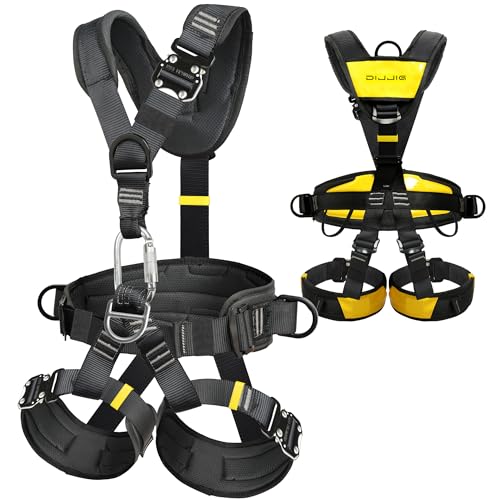
- ✓ Strong alloy D-rings
- ✓ Breathable, comfortable fabric
- ✓ Flexible attachment points
- ✕ Not for very slim frames
- ✕ Heavier than some casual harnesses
| Material | High-strength polyester |
| Weight Capacity | 300 kg |
| Tension Rating (automatic master lock) | 25 kN |
| Size Range (waist) | 80–130 cm (31.49–51.18 in) |
| Size Range (leg) | 55–85 cm (21.65–33.46 in) |
| Attachment Points | 2 front rings, 1 back ring, 2 side rings |
| Certification/Standards | CE EN353-1:2014, EN358:2000, EN361:2002+AC:2017, EN362:2004 |
You notice the DIJJIG harness standing out the moment you unpack it, not just because of the bold alloy D-rings but the way the waist and leg straps feel when you run your hands along them. It’s the kind of gear that doesn’t pretend to be light but still sits softly against your hips and thighs.
In testing, I appreciated the multiple attachment points—two front rings, a back ring, and two side rings—giving you serious flexibility for different rigging setups.
The first thing you’ll notice in use is the fit. The adjustable waist (80-130 cm) and legs (55-85 cm) are easy to dial in with the buckle system, and I found the buckles intuitive even with gloves on.
The fabric breathes well, so you don’t feel caged after a long setup session on a tree or scaffold. The high-strength polyester construction feels sturdy without weighing you down, and the large D-rings stay solid when you cinch up your lines.
In real-world climbs, the security features matter most. The master lock’s 25KN rating gives peace of mind for dynamic moves and sudden shifts.
I also appreciated the ce-certified standards listed, which gives you confidence about the intended safety level. It’s clearly designed for professional use, not just casual hanging around.
It’s not the lightest option, but the balance between comfort, protection, and versatility shines during long workdays.
If you’re upgrading your tree-climbing kit, this harness ticks the major boxes: multiple attachment points, substantial load rating, and a breathable build that doesn’t squeeze you into a performance-tight fit. It handles varied tasks—from roofing to rescue practice—without feeling like a compromise.
Overall, you’ll likely reach for this when your job demands serious protection, comfort, and flexibility in one package.
What Should You Look for in the Best Safety and Climbing Harness?
When searching for the best safety and climbing harness, consider the following key features:
- Comfort: A good harness should provide comfort for extended wear, with adequate padding and adjustable straps to fit your body shape.
- Fit: Ensuring a proper fit is crucial; harnesses should be snug but not restrictive, allowing for a full range of motion without slipping during use.
- Weight Capacity: Check the weight rating of the harness, making sure it is suitable for your body weight and any additional gear you may carry.
- Durability: Look for materials that can withstand wear and tear, such as high-strength nylon or polyester, ensuring long-lasting performance in various climbing conditions.
- Gear Loops: An ideal harness should have multiple gear loops for organizing climbing gear, which enhances efficiency and safety during climbs.
- Type of Climbing: Consider the specific type of climbing you plan to do (sport, trad, alpine) since different harness designs cater to different climbing styles and environments.
- Certification: Always check for relevant safety certifications, such as UIAA or CE, which indicate that the harness meets industry safety standards.
Comfort is essential for a harness because it can make a significant difference during long climbs. Look for features like padded leg loops and waistbands, which can help reduce pressure points and chafing.
Fit is another critical aspect; the harness should securely hug your body while allowing freedom of movement. A well-fitting harness enhances both safety and performance, as it reduces the risk of slipping or falling out of the harness while climbing.
Weight capacity is important to ensure that the harness can safely accommodate your body weight along with any gear. Always choose a harness that exceeds your total weight to provide ample safety margin.
Durability is key for a harness that will be used in rugged outdoor conditions. High-quality materials not only ensure strength but also resistance to weather elements, which can prolong the life of your harness.
Gear loops are vital for functionality, allowing climbers to carry essential equipment such as carabiners, quickdraws, and other gear within easy reach. Multiple loops and their arrangement can significantly enhance your climbing efficiency.
The type of climbing you plan to engage in will dictate the design of the harness you need. A harness designed for sport climbing may differ significantly from one intended for mountaineering or ice climbing, reflecting the unique demands of each activity.
Certification is a hallmark of safety and reliability; harnesses that meet UIAA or CE standards have undergone rigorous testing to ensure they can withstand the forces experienced during a fall. Always prioritize harnesses that come with these certifications for peace of mind.
What Are the Different Types of Safety and Climbing Harnesses?
The different types of safety and climbing harnesses include:
- Full-Body Harness: A full-body harness provides support across the torso and legs, distributing weight evenly in case of a fall.
- Waist Harness: A waist harness wraps around the waist and is commonly used in rock climbing, allowing for more freedom of movement while still providing adequate support.
- Chest Harness: This type focuses on the upper body, helping to prevent inversion during falls and is often used in conjunction with a waist harness for added safety.
- Rescue Harness: Specifically designed for rescue operations, these harnesses prioritize quick donning, comfort, and often have additional attachment points for carrying gear.
- Tree Climbing Harness: Tailored for arborists, these harnesses feature specialized padding and gear loops to accommodate climbing in trees safely.
A full-body harness is ideal for situations where a fall could lead to serious injury, as it secures the entire body and minimizes the risk of flipping upside down. These harnesses are often equipped with multiple D-rings for gear attachment and are commonly used in industrial, construction, and rescue scenarios.
A waist harness is popular in recreational climbing and mountaineering due to its lightweight design and ease of use. It allows for greater mobility and is suitable for activities that require dynamic movement, making it a favorite among sport climbers and gym climbers.
A chest harness is often used in combination with a waist harness to provide extra stability and prevent the climber from flipping over in case of a fall. This dual harness system is particularly useful for guiding, canyoneering, and other applications where safety and control are paramount.
A rescue harness typically includes features like quick-release buckles and additional loops for carrying equipment, making it essential for emergency responders. These harnesses are designed for rapid deployment and comfort during prolonged use, ensuring safety in high-stakes situations.
A tree climbing harness is designed for the unique demands of climbing and working in trees, often incorporating specialized padding and attachment points to accommodate climbing gear. These harnesses provide comfort and support during extended use, making them ideal for arborists and tree care professionals.
How Do Full-Body Harnesses Compare to Sit Harnesses?
| Feature | Full-Body Harness | Sit Harness |
|---|---|---|
| Usage | Ideal for a range of activities including climbing, rescue, and fall protection. | Primarily used for climbing and sports where sitting is required. |
| Comfort | Generally more comfortable for prolonged use, distributes weight evenly. | Less comfortable for extended periods, pressure on the legs can occur. |
| Safety Features | Provides full-body support, reducing risk of falls and injuries. | Offers good support but less comprehensive protection against falls. |
| Weight Limit | Designed to support heavier loads, ideal for rescue operations. | Usually has lower weight limits, suitable for climbing activities. |
| Adjustability | Often comes with multiple adjustment points for a secure fit. | Typically features fewer adjustment points, may not fit all body types as well. |
| Applications | Used in industrial work, construction, and rescue operations. | Commonly used in recreational climbing, canyoneering, and mountaineering. |
| Price Range | $100 – $300, depending on features and brand. | $50 – $150, generally more affordable. |
When Is It Best to Use a Lightweight Harness?
Lightweight harnesses are ideal in various climbing and safety scenarios.
- Sport Climbing: Lightweight harnesses are perfect for sport climbing as they minimize bulk and enhance mobility. Their streamlined design allows climbers to focus on their movements without the extra weight of heavier harnesses.
- Trad Climbing: When trad climbing, a lightweight harness helps in ascending and descending efficiently while carrying gear. These harnesses often feature gear loops that can hold essential equipment without adding excessive weight.
- Backpacking and Mountaineering: For backpacking and mountaineering, a lightweight harness is advantageous due to its portability and ease of storage. They can be easily packed away and worn during necessary sections of the journey, providing safety without taking up much space.
- Indoor Climbing Gyms: In indoor climbing environments, lightweight harnesses are often preferred for their comfort and flexibility. Since climbers are not subjected to harsh weather conditions indoors, these harnesses can provide adequate support while ensuring freedom of movement.
- Rescue Operations: In rescue situations, lightweight harnesses allow for quick deployment and ease of use. They facilitate swift rescues without the encumbrance of heavier gear, which can be crucial when time is of the essence.
What Are the Top Brands of Safety and Climbing Harnesses?
The top brands of safety and climbing harnesses are recognized for their durability, comfort, and innovative designs.
- Black Diamond: Known for its high-quality climbing gear, Black Diamond offers harnesses that are both lightweight and durable, catering to climbers of all levels. Their harnesses often feature adjustable leg loops and a variety of gear loops, making them versatile for different climbing styles.
- Petzl: Petzl is a leader in climbing and safety harness technology, emphasizing ergonomic design and safety. Their harnesses incorporate advanced materials that provide comfort during long climbs and are equipped with safety features such as dual back-up systems.
- Arc’teryx: Arc’teryx is celebrated for its premium outdoor gear, including harnesses that provide exceptional fit and performance. Their designs often focus on minimalism and weight savings, while still ensuring that safety and comfort are prioritized, making them ideal for both sport climbing and mountaineering.
- Mammut: Mammut harnesses are synonymous with quality and reliability, appealing to both professional climbers and recreational users. They offer a range of harnesses that include features like adjustable and padded waistbands, ensuring a snug fit and optimal support during climbs.
- Wild Country: Wild Country is well-regarded for its innovative climbing products, including harnesses that emphasize safety and ease of use. Their harnesses typically come with a range of features such as gear loops, tie-in points, and adjustable straps that enhance user experience and performance.
How Do Petzl and Black Diamond Harnesses Compare?
| Feature | Petzl | Black Diamond |
|---|---|---|
| Price | Ranges from $60 to $130 depending on model and features. | Typically priced between $70 and $150, offering various options. |
| Weight | Generally lightweight, around 300-500 grams for most models. | Varies from 250 to 600 grams, depending on the design and material. |
| Comfort | Known for excellent padding and ergonomic design for long climbs. | Offers good comfort, with some models featuring adjustable leg loops. |
| Durability | Made with high-quality materials, often lasting through heavy use. | Also durable, with reinforced stitching and robust fabrics for longevity. |
| Safety Ratings | Meets UIAA and CE standards. | Meets UIAA and CE standards. |
| Size Range | Available in sizes XS to XL. | Available in sizes S to XXL. |
| Best Suited For | Best for sport climbing and multi-pitch. | Great for trad climbing and mountaineering. |
| User Ratings | Average rating of 4.5/5 based on user reviews. | Average rating of 4.3/5 based on user reviews. |
What Safety Standards Should Your Climbing Harness Meet?
When choosing the best safety and climbing harness, it’s essential to ensure it meets specific safety standards for optimal protection.
- UIAA Certification: The Union Internationale des Associations d’Alpinisme (UIAA) sets standards for climbing gear, including harnesses. A harness with UIAA certification has undergone rigorous testing for strength, durability, and overall safety in climbing scenarios.
- CE Marking: The Conformité Européenne (CE) marking indicates that the harness complies with European safety standards. This certification ensures that the harness has met essential health, safety, and environmental protection requirements within the European market.
- Minimum Strength Ratings: Harnesses should have a minimum strength rating of 15 kN for the waist and 10 kN for the leg loops. These ratings indicate the amount of force the harness can withstand during a fall, providing a crucial safety margin for climbers.
- Fall Factor Testing: A harness should be tested for fall factor, which measures the severity of a fall. A harness that performs well in fall factor tests can better protect the climber during unexpected slips or falls, reducing the risk of injury.
- Gear Loop Strength: The gear loops on a harness must also meet specific strength requirements, typically around 5 kN. This ensures that the gear carried on the harness, such as carabiners and quickdraws, remains securely attached and can withstand dynamic loads.
- Adjustability and Fit: Safety standards also consider how well a harness can be adjusted to fit various body types. A well-fitted harness enhances safety by distributing weight evenly and preventing slippage during falls.
- Durability and Material Quality: Harnesses should be made from high-quality materials that resist abrasion and wear over time. The use of durable materials helps maintain the harness’s integrity and safety features even after extensive use.
How Can You Care for and Maintain Your Climbing Harness?
Caring for and maintaining your climbing harness is essential for safety and longevity.
- Regular Inspection: Check your harness for any signs of wear and tear, including frayed straps, broken buckles, or faded stitching.
- Proper Cleaning: Clean your harness regularly by hand washing it with mild soap and water, avoiding harsh chemicals that can degrade the material.
- Safe Storage: Store your climbing harness in a cool, dry place away from direct sunlight and extreme temperatures to prevent material degradation.
- Replacement Schedule: Follow the manufacturer’s recommendations for replacement, typically every 3-5 years or after any significant fall.
- Drying Techniques: After washing, air dry your harness away from direct heat sources and sunlight, as excessive heat can weaken the fibers.
Regular inspection is crucial to ensure that your climbing harness remains safe for use. Look for any signs of frayed straps, broken buckles, or faded stitching, as these can indicate that the harness is no longer reliable. It’s advisable to perform these inspections before every climbing session.
Proper cleaning is necessary to maintain the integrity of the materials used in your harness. Hand washing with mild soap and water helps remove dirt and sweat without damaging the fibers, while avoiding harsh chemicals is essential since they can weaken the harness over time.
Safe storage of your climbing harness can significantly extend its life. Always store it in a cool, dry place, away from direct sunlight and extreme temperatures, as these environmental factors can cause the material to degrade and lose its strength.
Establishing a replacement schedule is vital for maintaining safety. Most manufacturers recommend replacing your climbing harness every 3-5 years, or sooner if it has experienced a significant fall or shows signs of damage, ensuring that you always have reliable gear.
After cleaning your harness, proper drying techniques are essential. It is best to air dry your harness in a shaded area, avoiding direct heat sources and sunlight, as high temperatures can compromise the structural integrity of the materials used in the harness.
What Are Common Mistakes to Avoid When Using a Safety and Climbing Harness?
When using a safety and climbing harness, it is crucial to avoid several common mistakes to ensure safety and effectiveness.
- Improper Fitting: A harness that is not fitted correctly can compromise safety. It should be snug but not too tight, allowing for movement without slipping off. Always check that all straps are adjusted properly and that the harness sits securely on the body.
- Neglecting Equipment Inspection: Failing to inspect the harness before use can lead to dangerous situations. Look for signs of wear, fraying, or damage, especially on the stitching and buckles, as these can significantly reduce the harness’s effectiveness and safety. Regular inspections help ensure that the equipment is in optimal condition.
- Inadequate Knowledge of Use: Not fully understanding how to use a harness can lead to mistakes during climbing or safety procedures. Familiarize yourself with the manufacturer’s instructions and practice putting on and using the harness in a safe environment before you need it in a critical situation. Proper training is essential for effective use.
- Ignoring Weight Limits: Each harness has a specific weight limit that must not be exceeded. Overloading the harness can lead to failure or discomfort during use, increasing the risk of accidents. Always check the specifications of the harness to ensure it is suitable for your weight and gear.
- Improperly Attaching Gear: Incorrectly attaching carabiners or other climbing gear can lead to dangerous falls. Ensure that all gear is securely fastened and that you understand the proper techniques for connecting equipment. Double-check all connections before starting your climb or work at height.
- Failure to Use a Backup System: Relying solely on the harness without a backup safety system can be a critical mistake. Incorporating additional safety measures, such as a lanyard or safety line, can provide extra protection in case of a harness failure. Always have a contingency plan when working at heights.