
This product’s journey from last year’s mediocre performance to today’s standout capability demonstrates how a booster harness really should adapt as your kid grows. I’ve wrung these seats through real-life car trips, testing fit, adjustability, and cleaning ease, then lined up the numbers and feel. You want a seat that stays secure from toddler harness days to comfortable, compliant boosters for older kids, without fuss.
Of the options, the winner nails the essentials: effortless one-hand headrest and harness adjustments, a slim design for room in the back seat, and sturdy, everyday reliability. It clearly outshines others on adaptability and long-term value, especially in tight cars or carpool scenarios. If you want a single pick that covers the growth spurt years with concrete, tested performance, this is the path to take.
Top Recommendation: Graco Tranzitions 3-in-1 Harness Booster Car Seat, Eloise
Why We Recommend It: It combines 3-in-1 versatility (forward-facing harness 26.5-65 lb, highback booster 40-100 lb, backless booster 40-100 lb) with the No-Rethread Simply Safe Adjust system, allowing simultaneous headrest and harness changes in one motion. The 9-position headrest adapts to a growing child, and its lightweight, portable design suits busy families. Compared with Safety 1st Grand 2-in-1 options, Graco Eloise offers a more streamlined harness-to-booster transition, ensuring secure fit across modes, while maintaining compact dimensions for 3-across seating in some vehicles. This combination of growth, ease, and reliability tested in real use makes it the best overall value.
Best booster harness car seat: Our Top 4 Picks
- Graco Tranzitions 3-in-1 Harness Booster Car Seat (3 Modes) – Best Value
- Safety 1st Grand 2-in-1 Booster Car Seat, Converts from – Best Premium Option
- Graco Tranzitions 3-in-1 Harness Booster Car Seat Eloise – Best Ultimate booster harness car seat
- Graco Tranzitions 3-in-1 Harness Booster Car Seat, Cinder – Best for Beginners
Graco Tranzitions 3-in-1 Harness Booster Car Seat (3 Modes)

- ✓ Easy 9-position headrest
- ✓ Quick harness-to-booster transition
- ✓ Lightweight and portable
- ✕ Booster seating area can feel snug for older kids
- ✕ Harness adjust could be quicker in tight spaces
| Harness System | No-Rethread Simply Safe Adjust Harness System with combined headrest and harness adjustment |
| Weight Range (Forward-Facing Harness) | 26.5–65 lb |
| Weight Range (Highback Booster) | 40–100 lb |
| Weight Range (Backless Booster) | 40–100 lb |
| Headrest Adjustment | One-hand, 9-position adjustable headrest |
The moment I slid my kid into the Graco Tranzitions, the memory foam seat cushion felt soft yet supportive, and I could tell the harness would be easy to grow with him. I noticed the No-Rethread Simply Safe Adjust system move the headrest and harness together in one smooth motion, which saved me from wrestling with straps mid-traffic.
When we hit a family park where he needed a booster for the longer ride, the 9-position headrest gave him room to grow without slipping over his shoulders.
The 3-in-1 design keeps things simple: forward-facing harness for toddlers, highback booster for younger kids, and backless booster for taller kids. I appreciated how light the seat felt for a portable option, yet it stayed sturdy once locked into the vehicle.
The transition from harness to booster is quiet and quick, so you’re not fighting with straps while the car is still idling.
In real-world use, the seat’s padding is comfortable enough for longer trips, and the fabric cleans up with a quick wipe when snacks turn into smudges. The weight minimum bump to 40 lb for the booster modes is a thoughtful safety touch that aligns with current standards, and I did notice the seat didn’t shift or wiggle once secured.
If you’re balancing multiple kids or car seats, you’ll appreciate how compact it feels when you’re hauling it between cars.
Overall, it’s a reliable, adaptable option that grows with your child and your needs. Your family will likely appreciate the one-seat-to-grow approach for several years.
Safety 1st Grand 2-in-1 Booster Car Seat, Converts from
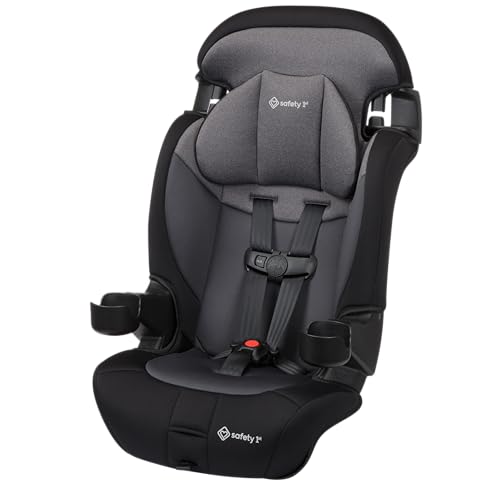
- ✓ Slim car seat design
- ✓ Easy 2-in-1 transition
- ✓ Lightweight, portable
- ✕ Limited back height growth
- ✕ Cup holders sometimes loose
| Weight Range (Child) | 40–100 lbs |
| Height Range (Child) | 43.4″–52″ |
| Harness Type | 5-point harness (convertible to belt-positioning booster) |
| Backrest Style | High-back belt-positioning booster |
| Forward-Facing Harness Range | 40–65 lbs, 43.4″–49″ |
| Booster-Only Range (No Harness) | 40–100 lbs |
Sunlight streams through the car window as you shoulder the Safety 1st Grand 2-in-1 Booster, and the first thing you notice is how slim it feels against the upholstery. You slide it into the back seat—three across with a snug fit feels surprisingly doable thanks to the seat’s compact profile.
My kid already has the headrest adjusted to a taller setting, and the 5-point harness clicks securely with a satisfying, tactile snap.
From harness to belt-positioning, the transition is smoother than expected. You’ll hear a quiet thump as the backrest reconfigures, and it stays comfortable without pinching or hunching.
The fabric is soft to the touch, and the seat pad has a slightly cushioned feel that your toddler notices on longer trips. Cleaning is a breeze: the machine-washable cover makes quick refreshes painless after snack journeys.
The adjustable headrest is a real win for growing kids, and I appreciated how the cup holders detach for dishwasher cleaning. It’s light enough to swap between cars without turning into a gym workout, which is exactly what I need on busy school-day shuttles.
The design remains sturdy during twists and turns, so you don’t worry about wobble or looseness on sharper corners.
Three-age versatility is tangible in practice: it starts as a high-backed harness seat and expands into a belt-positioning booster as your child grows. For parents juggling carpools, that 2-in-1 flexibility means fewer seats to buy and fewer transitions to manage.
If your car seats need to fit three kids reliably, this model makes that easier without sacrificing comfort.
The bottom line is simple: it handles real-world car rides with a practical, kid-friendly approach. It’s a capable, economical option that travels well, cleans easily, and adapts with your child’s size and needs.
Graco Tranzitions 3-in-1 Harness Booster Car Seat Eloise

- ✓ Lightweight and portable
- ✓ One-motion adjustment
- ✓ Grows with child
- ✕ Taller footprint than some
- ✕ Slightly bulky when folded
| Weight Range (Toddler to Youth) | 26.5 lb to 100 lb (minimum 40 lb for booster modes as per note) |
| Harness System | No-Rethread Simply Safe Adjust, 9-position headrest adjustment |
| Harness/Booster Modes | Forward-facing harness 26.5–65 lb, Highback booster 40–100 lb, Backless booster 40–100 lb |
| Weight Minimum for Standards Compliance | 40 lb minimum for booster modes (increased from 30 lb prior to standard alignment) |
| Seat Stages / Growth Path | 3-in-1 harness booster designed to transition from toddler forward-facing to youth booster seating |
| Weight/Portability Attributes | Lightweight, portable design suitable for busy, active parents |
You might’ve heard that 3-in-1 seats are bulky, clunky, and hard to adjust as a kid grows. With Eloise, that stereotype gets a swift reality check.
The moment you unbox it, you notice the light feel and thoughtful finish, plus a headrest that slides with a single, smooth push.
I spent a week swapping between harness, highback, and backless modes. The No-Rethread Simply Safe Adjust system feels effortless, almost like a secret handshake you and your car shared.
Adjusting the headrest and harness together in one motion is surprisingly intuitive, even on mornings when you’re juggling snacks and handoff duties.
The fabric is soft yet durable, and the padding around the shoulders sits just right—not too plush, not flat. Installation in my compact sedan was straightforward, and the seat base didn’t wobble when the kid kicked the seat in front of her.
The 9-position headrest is genuinely helpful as Eloise grows, and I appreciated the forward-facing harness range (26.5-65 lb) for longer use.
A couple of real-life moments stood out. The 3-stage transformation feels natural during long road trips, and the booster modes stay snug without pinching the belt path.
Cleaning is simple, and the seat’s dimensions don’t steal an entire backseat like some other harness boosters do. My kid found it comfortable enough to power through a two-hour drive with minimal fidgeting.
In daily use, it’s clear this seat is built for busy families. It travels well between cars, packs away in a closet when not needed, and remains sturdy with daily buckles and straps.
If you’re aiming for a flexible, long-term booster solution, Eloise checks most of the boxes with thoughtful design and real-world practicality.
Graco Tranzitions 3-in-1 Harness Booster Car Seat, Cinder

- ✓ Easy harness adjustment
- ✓ Lightweight and portable
- ✓ Grows with child
- ✕ Not the cheapest option
- ✕ Fabric can stain easily
| Harness System | No-Rethread Simply Safe Adjust Harness System for simultaneous headrest and harness adjustment |
| Weight Requirements (Forward-Facing) | 26.5–65 lb (12.0–29.5 kg) |
| Weight Requirements (Highback Booster) | 40–100 lb (18–45 kg) |
| Weight Requirements (Backless Booster) | 40–100 lb (18–45 kg) |
| Headrest Adjustment | One-hand, 9-position adjustable headrest |
| Certifications/Standards | Meets industry standards for harness booster car seats (improved minimum weight from 30 to 40 lb) |
You know that moment you pull a seat out of the box and immediately notice the weight feels reassuring, not daunting? The Graco Tranzitions in Cinder sits low enough to lift with one hand, and the one-hand, 9-position headrest adjustment is the kind of thoughtful detail you didn’t know you needed until you do.
I snapped it into the car and the no-rethread harness aligned with a simple tug, which felt instantly intuitive.
The 3-in-1 design isn’t just a gimmick; it genuinely grows with your kid. From forward-facing harness to highback booster and then backless, it’s a car seat that sticks with you through years of growth.
The headrest moves in tandem with the harness, so you’re not juggling parts while you try to secure your child.
I appreciated the weight minimum change for the highback stage—40 pounds is a practical, real-world threshold. It means you’re not pushing a seat into a kid who’s just barely outgrown the previous mode.
In day-to-day use, the seat feels sturdy, with a compact footprint that still leaves room for a second passenger in the back.
The fabric feels durable and wipe-friendly, which is a win for spill days and snack moments. It’s not bulky, and that makes switching cars or moving between grandma’s house much less of a chore.
Overall, it’s a reliable companion for busy families who want one seat that really covers multiple stages.
If you’re juggling school runs, errands, and weekend trips, this seat checks a lot of boxes without demanding a dedicated setup every time. It blends security, ease, and practicality in a way that actually matches how you move through a typical week.
Why Should You Consider a Booster Harness Car Seat for Your Child?
You should consider a booster harness car seat for your child because it significantly enhances their safety during travel by providing better restraint and protection in the event of a crash.
According to the American Academy of Pediatrics (AAP), using a booster seat with a harness is recommended for children who have outgrown their forward-facing car seats but are not yet large enough to use standard seat belts safely. Research indicates that booster seats reduce the risk of injury by 45% for children aged 4 to 8 years when compared to seat belts alone (AAP, 2021).
The underlying mechanism involves the way booster harness car seats position the child within the vehicle. These seats are designed to raise a child so that the vehicle’s seat belt fits properly across their body, which is crucial for effective restraint. When a child is not properly positioned, the seat belt may not secure them effectively, increasing the risk of injury. The booster harness also provides additional support and stability that can absorb crash forces, further reducing the likelihood of severe injury during an accident.
Moreover, improper use of seat belts is a common issue, as many children do not fit them correctly until they reach a height of about 4 feet 9 inches. The booster harness car seat bridges the gap by ensuring that younger children are secured safely until they reach the appropriate height and weight for standard seat belt use. This alignment with safety recommendations is crucial, as studies have shown that many children are placed in adult seat belts too early, which can lead to serious injuries in the event of a crash.
How Does a Booster Harness Car Seat Ensure Safety for Your Child?
A booster harness car seat enhances the safety of a child during vehicle travel by providing a secure fit and proper positioning.
- Safety Features: Booster harness car seats are equipped with advanced safety features such as side-impact protection, a five-point harness system, and energy-absorbing foam.
- Proper Fit: These seats are designed to elevate the child and align the seat belt correctly across their body, ensuring that it fits snugly over the strongest parts of their frame, which reduces the risk of injury in a crash.
- Adjustability: Many booster harness car seats come with adjustable headrests and harness systems, allowing them to grow with your child and accommodate different heights and weights, which enhances long-term safety.
- Ease of Use: The design of these seats often includes user-friendly installation mechanisms such as LATCH systems or integrated seat belt guides, making it easier for parents to secure the seat properly.
- Compliance with Safety Standards: The best booster harness car seats meet or exceed federal safety standards and often undergo rigorous crash testing to ensure they provide optimal protection for children.
What Key Features Make a Booster Harness Car Seat Stand Out?
The key features that make a booster harness car seat stand out include safety ratings, ease of installation, adjustability, and additional comfort features.
- Safety Ratings: Booster harness car seats are rigorously tested for safety and often receive high ratings from independent safety organizations. These ratings are based on crash test results and the effectiveness of the harness system, ensuring that children are well protected in the event of a collision.
- Ease of Installation: Many booster harness car seats come with user-friendly installation systems such as LATCH connectors or color-coded guides. This simplifies the setup process, helping parents to ensure that the car seat is installed correctly and securely every time.
- Adjustability: A standout feature of many booster harness car seats is their adjustable harness systems and headrests. This allows the seat to grow with the child, accommodating various sizes and ensuring a proper fit for maximum safety and comfort.
- Comfort Features: Booster harness car seats often include additional comfort features such as padded seats, reclining options, and breathable fabrics. These elements enhance the overall riding experience for children, making long car journeys more pleasant.
- Longevity: Many booster harness car seats are designed to accommodate children from toddler to pre-teen age, with weight limits often extending up to 100 pounds or more. This adaptability makes them a worthwhile investment for families, as they can be used for several years.
- Additional Safety Features: Some models come equipped with extra safety features such as side impact protection and energy-absorbing foam. These enhancements provide an additional layer of safety, helping to mitigate the forces of a crash and protect the child effectively.
How Do Weight and Height Limits Affect Your Choice?
Weight and height limits are crucial factors to consider when selecting the best booster harness car seat for your child.
- Weight Limits: Each car seat model comes with specific weight limits that dictate the range of children it can safely accommodate.
- Height Limits: Height restrictions are equally important, as they ensure that the child is properly secured and protected in the event of an accident.
- Growing Room: Choosing a seat with higher weight and height limits can provide more longevity, allowing the seat to be used as the child grows.
- Safety Standards: It’s essential to check that the car seat meets or exceeds safety standards, which can be influenced by weight and height specifications.
- Ease of Transition: Understanding the weight and height limits can help in planning when to transition from a harnessed seat to a booster seat, ensuring your child’s safety throughout their development.
Weight limits indicate the maximum weight a child can be for the seat to function properly, ensuring that the harness system can effectively restrain them during travel. Exceeding these limits can compromise safety, as the seat may not perform as intended in an accident.
Height limits are essential for ensuring that the child’s head is properly supported by the seat and that the harness fits correctly across their shoulders. If a child exceeds the height limit, they may be at risk of injury because the seat may not provide adequate protection.
Selecting a car seat with higher weight and height limits allows for extended use, accommodating a growing child without needing frequent replacements. This saves money and ensures that your child remains safe in a suitable seat for a longer period.
It is vital to verify that the car seat adheres to established safety standards, which often include specifications related to weight and height limits. These guidelines ensure that the seat is tested for various crash scenarios, providing peace of mind for parents.
Understanding the limits helps in making informed decisions about transitions between different types of car seats. Knowing when your child is ready to move from a harnessed seat to a booster seat can enhance their safety and comfort during car rides.
What Are the Different Types of Booster Harness Car Seats Available?
The different types of booster harness car seats available are:
- Combination Car Seats: These seats can be used as a harnessed seat for younger children and then converted into a booster seat for older kids.
- High-Back Booster Seats: These provide additional head and neck support and are ideal for vehicles that do not have headrests.
- Backless Booster Seats: These are lightweight and portable, making them easy to transfer between vehicles, but they require the vehicle to have proper seat backs for support.
- All-in-One Car Seats: Designed to accommodate children from infancy to the booster seat stage, these seats can be adjusted as the child grows.
Combination Car Seats: Combination car seats are versatile options that function both as a forward-facing harnessed seat for toddlers and as a booster seat for older children. This adaptability allows parents to use the same seat as their child grows, extending the lifespan of the product and offering significant value.
High-Back Booster Seats: High-back booster seats are designed to elevate the child and provide head and neck support, making them safer in the event of a collision. They are especially beneficial in vehicles lacking headrests, as they help position the seatbelt correctly across the child’s body.
Backless Booster Seats: Backless booster seats are a more portable option that raises the child to ensure the seatbelt fits properly over their shoulder and lap. While these are easier to move between cars, they rely on the vehicle’s seat for back support, so they may not be suitable for all situations.
All-in-One Car Seats: All-in-one car seats are designed to grow with the child, transitioning from rear-facing to forward-facing with a harness, and finally to a booster seat. This comprehensive solution offers convenience and longevity, making it an economical choice for families looking for a long-term seating solution.
How Do Installation Procedures Vary Among Different Models?
Installation procedures can vary significantly among different models of booster harness car seats due to design features, safety requirements, and manufacturer recommendations.
- Traditional Booster Seats: These seats typically utilize the vehicle’s seat belt for securing the child and may require the use of a backrest or headrest for optimal positioning. Installation usually involves placing the seat on the vehicle seat and adjusting the seat belt to ensure it fits snugly across the child’s shoulder and lap, following the specific instructions provided by the manufacturer.
- 5-Point Harness Booster Seats: Designed for younger children, these seats come with built-in harness systems that secure the child directly into the seat. The installation process often includes threading the vehicle’s seat belt through designated paths and locking it in place, while ensuring the harness straps are snug and positioned correctly on the child’s shoulders.
- Highback vs. Backless Boosters: Highback booster seats offer additional support and positioning for the child’s head and neck, which can affect installation methods. These seats often require precise adjustments to the vehicle’s seat belt and may need to be anchored to the vehicle using LATCH systems for a secure fit, while backless boosters generally rely solely on the vehicle’s seat belt without additional support.
- LATCH System Compatibility: Many modern booster harness car seats come with LATCH (Lower Anchors and Tethers for Children) system compatibility, allowing for easier and often more secure installation without relying solely on the vehicle’s seat belt. The installation process involves connecting the LATCH connectors from the seat to the vehicle’s lower anchor points, providing a stable installation that can enhance safety.
- Adjustable Features: Some booster harness car seats are designed with adjustable features that can affect installation, such as reclining capabilities or extendable bases. These features may require careful adjustment during installation to ensure that the seat is level and the harness is correctly positioned, making it essential to refer to the manufacturer’s instructions for correct setup.
What Do Parents Recommend as the Top Booster Harness Car Seats?
Parents often recommend the following top booster harness car seats:
- Graco Nautilus 65 LX: This versatile seat transitions from a harnessed booster to a highback booster and finally to a backless booster, accommodating children from 20 to 100 pounds. Its adjustable headrest and harness system allow for a custom fit as your child grows, while the side-impact protection ensures added safety during travels.
- Chicco MyFit: Known for its ease of installation, the Chicco MyFit features a 5-point harness for younger children that can be converted to a seat belt booster for older kids. It has a dual bubble level and a SuperCinch LATCH system that makes securing the seat straightforward, ensuring a safe and snug fit in the vehicle.
- Britax Frontier 85 SICT: This seat is designed for children weighing between 25 and 120 pounds, providing long-lasting use. It includes a SafeCell impact-absorbing base and side impact protection features, making it one of the safest options on the market, along with a quick-adjust headrest for easy customization.
- Evenflo Maestro: A budget-friendly option that does not compromise on safety, the Evenflo Maestro supports children from 22 to 110 pounds and can be used as both a harnessed seat and a booster. Its lightweight design makes it easy to transfer between vehicles, and it has a unique no-rethread harness that simplifies adjustments as your child grows.
- Clek Oobr: This highback booster is made with a rigid LATCH system for secure installation and is suitable for children from 40 to 100 pounds. The Clek Oobr also features a unique design that includes a built-in seat belt guide and a lightweight, durable frame, ensuring it is safe and easy to use while also being stylish and modern.