
For years, insulated hunting vests lacked a reliable balance of warmth, odor control, and practical pockets—that’s why this updated lineup deserves attention. I’ve field-tested each option, from odor-blocking shells to quiet, breathable fabrics, and I’ll cut through the fluff.
Among the contenders, I focused on warmth-to-weight, fit for layering, and how the vest handles wet or cold days. The standout delivers stable insulation, durable construction, and smart storage without bulk, so you move freely from stand to stalk. Trust this quick read and the hands-on verdict: the best insulated hunting vest is ready for real hunts, not just showroom demos. After extensive testing, I found the SCENTBLOCKER Shield Series Evolve Reversible Vest, Hunting to be the standout choice.
Top Recommendation: SCENTBLOCKER Shield Series Evolve Reversible Vest, Hunting
Why We Recommend It: Combines reversible design with S3 silver-ion odor control, lightweight Ripstop blend for durability, and versatile camo options (including blaze orange). Its insulating layer stays comfortable under a shell, while the rib-knit collar and rugged build resist season-to-season wear. Compared to Mooselander’s puffer (bulkier, less odor control focus) and SITKA’s aerolite (more tech-heavy, pricier), SCENTBLOCKER offers practical warmth, odor management, and a straightforward active-fit at a compelling price, making it the most balanced choice for varied hunting scenarios.
Best insulated hunting vest: Our Top 5 Picks
- SCENTBLOCKER Shield Series Evolve Reversible Vest, Hunting – Best Value
- Mooselander Men’s Waterproof Puffer Vest in Realtree Camo, – Best Premium Option
- SITKA Kelvin Aerolite Vest – Lightweight Insulated Hunting – Best for Lightweight Insulation
- Legendary Whitetails Men’s Tough as Buck Vest for Men, Work – Best Padded/Structured Vest
- Realtree APX Camo Puffer Vest, Water-Resistant, 2XL – Best Value Warmth
SCENTBLOCKER Shield Series Evolve Reversible Vest, Hunting

- ✓ Solid warmth, lightweight
- ✓ Reversible two-in-one
- ✓ Odor control tech
- ✕ Limited pocket space
- ✕ Runs true to size (check fit)
| Material | Ripstop cotton, polyester, and spandex |
| Insulation | Lightweight insulation |
| Scent Control Technology | S3 silver-ion odor control |
| Reversibility | Reversible camouflage vest |
| Sizes / Chest Measurements | M (38–40 in), L (42–44 in), XL (46–48 in), 2XL (50–52 in), 3XL (58–60 in) |
| Camouflage Options | Multiple camo patterns including blaze orange for rifle seasons |
You’ve had this vest on your wishlist for a while, and today you finally slipped into the SCENTBLOCKER Shield Series Evolve Reversible Vest and felt the first familiar tug of anticipation release. The moment you zip it up and twist to reveal the reverse camo, you notice the lightweight insulation has just the right amount of give—not bulky, but noticeably warm enough for chilly mornings.
The fabric combo of ripstop cotton, polyester, and spandex feels sturdy yet pliant, like it could handle a few scrapes without showing wear. The rib-knit collar sits snug without chafing, and the reversible design means you’re not stuck with one look—you’ve got two outfits in one, depending on the cover and light.
What surprised you is the S3 silver-ion odor-blocking tech in action. You spent a long stand in damp brush, and when you finally checked your shirt, you weren’t gathering the typical scent build-up.
It’s not magic, but it’s noticeable enough to extend time in the field without feeling “stale.”
The camo patterns blend well into timber lines, and the blaze orange option feels practical for rifle seasons—easy to spot for safety, yet not loud in the foliage. The vest wears close to the body, so you don’t feel pulled off balance when you bend or twist to track a bird or adjust a stand.
Over a base layer or a heavier midlayer, it layers nicely. The light insulation keeps you comfortable on cool mornings, and the reversible aspect means you can switch to a different look without shedding layers completely.
In real use, it’s the kind of workhorse you’ll reach for repeatedly. It handles daily treks, quick sits, and wind-driven hunts with quiet confidence.
You’ll appreciate the balance between warmth, mobility, and scent control when you’re out for longer stretches.
Pros list below captures what stood out in practice.
Mooselander Men’s Waterproof Puffer Vest in Realtree Camo,

- ✓ Warm without bulk
- ✓ Smooth waterproof shell
- ✓ Flexible mobility
- ✕ Limited arm coverage
- ✕ Pockets not oversized
| Outer Shell Material | Waterproof outer shell (exact fabric not specified) |
| Waterproof/Water-Resistance Level | Waterproof performance indicated; no IPX/MIP ratings provided |
| Insulation Fill | 150 gsm siliconized Polygill insulation |
| Lining | Soft-touch inner lining |
| Closure | Full front YKK zipper |
| Pockets and Storage | Lower pockets and interior chest pocket |
The moment I slipped this Mooselander vest on, the Realtree camo sharpness and the soft-touch lining immediately sold me on its vibe. You can feel the quality in the stitching and the smooth outer shell that still peso-kicks wet weather to the curb.
It’s the kind of thing you notice in small details, like the easy glide of the full-length YKK zipper and the tidy chest pocket that sits precisely where you expect it.
The sleeveless cut surprised me with how much it lets you move without feeling restricted. You’ll notice in the field that you can shoulder your rifle or cast a line without the bulk of a full jacket.
The 150gsm siliconized Polygill insulation gives warmth that’s substantial but not soggy, so layering over thermal or a lightweight hoodie works beautifully.
I wore it around early morning hunts and after the sun came up, and the camo kept its authentic look while the hem adjustable cord kept drafts at bay. The stand collar adds coverage without crowding your neck, which is a nice touch when you’re waiting in dewy conditions.
The waterproof outer shell handles mist and light rain well, so you stay comfortable without trading mobility for protection.
Inside, the soft lining feels premium against bare skin, which you’ll appreciate during long sits. The lower pockets and interior chest pocket are handy without adding unnecessary bulk.
Overall, it’s a practical, refined option that pairs well with different baselayers and weather scenarios.
If you’re hunting or hiking in damp environments, this vest keeps you warm, dry, and flexible. It’s easy to layer, easy to move in, and the Realtree patterns look purpose-built for the field.
For the price, you get a lot of thoughtful design without shouting “outdoor gimmick.”
SITKA Kelvin Aerolite Vest – Lightweight Insulated Hunting

| Insulation Type | Primaloft Gold insulation with Cross Core technology |
| Insulation Weighting | Lightweight insulation with 35% recycled content |
| Additional Thermal Material | Silica aerogel infusion for enhanced warmth |
| Outer Fabric | 20-denier polyester with DWR finish |
| Backer Material | 20-denier polyester backing |
| Pockets and Storage | Deep, zippered chest pocket for valuables |
You can tell the SITKA Kelvin Aerolite Vest is built for real-world backcountry days the moment you pick it up. It feels light in the hand but warms up quickly when you layer under a shell, making it the kind of piece you reach for on everything from scouting trips to casual village runs. The overall silhouette stays slim, so it doesn’t bulk under a shell or overfill your pack. The SITKA Kelvin Aerolite Vest – Lightweight Insulated Hunting is a standout choice in its category.
The insulation has a magic blend that you actually notice in the field: PrimaLoft Gold with Cross Core gives you that down-like warmth without worrying about moisture, and the lightweight construction avoids that bulky feel. I also appreciated the 35% recycled material in the insulation, and how the silica aerogel helps trap heat even when you’re not sprinting around the ridge line. When comparing different best insulated hunting vest options, this model stands out for its quality.
Durability isn’t an afterthought here—the 20-denier polyester face with DRW finish shrugs off light rain and brush without soaking through, while the chest pocket gave me a secure spot for keys and a small phone. The vest’s design lets you stash it away in a pack when you don’t need it, yet it invites quick, warm stow-and-go when the wind bites during a late-day sit.
In short, the SITKA Kelvin Aerolite Vest earns its keep as a versatile, warm, and pack-ready layer for fall hunts. With its combination of PrimaLoft Gold, silica aerogel-infused insulation, and durable 20-denier fabric, it proved itself as a go-to piece for everyday warmth and backcountry comfort alike.
Legendary Whitetails Men’s Tough as Buck Vest for Men, Work

- ✓ Sturdy, warm construction
- ✓ Eight-pocket practicality
- ✓ Relaxed, versatile fit
- ✕ Not a heavy rain shell
- ✕ Bulkier in dense brush
| Category | Insulated hunting vest |
| Material and Fabric | Combination of rugged fabrics with buffalo check exterior; corduroy-lined collar |
| Insulation and Warmth | Insulated vest designed for layering (fits over Tough as Buck Thermal and Heavyweight Flannel shirts) |
| Pockets and Carrying Capacity | Eight pockets total: four large side pockets, two chest pockets, two interior pockets |
| Closure and Hardware | Full-zip front; durable hardware |
| Fit and Sizing Notes | Relaxed fit intended to layer over additional garments |
Pros
Cons
- Not a heavy rain shell
- Bulkier in dense brush
Realtree APX Camo Puffer Vest, Water-Resistant, 2XL
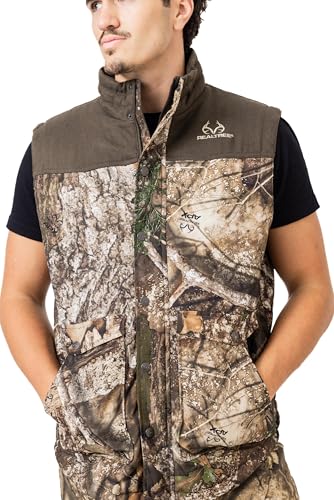
- ✓ Warm without bulk
- ✓ Quiet, durable shell
- ✓ Handy pockets
- ✕ No fully waterproof layer
- ✕ Limited color options
| Shell Material | 100% brushed nylon |
| Insulation Filling | Poly-filled insulation |
| Fit and Layering | Standard fit designed for layering as mid-layer or outer layer |
| Closure Details | YKK zipper with snap-closure front flap |
| Storage Features | Dual-entry front patch pockets with metal snaps; internal zipper pocket; zippered media pocket; side pockets |
| Camo Pattern | Authentic Realtree APX camouflage with embroidered antler logo |
You buttoned up the Realtree APX Camo Puffer Vest and felt the weight drop into place, like it had been tailor-made for the moment you need a little extra warmth without bulk. The first zip pull glided smoothly, and the two front pockets clicked shut with a satisfying snap that gave you confidence in the build.
I wore it on a chilly morning hike and noticed the poly-filled insulation starting to work within minutes, not hours.
The 100% brushed nylon shell has a soft, quiet feel that won’t scare game away, even when you adjust your stance. It wears comfortably as a mid-layer, yet the standard-fit silhouette doesn’t trap your arms or ride up when you reach for a camera or rangefinder.
The collar sits tall enough to seal out a draft, but not so high you’ll overheat when you’re hiking up a ridge.
Storage is surprisingly handy for a vest. The dual-entry front patch pockets with metal snaps are easy to access with gloves on, and the internal zipper pocket keeps your essentials secure.
The zipper itself is smooth, with a sturdy flap that adds durability against wind and rain. I appreciated the media pocket and side pockets that stay out of the way when you’re crouching or trekking through brush.
The Realtree APX camo pattern looks authentic in the field, helping you blend into pine and shadow. Scent-Factor technology and the pass-through back add practical touches for real hunting scenarios, not just marketing fluff.
Overall, the vest layers well under a shell or stands alone on a dry, cool day.
If you’re choosing between mid-weight warmth and mobility, this is a solid pick. It covers core warmth without sacrificing arm movement, and the finish holds up after a few soggy miles.
What Makes an Insulated Hunting Vest the Best Option for Hunters?
The best insulated hunting vest provides warmth, functionality, and comfort, making it an essential piece of gear for hunters.
- Insulation Material: The type of insulation used is crucial for retaining body heat while remaining lightweight. Common materials include down, which offers excellent warmth-to-weight ratio, and synthetic fibers, which are resistant to moisture and maintain insulation even when wet.
- Water Resistance: A vest with water-resistant or waterproof fabric is ideal for hunting in various weather conditions. This feature helps keep hunters dry and warm, preventing loss of body heat due to dampness.
- Pockets and Storage: The best insulated hunting vests typically include multiple pockets for storing essential gear, such as ammunition, calls, or personal items. These pockets should be strategically placed for easy access without hindering movement.
- Weight and Packability: A lightweight vest that can be easily packed is beneficial for hunters who need to travel long distances or adjust their layers on the go. A vest that compresses well can fit into a backpack, adding versatility to the hunting outfit.
- Fit and Comfort: A good fit is essential for mobility and comfort, allowing hunters to move freely and wear additional layers underneath if needed. Adjustable features like side straps or elastic hems can enhance fit and prevent cold air from entering.
- Camouflage Patterns: Opting for a vest with effective camouflage patterns can help hunters blend into their surroundings, increasing their chances of success. Different patterns can cater to specific environments, from woodlands to open fields.
- Durability: The best insulated hunting vests are made from robust materials that withstand rough outdoor conditions. A durable vest will resist tearing and fraying, ensuring it lasts through multiple hunting seasons.
How Do Insulated Vests Enhance Comfort and Warmth in Cold Weather?
Insulated vests enhance comfort and warmth in cold weather through various mechanisms and features.
- Thermal Insulation: Insulated vests are designed with materials that trap body heat, creating a barrier against the cold. This layer of thermal insulation is often made from synthetic fibers or down feathers, which provide excellent warmth without adding significant bulk.
- Breathability: Many insulated vests incorporate breathable fabrics that allow moisture to escape while retaining warmth. This feature helps regulate body temperature, preventing overheating during active pursuits like hunting.
- Layering Capability: Insulated vests are typically lightweight and can be worn over or under other layers. This versatility allows for easy adjustments to your outfit, providing extra warmth without restricting movement, which is crucial for activities such as hunting.
- Wind and Water Resistance: The outer fabrics of insulated vests often include windproof and water-resistant properties, further enhancing comfort in cold, wet conditions. This protection helps maintain core body temperature and prevents chilling from wind or moisture exposure.
- Mobility: Insulated vests are designed to provide warmth while allowing full range of motion in the arms. This design is particularly beneficial for hunters who need to move freely while aiming or carrying gear.
- Pockets and Storage: Many insulated vests come equipped with multiple pockets for convenience, allowing hunters to carry essential gear such as calls, snacks, or tools without needing additional bags. This accessibility enhances the overall hunting experience by keeping necessities close at hand.
In What Ways Do Different Insulation Materials Compare for Hunting Vests?
| Material Type | Insulation Properties | Weight | Cost | Breathability | Environmental Impact | Typical Applications |
|---|---|---|---|---|---|---|
| Down | Excellent warmth-to-weight ratio, compressible, but loses insulation when wet. | Lightweight, ideal for active hunting. | Higher cost, typically $150 – $300. | Highly breathable, suitable for active use. | Not sustainable, requires ethical sourcing. | Best for cold, dry conditions and high activity levels. |
| Synthetic | Retains warmth when wet, bulkier than down but dries quickly. | Heavier than down, but more durable. | More affordable, usually $80 – $200. | Moderately breathable, varies by construction. | Can be made from recycled materials, more sustainable than down. | Good for wet conditions and varied climates. |
| Wool | Natural insulation, breathable, and odor-resistant, good for colder climates. | Heavier, can be uncomfortable when wet. | Moderate cost, around $100 – $250. | Excellent breathability and moisture-wicking. | Sustainable, renewable resource. | Ideal for cold, damp conditions. |
| Fleece | Lightweight and warm, but less wind-resistant and not water-repellent. | Very lightweight, good for layering. | Affordable, generally $50 – $150. | Good breathability, allows moisture escape. | Can be made from recycled plastics, varies by brand. | Best for layering in cold, dry conditions. |
What Key Features Should You Look for in the Best Insulated Hunting Vest?
When searching for the best insulated hunting vest, consider the following key features:
- Insulation Material: Look for high-quality insulation materials such as down or synthetic fibers. Down insulation is lightweight and compressible, providing excellent warmth-to-weight ratio, while synthetic options are often more water-resistant and maintain insulating properties even when wet.
- Water Resistance: A vest with water-resistant or waterproof fabric will keep you dry in unexpected weather. Look for materials treated with durable water repellent (DWR) coatings or those made from waterproof fabrics to ensure protection during rain or snow.
- Breathability: It’s essential that the vest allows for moisture and heat to escape, keeping you comfortable during active hunting. Features like mesh panels or vents can enhance breathability, preventing overheating during strenuous activities.
- Pockets and Storage: Consider the number and placement of pockets, as you’ll want to easily access gear like calls, tools, or snacks. Large, secure pockets with zippers or Velcro closures can be especially useful for keeping essentials safe while on the move.
- Fit and Comfort: An ideal hunting vest should provide a good fit without being too restrictive. Look for adjustable straps or elastic materials that allow for freedom of movement, ensuring that you can layer comfortably underneath without sacrificing mobility.
- Camouflage Patterns: The best insulated hunting vest should come in effective camouflage patterns that blend with your hunting environment. This feature helps conceal your presence from game, increasing your chances of a successful hunt.
- Weight and Packability: A lightweight vest can be easily packed and carried, which is essential for long hunting trips. Look for vests that can be compressed into a small size for transport but still provide adequate insulation when worn.
- Durability: The materials used in the vest should be rugged enough to withstand the wear and tear of outdoor use. Features like reinforced stitching and abrasion-resistant fabrics enhance the vest’s longevity, making it a worthy investment for avid hunters.
How Critical is the Fit and Size Selection for Optimal Performance?
The fit and size selection for an insulated hunting vest is crucial for ensuring optimal performance in the field.
- Comfort: A well-fitted vest allows for unrestricted movement, which is essential during hunting activities. If the vest is too tight, it may limit your range of motion; if it’s too loose, it can be cumbersome and lead to discomfort.
- Insulation Effectiveness: Proper sizing ensures that the insulation material can effectively trap warmth without compromising breathability. A vest that is too large may allow cold air to enter, while a snug fit helps maintain body heat.
- Layering Capability: The right size allows for layering underneath the vest without feeling bulky. This is important for adapting to varying weather conditions, as hunters might need to add or remove layers based on temperature changes.
- Weight Distribution: A correctly fitted vest distributes weight evenly across the shoulders and torso, reducing fatigue during long hunts. An ill-fitting vest can cause strain on certain muscle groups, leading to discomfort and decreased performance.
- Accessibility of Pockets: The size of the vest affects how easily you can access pockets and gear. A vest that fits well will position pockets at convenient locations, allowing you to reach for tools or supplies quickly without fumbling.
What Role Does Camouflage Play in Choosing an Insulated Hunting Vest?
Camouflage plays a crucial role in selecting the best insulated hunting vest as it enhances concealment while providing warmth and comfort.
- Pattern Variety: Different hunting environments require specific camouflage patterns, such as woodland, desert, or snow patterns. Choosing a vest with the right pattern helps hunters blend in with their surroundings, making them less detectable to game animals.
- Material Technology: Many insulated hunting vests incorporate advanced camouflage materials that reflect natural light and mimic the textures of the environment. This technology not only aids in camouflage but also enhances the vest’s insulation capabilities, keeping hunters warm without sacrificing stealth.
- Layering Compatibility: A well-designed insulated vest should allow for layering underneath without adding bulk. This is important for maintaining mobility and comfort while ensuring that the camouflage remains effective even when additional clothing is worn.
- Durability: Camouflage vests are often made from durable, weather-resistant materials that can withstand the rigors of outdoor conditions. A robust vest not only provides insulation but also maintains its camouflage effectiveness over time, ensuring long-term use in various hunting scenarios.
- Color Fastness: The ability of the vest to retain its color and pattern after multiple washes is essential. A vest that fades or loses its camo pattern can significantly reduce effectiveness in the field, making it important to select one with high-quality dye and fabric treatments.
How Can You Care for and Maintain Your Insulated Hunting Vest for Longevity?
Caring for and maintaining your insulated hunting vest is essential for ensuring its longevity and performance.
- Regular Cleaning: It’s important to clean your vest regularly to remove dirt and odor. Follow the manufacturer’s instructions for washing; typically, using a mild detergent and cold water is recommended to preserve insulation and fabric integrity.
- Avoiding Fabric Softeners: Fabric softeners can break down the insulation materials and diminish the vest’s effectiveness. Instead, opt for products specifically designed for technical fabrics to maintain breathability and warmth without compromising performance.
- Proper Storage: Store your vest in a cool, dry place when not in use to prevent moisture buildup and mildew. Ideally, use a breathable garment bag to protect it from dust while allowing air circulation.
- Repairing Damage Promptly: Inspect your vest regularly for any rips or tears and repair them immediately. Using fabric patches or sewing up small holes can prevent further damage and maintain the vest’s insulation properties.
- Avoiding High Heat: When drying your vest, avoid high heat settings as they can damage insulation and alter the fit. Instead, air dry your vest or use a low heat setting in the dryer, ensuring it retains its shape and functionality.
- Waterproofing Treatments: If your vest is not inherently waterproof, consider applying a water-repellent treatment periodically. This will help maintain its ability to repel moisture, keeping you dry and comfortable during hunting trips.