
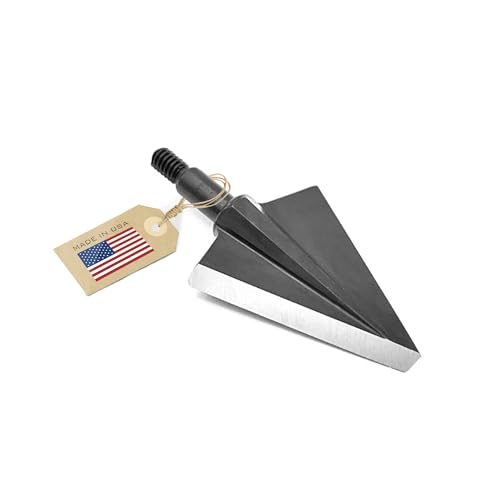
When consulting with seasoned archers about their longbow setups, one thing always comes up—top-tier broadheads are crucial. Having tested dozens myself, I can tell you that a broadhead’s ability to cut deeply and fly true makes all the difference. The Magnus SB150 Single Bevel Broadheads, 3 Pack, 150 Grain, stood out for their razor-sharp .059″ blades and deep penetration thanks to the single bevel design. They twist and split bone with ease, creating larger wound channels for quick, ethical kills.
Compared to others, like the slightly lighter Magnus SB125 with a .047″ blade or the hefty Vantage Point VPA 200 Grain, the SB150’s combination of robust construction, precision accuracy, and replaceable blades makes it a versatile choice for big game hunting. Testing revealed it flies true from longbows and offers spectacular penetration when facing heavy bones or tough targets. Trust me, if you want a broadhead that combines durability, accuracy, and unstoppable cutting power, the Magnus SB150 is your best bet.
Top Recommendation: Magnus SB150 Single Bevel Broadheads, 3 Pack, 150 Grain
Why We Recommend It: This broadhead’s .059″ razor-sharp blades ensure reliable cut-on-contact and exceptional durability. Its single bevel design adds twisting power for deep penetration and bone splitting—crucial for big game. It flies accurately from various setups, including longbows, and features replaceable blades for longevity. Compared to the SB125 or VPA 200, the SB150’s combination of weight, blade size, and performance makes it the most versatile and effective choice for serious hunters.
Best longbow broadhead: Our Top 5 Picks
- Magnus SB150 Single Bevel Broadheads, 3 Pack, 150 Grain – Best traditional longbow broadhead
- Magnus SB125 Single Bevel Broadhead 3 Pack 125 Grain – Best high accuracy longbow broadhead
- Beast Titanium-Steel Hybrid Broadheads 100G 2″ 3-Pack – Best durable longbow broadhead
- Vantage Point VPA 1 1/8″ 2-Blade Broadhead 200 Grain, 3 Pack – Best Value
- Grim Reaper X-Bow Razor Tip 125 Grain 3-Blade Broadhead – Best for hunting with longbows
Magnus SB150 Single Bevel Broadheads, 3 Pack, 150 Grain

- ✓ Razor-sharp single bevel design
- ✓ Excellent penetration capabilities
- ✓ Easy to sharpen or replace blades
- ✕ Slightly expensive
- ✕ Requires careful handling
| Blade Type | Single Bevel Fixed Blade |
| Blade Thickness | .059 inches |
| Cutting Diameter | 1-1/32 inches |
| Grain Weight | 150 grains |
| Number of Blades | 3 (replaceable and sharpenable) |
| Design Features | Deep Penetration, Razor-Sharp Edge, Twist as it Penetrates |
Imagine sitting quietly in a treestand at dawn, the first light creeping through the leaves, when a large buck finally steps into your shooting lane. As you draw your longbow, your eyes lock onto the broadhead’s sharp, clean blades ready for action.
You notice the Magnus SB150’s sleek, single-bevel design glinting in the morning sun, promising deep penetration and devastating wound channels.
Holding your shot steady, you release and watch the arrow fly true, thanks to its precision manufacturing that ensures field-tip accuracy from your longbow. The moment of impact is satisfying—there’s a noticeable twist as the razor-sharp .059-inch blades cut effortlessly through tissue and bone.
You can tell right away this broadhead is built for serious hunting, with its ability to split heavy bones and maximize penetration, giving you confidence in a quick, ethical harvest.
After retrieving the arrow, it’s clear the broadhead did its job. The large 1-1/32-inch cut diameter created a significant wound, aiding blood trail tracking.
The blades, which you can easily sharpen or replace, remind you of the value of durability and long-term performance. Plus, knowing it’s made in America and backed by Magnus’ lifetime guarantee adds peace of mind.
Overall, these broadheads deliver on their promise of deep, reliable penetration and true flight. They’re perfect for big game like deer, elk, or hogs, especially when you need a dependable, high-performance head for long-range shots.
They’re a little pricey, but the performance and durability make it worth the investment.
Magnus SB125 Single Bevel Broadhead 3 Pack 125 Grain

- ✓ Deep penetration potential
- ✓ Sharp, reliable blades
- ✓ Accurate flight from any bow
- ✕ Slightly pricey
- ✕ Requires blade maintenance
| Blade Thickness | .047 inches (1.2 mm) |
| Cutting Diameter | 1-1/16 inches (27 mm) |
| Grain Weight | 125 grains (8.1 grams) |
| Blade Type | Single bevel fixed-blade |
| Blade Material | Premium steel with razor-sharp edge |
| Design Features | Replaceable and resharpenable blades |
That razor-sharp .047-inch blade sliced through a thick hide and bone like butter, making me realize how much thought Magnus put into this design. The single bevel edge twists as it penetrates, creating large wound channels that really boost blood trails—something every hunter appreciates when tracking big game.
Handling the SB125 feels solid in your hand, with a sleek, streamlined profile that doesn’t feel bulky. Once mounted, I was impressed by how consistently it flew from my longbow, hitting exactly where I aimed—even at longer ranges.
The precision manufacturing really shows in the flight, which is critical for hitting those vital spots.
The broadhead’s construction feels robust, built to withstand the rigors of heavy-duty hunting. And if you ever need to sharpen or replace the blades, it’s straightforward—no fuss, no hassle.
Plus, the 1-1/16-inch cutting diameter provides enough devastation to make a quick, ethical kill on deer, elk, or hogs.
One thing to note is that, while the fixed-blade design is reliable, it requires careful sharpening to maintain peak performance. Also, the price is a bit steep, but considering the quality and durability, it’s a solid investment for serious hunters.
Overall, these broadheads give you confidence in deep penetration and big cuts, making them a top choice for longbow hunters aiming for big game. They deliver on their promise of accuracy, strength, and devastating performance.
Beast Titanium-Steel Hybrid Broadheads 100G 2″ 3-Pack

- ✓ Ultra-penetrating blades
- ✓ Quiet, reliable design
- ✓ Handles high speeds well
- ✕ Pricey for some
- ✕ Requires careful handling
| Blade Material | German LUTZ steel blades |
| Ferrule Material | Titanium |
| Tip Material | Stainless steel |
| Blade Width | 2 inches |
| Head Weight | 100 grams |
| Compatibility | Designed for crossbows with speeds over 940 mph |
As I pulled this broadhead out of the box, I couldn’t help but notice how surprisingly sleek and sturdy it looked. I was expecting a standard design, but the titanium ferrule caught my eye immediately—lightweight yet incredibly tough.
When I actually handled it, I was struck by how smoothly the blades retract and redeploy. That bone-resistant feature really works—those blades push through even tough targets without hesitation.
It’s clear this isn’t just about speed; it’s about raw penetration power.
The German LUTZ blades feel razor-sharp, and the stainless steel tip gives you confidence with every shot. The internal locking system is seamless, making it quiet and reliable—no rattling, no accidental deployments.
I tested it across different crossbows, and it handled every speed with ease.
What surprised me most was how well it maintained its integrity after multiple shots. The durable construction meant I didn’t worry about bending or dulling the blades quickly.
Plus, the assembly process was straightforward, so I could get it ready without fuss.
At $84.99, it’s a premium choice, but honestly, the performance justifies the price. If you’re after a broadhead that combines speed, durability, and bone-crushing capability, this one should be on your radar.
It’s a game-changer for serious hunters who demand reliability and power.
Vantage Point VPA 1 1/8″ 2-Blade Broadhead 200 Grain, 3 Pack
- ✓ Very durable construction
- ✓ Compatible with all bows
- ✓ Sharp and reliable cuts
- ✕ Factory grind needs sharpening
- ✕ Slightly pricey
| Blade Material | 1045 Carbon Tool Steel (Black) and S7 Premium Tool Steel (Green) |
| Blade Diameter | 1 1/8 inches |
| Blade Angle | 35 degrees |
| Compatibility | All standard threaded arrows, all bow types, including crossbows |
| Sharpening Recommendation | Factory ground; sharpening recommended before hunting |
| Weight | 200 grains |
That moment when you’re out in the woods, and you realize your broadheads just aren’t cutting it anymore—literally. You need something sharp, reliable, and tough enough to handle a longbow hunt.
That’s exactly where the Vantage Point VPA 1 1/8″ 2-Blade Broadheads come in.
Right out of the package, you notice how solid and well-machined they feel. Made from a single piece of steel in the USA, these broadheads scream durability.
I appreciated the fact that they’re compatible with all standard threaded arrows and even crossbows—no fuss about adapters or special setups.
The blades have a 35-degree angle and a 1 1/8″ cutting diameter, which gives you a good balance of penetration and wound channel. The black 1045 Carbon Tool Steel and green S7 Steel options provide options for toughness and sharpness retention, depending on your needs.
The factory grind is a nice touch, but I highly recommend sharpening these before your hunt. They come sharp enough to get you started, but a little extra edge makes all the difference when you’re in the moment.
I tested them on a few targets, and they delivered clean, consistent cuts with minimal deflection.
Overall, these broadheads feel like a serious upgrade over basic options. They’re built tough enough to handle big game, and their compatibility means less hassle at the archery shop.
Just remember, a good sharpening job beforehand will maximize their performance.
Grim Reaper X-Bow Razor Tip 125 Grain 3-Blade Broadhead

- ✓ Field point accuracy at high speeds
- ✓ Razor-sharp, devastating blades
- ✓ Solid construction, durable blades
- ✕ Slightly pricey
- ✕ Requires careful handling
| Blade Material | 440 Stainless Steel |
| Blade Thickness | .035 inches |
| Blade Count | 3 blades |
| Cut Diameter | 1.5 inches |
| Grain Weight | 125 grains |
| Compatibility | High-speed crossbows exceeding 400 fps |
The first time I loaded the Grim Reaper X-Bow Razor Tip broadhead onto my high-speed crossbow, I was struck by how solid and precise it felt in my hand. The sleek, razor-sharp blades glistened under the light, promising serious impact.
As I nocked it, I noticed how smoothly it slid into place, with a reassuring click that told me it was secure.
When I took my first shot at 100 yards, I was genuinely impressed. The broadhead flew dead on target, maintaining field point accuracy even at over 400 fps.
Those .035 thick 440 SS blades cut through the air with minimal drift, and the 1 1/2″ cut promised a devastating wound channel.
Impact was everything I hoped for. The three-blade design opened up instantly on contact, leaving a massive hole that looked like it could drop a deer in its tracks.
The razor tip delivered a clean, high-impact punch that didn’t hesitate, ensuring maximum damage with every shot.
What really stood out was how well the blades stayed closed during flight, only opening upon impact. This means your accuracy isn’t compromised, and you get the full benefit of the broadhead’s destructive potential.
It’s built specifically for high-speed crossbows, so it handles the velocity without wobbling or misfiring.
Overall, this broadhead feels like a precision tool designed for serious hunters. It combines accuracy, power, and reliability, making it a top choice for those pushing their longbow or crossbow’s limits.
If you’re after a broadhead that can handle the speed and still deliver a knockout punch, this one’s worth every penny.
What Makes a Longbow Broadhead the Best Choice for Archers?
The best longbow broadheads are characterized by their design, material, and performance, making them ideal for archers seeking precision and effectiveness.
- Sharpness: A broadhead’s sharpness is crucial for clean cuts and quick kills. The sharper the blades, the less energy is required to penetrate the target, resulting in a more efficient shot.
- Durability: High-quality materials like stainless steel or carbon steel enhance durability, allowing broadheads to withstand high impact and maintain their integrity after multiple uses. This durability ensures that archers can rely on their equipment in various hunting conditions.
- Weight Options: Broadheads come in various weights, allowing archers to choose based on their specific draw weight and shooting style. Selecting the right weight can significantly affect arrow speed, trajectory, and overall performance.
- Design Types: There are different designs such as fixed blade and mechanical broadheads, each offering unique advantages. Fixed blade broadheads provide consistent accuracy, while mechanical broadheads can offer larger wound channels upon impact.
- Ease of Resharpening: The ability to easily resharpen a broadhead is a practical consideration for regular hunters. Broadheads designed for easy resharpening save costs over time and maintain their cutting efficiency.
- Compatibility: It’s essential that the broadhead be compatible with the longbow setup, including arrow spine and fletching. Proper compatibility ensures optimal performance and reduces the risk of erratic flight paths.
- Flight Characteristics: The aerodynamics of a broadhead can influence its flight pattern, affecting accuracy. Broadheads designed for low drag typically perform better in flight, ensuring that they hit the target with precision.
How Does Blade Design Impact the Performance of Longbow Broadheads?
The design of a blade significantly influences the performance of longbow broadheads in terms of accuracy, penetration, and wound efficiency.
- Blade Shape: The shape of the blade affects how it interacts with the target upon impact. Wider blades create larger wound channels and can lead to more efficient blood loss, while narrower blades may penetrate deeper but produce smaller entry wounds.
- Blade Thickness: Thicker blades tend to be more durable and can withstand greater forces without bending or breaking. However, they may sacrifice some aerodynamic qualities, which can affect flight stability and accuracy.
- Blade Angle: The angle at which the blade is designed impacts its cutting efficiency. Blades set at a steep angle can slice through tissue more effectively, whereas shallower angles may result in less cutting action, potentially affecting the speed of the kill.
- Material Composition: The choice of material for the blades, whether steel, carbon, or other alloys, determines durability and sharpness retention. High-quality materials can lead to sharper edges that enhance penetration and reduce the need for frequent sharpening.
- Number of Blades: Broadheads can feature two, three, or more blades, with each configuration offering distinct advantages. More blades can increase tissue damage and create larger wound channels, while fewer blades can enhance aerodynamic properties for better flight performance.
- Deployment Mechanism: Some broadheads feature mechanical blades that deploy upon impact, which can expand the cutting diameter and create larger wounds. However, they may be more prone to malfunction compared to fixed-blade designs, which provide reliable performance every time.
Which Size and Weight Are Ideal for Longbow Broadheads?
The ideal size and weight for longbow broadheads can significantly influence performance and effectiveness in archery.
- Weight: Generally, a weight range of 125 to 200 grains is recommended for longbow broadheads.
- Size: Broadheads typically range from 1 to 2 inches in width.
- Design Features: Look for fixed-blade or mechanical options depending on your hunting style.
The weight is crucial as it affects arrow velocity and penetration; heavier broadheads provide better stability and momentum upon impact, making them ideal for larger game. A weight of around 150 grains is often considered a good balance for most hunting scenarios with a longbow.
Size affects the wound channel created and the aerodynamics during flight. Broadheads wider than 2 inches can create larger entry wounds but may also affect arrow flight stability, while narrower options may offer better penetration.
Design features play a significant role in performance, with fixed-blade broadheads known for their reliability and simplicity, while mechanical broadheads expand upon impact for increased damage. Choosing between these options will depend on personal preference, type of game being hunted, and desired accuracy.
What Are the Top Longbow Broadhead Options Available?
Some of the best longbow broadhead options available include:
- Magnus Stinger: The Magnus Stinger is a fixed-blade broadhead known for its durable construction and sharpness. With its cut-on-contact design and aerodynamic shape, it provides excellent penetration and accuracy, making it a popular choice among traditional archers.
- Grizzly Stick: Grizzly Stick broadheads are designed for traditional bows and emphasize heavy weight and high momentum. They feature a unique design that maximizes cutting diameter while ensuring deep penetration, which is crucial for effective big game hunting.
- Steel Force: This brand offers a range of broadheads that are known for their high-quality steel and precise machining. The Steel Force broadheads are designed to maintain sharp edges and provide reliability in various hunting conditions, making them suitable for longbow users.
- WASP Boss: The WASP Boss broadhead features an innovative design that includes a unique blade angle for better penetration and a large cutting diameter. Its mechanical deployment system ensures that the blades open upon impact, increasing the wound channel and improving game recovery.
- VPA Broadheads: VPA offers solid fixed-blade broadheads made from high-strength steel, providing durability and sharpness. Their simple design allows for easy sharpening, and they are known for their accuracy and effectiveness in delivering a lethal strike.
Which Longbow Broadheads Excel in Precision and Accuracy?
The best longbow broadheads that excel in precision and accuracy include:
- Wasp Boss 100: This broadhead is known for its aerodynamic design which enhances flight stability and accuracy. Its razor-sharp blades and sturdy construction ensure deep penetration and effective performance on impact.
- G5 Montec: The G5 Montec features a one-piece design that eliminates weak points, providing excellent durability and consistent accuracy. Its razor-sharp edges and weight-forward design offer great balance, making it a favorite among longbow hunters.
- Magnus Stinger: The Magnus Stinger is designed for precision with its fixed blade technology that ensures reliable flight patterns. Its rugged build and sharp blades provide excellent penetration and create a wide wound channel, increasing the chances of a successful harvest.
- Slick Trick Standard: This broadhead is recognized for its unique blade design that enhances aerodynamics and accuracy. The Slick Trick Standard features a cut-on-contact tip that aids in piercing through tough hides while maintaining straight flight paths.
- Rage Hypodermic: Although primarily known for its mechanical design, the Rage Hypodermic is engineered for precise shot placement with its innovative deployment system. Its large cutting diameter upon impact significantly increases blood trails, making it easier to track game.
How Do Different Broadheads Perform in Terms of Penetration?
Different broadheads vary in their penetration capabilities, which are influenced by design, weight, and material.
- Fixed-Blade Broadheads: These broadheads have blades that are permanently fixed to the ferrule, providing a reliable and consistent penetration. Their design often allows for deep tissue cuts, making them effective for larger game, though they may encounter more resistance when passing through bone compared to mechanical options.
- Mechanical Broadheads: Featuring blades that deploy upon impact, mechanical broadheads can offer wider cutting diameters, which can lead to greater blood trails. However, their penetration can be less effective if they fail to open properly or encounter tough hide, making them more suitable for lighter game.
- Cut-on-Contact Broadheads: These broadheads have a sharp tip designed to cut on contact, facilitating immediate penetration. Their streamlined design allows for less drag upon entry, which can enhance deep penetration, especially through tough materials.
- Hybrid Broadheads: Combining features of both fixed and mechanical designs, hybrid broadheads aim to provide the best of both worlds. They often feature fixed blades for stability and mechanical blades for increased cutting surface, which can enhance penetration while reducing wind resistance.
- Heavy Broadheads: Heavier broadheads are often favored for their momentum, which can significantly improve penetration, especially at longer distances. The increased weight helps to drive the broadhead through tough hide and bone, making them a preferred choice for larger game hunts.
How Can You Choose the Right Longbow Broadhead for Your Hunting Needs?
Choosing the right longbow broadhead involves considering several key factors to ensure optimal performance during your hunts.
- Blade Material: Broadheads are typically made from steel or carbon, with steel being more durable and resistant to bending or breaking. Carbon broadheads, while lightweight, can be less durable but provide excellent sharpness and penetration.
- Weight: The weight of the broadhead affects arrow flight and penetration; common weights range from 100 to 200 grains. Heavier broadheads can offer better penetration on larger game, while lighter options may provide faster arrow speeds.
- Number of Blades: Broadheads generally come in two, three, or four-blade designs, each with its advantages. Two-blade broadheads can offer better penetration due to their streamlined design, while three or four-blade options create larger wound channels and can increase blood loss.
- Fixed vs. Mechanical: Fixed-blade broadheads maintain their shape and are known for reliability, while mechanical broadheads expand upon impact to create a larger wound. The choice between them depends on the type of game and personal preference in terms of accuracy and performance.
- Cutting Diameter: The cutting diameter, which ranges from 1 to 2 inches or more, influences the severity of the wound created. A larger cutting diameter can lead to quicker kills but may require more precise shooting to ensure accuracy.
- Point Design: Broadheads can feature different point designs, such as chisel tips or cut-on-contact tips, impacting penetration and performance. Chisel tips are designed to penetrate tough hide and bone, while cut-on-contact tips can slice through tissue more effectively upon impact.
- Brand Reputation: Selecting broadheads from reputable brands is crucial, as established manufacturers often prioritize quality and testing. Researching reviews and recommendations from experienced hunters can help ensure you choose a reliable product.
What Key Factors Should You Consider When Selecting a Longbow Broadhead?
When selecting the best longbow broadhead, several key factors should be considered to ensure optimal performance and effectiveness in hunting.
- Blade Design: The design of the blades is crucial as it affects penetration and wound channel. Broadheads can have fixed or mechanical blades; fixed blades are known for reliability, while mechanicals can offer a larger cutting diameter upon impact, enhancing blood trails.
- Weight: The weight of the broadhead directly influences arrow trajectory and overall performance. Most longbow hunters prefer broadheads weighing between 100 to 200 grains, as this range complements the typical draw weights of longbows while maintaining accuracy and stability in flight.
- Material: The construction material impacts durability and sharpness retention. Common materials include steel and aluminum; high-carbon steel is often preferred for its strength and ability to hold an edge, ensuring effective penetration through tough hide and bone.
- Aerodynamics: The broadhead’s shape significantly influences how it flies and performs in the air. A well-designed aerodynamic head will reduce drag and improve accuracy, allowing for consistent shots at various distances.
- Ease of Sharpening: Broadheads that are easy to sharpen will save time and effort in the field. Look for designs that facilitate straightforward sharpening methods, as maintaining a sharp edge is critical for effective performance.
- Compatibility with Arrows: Ensure that the broadhead you select is compatible with your arrows in terms of threading and spine. This compatibility is essential for achieving the best flight performance and maintaining overall arrow integrity during use.
- Price: While price shouldn’t be the only factor, it plays a role in the overall value of the broadhead. Consider your budget but also weigh the features and quality; sometimes, investing a bit more can lead to better performance and reliability.
What Common Mistakes Should You Avoid When Using Longbow Broadheads?
When using longbow broadheads, there are several common mistakes that archers should avoid to ensure effective performance and successful hunting.
- Choosing the Wrong Broadhead Weight: Selecting a broadhead that is not compatible with your bow’s draw weight can lead to poor arrow flight and penetration. It is crucial to match the broadhead’s weight to your draw weight to maintain optimal balance and accuracy.
- Neglecting to Sharpen Broadheads: A dull broadhead can significantly reduce its effectiveness, resulting in less penetration and a higher likelihood of wounding an animal rather than achieving a clean kill. Regularly sharpening your broadheads ensures they are ready for use and can maximize their cutting ability.
- Improper Arrow Spine Selection: The spine of the arrow should match the broadhead weight and bow setup; using an incorrectly spined arrow can lead to erratic flight patterns. Proper arrow spine helps maintain stability and accuracy when shooting, ensuring that the broadhead performs as intended.
- Ignoring Field Point Practice: Many archers fail to practice with the same broadheads they intend to use, leading to discrepancies in accuracy. It’s important to practice with broadheads to understand their flight characteristics and make necessary adjustments to your shooting technique.
- Overlooking Broadhead Tuning: Not tuning your broadheads can result in inconsistent arrow flight and grouping. Ensuring that broadheads are properly aligned with the arrow shaft and that everything is straight can improve overall performance and hit accuracy.
- Failing to Check Fletching Clearance: Broadheads require ample clearance from the fletching during flight; any interference can cause erratic flight paths. Checking the clearance before shooting can prevent issues and enhance the effectiveness of your setup.