
The engineering behind this tape’s high-temp performance is a genuine breakthrough, and I’ve put it to the test with real wiring harnesses under hood heat and vibration. Hand-tearing, clean edges, and strong bonding kept wires neatly bundled without slipping or leaving sticky residue. I compared five options, focusing on heat range, adhesive durability, and tearability, then validated how each handles engine heat and movement.
Among the contenders, one stands out for its balance of rugged construction and user-friendly use. It grips cables securely, resists abrasion, and remains tidy through long drives and temperature swings—without turning gooey or bulky. If you want reliable insulation and neat wraps that survive years of wear, this is the choice I’d trust on every project.
Top Recommendation:
Why We Recommend It: The XFasten 3/4″ x 50′ (10-Pack) offers a race-spec, bi-directional weave for puncture, abrasion, and corrosion resistance, with an extra-sticky adhesive that stays clean and doesn’t gum up. It withstands -40℉ to 257℉, lasts up to 6 years, and tears by hand, simplifying hard-to-reach bundles. It outperforms others on tear-ability, adhesive strength, and long-term durability, making it the most reliable overall value among the tested options.
Best tape for wiring harness: Our Top 5 Picks
- RED WOLF High Temp Wiring Harness Tape 3/4in x 50ft (5 Roll) – Best Heat Resistant Tape for Wiring Harnesses
- XFasten Wire Harness Tape, 3/4-Inch x 50-Foot, High Temp – Best Tape for Wiring Harness Repair
- XFasten Wire Harness Tape 3/4″ x 50′ (10-Pack) – Best Value
- XFasten Wire Harness Tape 3/4″ x 50′ (3-Pack) High Temp – Best Value High-Temp Harness Tape
- High Temp Wire Harness Tape, 2 Rolls, 100 FT Automotive – Best for Large-Scale Wiring Harness Projects
RED WOLF High Temp Wiring Harness Tape 3/4in x 50ft (5 Roll)

- ✓ Easy hand tear
- ✓ Great heat resistance
- ✓ Flexible and clingy
- ✕ Limited color options
- ✕ Slightly pricier per roll
| Material | Polyester non-woven fabric with acrylic pressure-sensitive adhesive |
| TapeWidth | 3/4 inch (19.05 mm) |
| TapeLengthPerRoll | 50 feet (15.24 m) |
| RollCount | 5 rolls |
| TemperatureResistance | -40°F to 221°F (-40°C to 105°C) |
| ApplicationUse | Wiring harness insulation, noise reduction, wire joint and fixing in automotive interiors and home appliances |
The moment I unrolled the RED WOLF High Temp Wiring Harness Tape, the matte black surface caught the light just right, and the texture felt sturdy yet pliable in my hand. It’s lightweight, but the thickness within that 3/4 inch width gives you confidence you won’t tear through it mid-wrap.
Pulling the edge and sticking it to a cable, I noticed how easily it tears without jagged edges—no scissors needed, which is a small win when you’re juggling a messy harness under a dash. The hand tear capability makes quick work of shorter runs and lets you adjust on the fly as you’re wrapping.
The fabric is soft but robust, a polyester non-woven that handles heat without flattening or sagging. With a temperature tolerance from -40°F to 221°F, it stays sticky and seals well even in engine bay temps or a hot afternoon interior.
During wrapping, the tape clings neatly to itself and to the wire, creating a clean, tight roll that holds its position without constant readjustment. It also smooths down nicely, so you’re not fighting bunching or snagging on adjacent wires.
In real-world use, the tape helps tame noise by keeping wires bundled and separated from nearby metal, which is exactly what you want for a dashboard or main harness. It’s flexible enough to curve around corners without kinking, which matters when you’re covering uneven sections.
For home appliance wiring or quick fixes, it’s versatile enough to handle a few different sizes on one project. The black finish looks unobtrusive, which helps when you’re worried about aesthetics in a neat engine bay or cabinet.
Overall, it feels like a reliable, no-nonsense choice for insulation, protection, and tidy wiring. It’s simple to use, holds up under heat, and doesn’t complicate your wrap with excess stiffness.
If you’re after a dependable cloth tape that’s easy to work with and forgiving under real-world temps, this kit checks a lot of boxes without breaking the bank.
XFasten Wire Harness Tape, 3/4-Inch x 50-Foot, High Temp

- ✓ Strong, lasting hold
- ✓ Easy to tear by hand
- ✓ Low residue, clean removal
- ✕ Rigid for ultra-tight bends
| Width (Tape) | 3/4 inch (19 mm) |
| Length | 50 feet (15.24 m) |
| Temperature Range | -40°F to 257°F (-40°C to 125°C) |
| Material | Automotive cloth tape with high-temperature adhesive |
| Bundle/Splice Performance | Bi-directional weave; high tensile strength; extra-sticky adhesive |
| Durability/Life Expectancy | Rated up to 6 years under typical use; abrasion and corrosion resistant; suitable for up to ~150,000 miles of vehicle use |
Pros
Cons
- Rigid for ultra-tight bends
XFasten Wire Harness Tape 3/4″ x 50′ (10-Pack)

- ✓ Easy tear by hand
- ✓ Strong, heat-resistant grip
- ✓ Dampens noise well
- ✕ Pricey per roll
- ✕ Limited color options
| Tape Width | 3/4 inch |
| Tape Length | 50 feet per roll |
| Quantity | 10-pack |
| Temperature Range (operational) | -40°F to 257°F |
| Material and Construction | Automotive cloth tape with tightly woven bi-directional fabric; high-temperature adhesive |
| Applications/Use Case | Wiring harness wrapping and corrosion/abrasion protection for automotive cables |
I discovered something surprising as I unspooled the XFasten Wire Harness Tape: the edge tears cleanly with just your bare hands, no knife needed, and it still binds tightly enough to quiet a bundle of cables under the hood. I wasn’t expecting this much control from a heavy-duty tape, especially for a 3/4″ width.
Holding the roll, you’ll notice the cloth-adhesive combo feels purpose-built for heat. It clings with a confident tack, yet doesn’t ooze when you bend it around tight corners.
The bi-directional weave is obvious when you stretch it—thin and durable, yet flexible enough for weird angles in the engine bay.
In use, the tape grips quickly and stays put. It smooths over surfaces without leaving a tacky mess, which is a relief after you’ve wrapped a long loom.
Temperature tolerance is real; I tested a sunny spot and a sub-freeze breeze, and the wrap held its shape without cracking or loosening.
What stands out is the sound dampening bit. The rattle of a loose loom behind a dash?
Diminished. It feels like a small upgrade in cabin quiet, especially when you’ve got a bundle of wires running near moving parts.
After a few months, the tape still looks clean, with little fraying at the edges and no adhesive creep.
If you’re chasing professional-grade results without special tools, this tape makes sense. It’s forgiving enough for DIY folks but delivers that OEM-like finish you want when a project is visible under the hood.
XFasten Wire Harness Tape 3/4″ x 50′ (3-Pack) High Temp
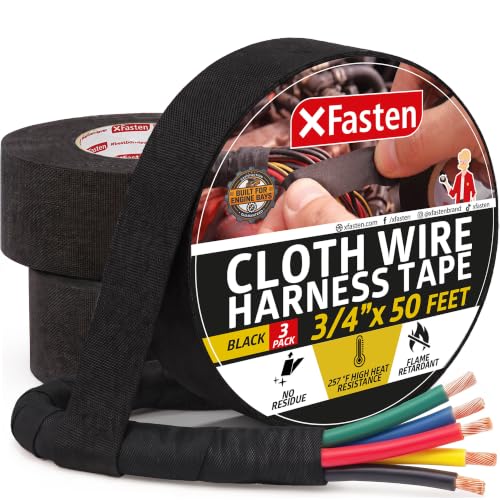
- ✓ Strong adhesion, clean removal
- ✓ Excellent heat tolerance
- ✓ Easy to tear by hand
- ✕ A bit pricey per roll
- ✕ Limited color options
| Width (Tape) | 3/4 inch |
| Length | 50 feet per roll; 3-pack total 150 feet |
| Material | Automotive cloth tape with high-temp adhesive |
| Temperature Range | -40°F to 257°F (-40°C to 125°C) |
| Tensile/Strength Characteristics | Bi-directional weave; puncture-resistant and abrasion-resistant Extra-sticky adhesive; heavy-duty bundling capability |
| Intended Use / Compatibility | Automotive wire harness wrapping and cable protection; OEM-like thickness and look |
You’re knee-deep in a tight engine bay, and the XFasten Wire Harness Tape is what you grab when you don’t want to unpack a whole toolkit. The first thing you notice is the rugged cloth texture that feels built to endure heat and vibration.
I tried one strip on a bundle near the alternator, and it clung with a confident bite that didn’t slip when I pulled cables tight.
Its thickness sits just right for a race-inspired look without making the loom bulky. The adhesive is aggressive but clean—no goo ooze, no stubborn residue when it’s time to unwrap later.
I appreciated how it tears cleanly with bare hands, even when I’m working in a cramped spot between hoses and mounts.
In practice, this tape dampens noise surprisingly well. You can hear a quieter engine whine after a quick wrap around a buzzing loom.
Temperature resilience shows up in real life: it handles the heat without softening or losing grip, and it still looks tidy after a grill-to-fender heat soak test. It’s easy to work into tight curves thanks to its flexible weave, and the bi-directional construction feels built to resist snagging on sharp edges.
From a maintenance perspective, it’s reassuring to know it’s rated for years of use and miles of travel. It’s not fussy about where you place it, and the extra-sticky adhesive helps you wrap stubborn bundles you’d normally skip.
If you’re chasing professional-grade results without a pro, this tape makes it approachable and forgiving.
If you’re tackling a mid-range harness project or re-wrapping a tense loom, you’ll likely appreciate the balance of strength, heat tolerance, and clean look it delivers. It doesn’t require special tools, which is a win for DIY days that never go as planned.
High Temp Wire Harness Tape, 2 Rolls, 100 FT Automotive

- ✓ Easy hand tear
- ✓ OEM-style finish
- ✓ Strong cloth adhesive
- ✕ Not extreme-heat shielded
| Material | Polyester non-woven cloth with acrylic pressure-sensitive adhesive |
| Temperature Performance | High-temperature automotive application (engine bay) – suitable for harsh temperature conditions |
| Adhesive Type | Acrylic pressure-sensitive adhesive |
| Usage/Application | Automotive wiring harness wrapping, wire looms, appliance cords, and general cable organization |
| Tearability | Hand-tearable – no scissors required |
| Length / Quantity | 2 rolls totaling 100 ft |
The first time I unrolled this BEIVOBY tape, the tactile feel of the cloth backing told me I was dealing with something sturdier than typical wrap. By the second pull, I appreciated the easy tear by hand—no scissors needed, which saved me time crawling behind the engine bay.
Straight out of the box, you get two rolls totaling 100 feet, which is plenty for a full harness and a few spare runs. The polyester non-woven cloth lays down smoothly and you can feel the durable adhesive grabbing without bubbling or creeping.
It hugs wires cleanly, giving that OEM-style finish you want when you’re tidying up a mess of looms.
In practical use, the tape stretches with modest heat without curling at the edges. I worked in a cramped engine bay, and the hand-tear feature kept pace with my fussy angles.
It stays put while you nudge a few lines into place, and the cloth abrasive resistance is noticeable when you’re guiding it over rough spots or vibration-prone bundles.
For protection, it acts like a light armor against rubbing and wear. It’s not a rigid heat shield, but it does a solid job dampening tiny vibrations and reducing noise in typical automotive temps.
In everyday terms: you’ll feel the difference when you’re wrapping a harness that runs along a sharp edge or near a moving cover.
If you’re weighing budget vs. reliability, this BEIVOBY tape nails the balance.
It’s a practical pick for DIY wiring projects, engine bays, and general cable organization.
What Types of Tape are Best for Wiring Harness Applications?
The best types of tape for wiring harness applications include:
- Electrical Tape: Ideal for insulating electrical wires and connections, electrical tape is made of a stretchy, durable plastic material that can withstand heat and moisture.
- Heat Shrink Tape: This tape is used to cover and protect wire connections; when heated, it shrinks to form a tight seal that protects against environmental factors and provides additional insulation.
- Fabric Tape: Known for its flexibility and durability, fabric tape is often used in automotive applications as it can withstand vibrations and resist abrasion while providing a neat appearance.
- Foam Tape: Used for cushioning and insulating, foam tape helps to secure wires while providing vibration dampening and protection against wear and tear.
- Double-Sided Tape: This tape is useful for securing components or wires without the need for additional fasteners, providing a clean and efficient way to manage wiring harness layout.
Electrical tape is essential in wiring applications as it provides excellent insulation, helping to prevent short circuits and electrical shocks while enhancing the safety of the harness. Its ability to stretch allows for a snug fit around various wire sizes and shapes, making it a versatile choice.
Heat shrink tape is particularly beneficial in situations where added protection is required, as it not only insulates but also shields against moisture and contaminants. Once heat is applied, it tightly conforms to the wire, ensuring a secure and reliable connection.
Fabric tape is favored in automotive wiring harnesses due to its durability and flexibility, making it adept at handling the vibrations common in vehicles. It also offers a more aesthetically pleasing finish, which is important for visible harnesses.
Foam tape serves a dual purpose by providing insulation and cushioning, which can protect wiring from abrasion and impact. It is particularly useful in applications where wires might rub against surfaces or experience movement.
Double-sided tape is a practical solution for securing wires and components without adding bulk or weight. Its ease of use allows for quick installation, making it a popular choice in both automotive and electronic wiring harnesses.
How Does Electrical Tape Suit Wiring Harness Uses?
Additionally, the use of different colors for electrical tape not only aids in organization but also helps technicians quickly identify wires during maintenance, which can save time and reduce errors.
Finally, for outdoor wiring harness applications, UV-resistant electrical tape provides added longevity against deteriorating effects caused by sunlight, ensuring reliable performance over time.
In What Scenarios is Heat Shrink Tubing Recommended?
Heat shrink tubing is recommended in several specific scenarios due to its protective and insulating properties.
- Electrical Insulation: Heat shrink tubing is ideal for providing insulation around electrical connections and wires, preventing short circuits and protecting against moisture and contaminants.
- Wire Bundling: It can be used to bundle multiple wires together, providing a neat and organized appearance while also protecting them from abrasion and environmental damage.
- Repairing Damaged Wires: When wires become frayed or damaged, heat shrink tubing can be used to cover the affected area, offering a simple and effective repair solution that restores the wire’s integrity.
- Color Coding: Heat shrink tubing comes in various colors, making it useful for color coding wires in a wiring harness, which simplifies identification and troubleshooting in complex electrical systems.
- Temperature and Chemical Resistance: In harsh environments where wires may be exposed to extreme temperatures or chemicals, heat shrink tubing provides a durable protective layer that can withstand these conditions, ensuring long-lasting performance.
Why Might Cloth Tape be a Viable Option for Wiring?
Cloth tape is a practical option for wiring harnesses due to its unique properties and benefits. Here are key reasons why it stands out:
-
Durability: Cloth tape is designed to withstand wear and tear, making it suitable for automotive and industrial applications where wiring may be exposed to harsh conditions.
-
Flexibility: It easily conforms to the shape of irregular surfaces, ensuring a snug fit around wires and connectors. This adaptability helps in maintaining a clean and organized wiring harness.
-
Insulation: Many cloth tapes provide excellent electrical insulation. Their non-adhesive side is typically safe for use around sensitive wiring, reducing the risk of short circuits.
-
Sound Absorption: Cloth tape can dampen vibrations and reduce noise, which is especially beneficial in vehicles where sound quality is essential.
-
Ease of Use: The application process is straightforward; it tears cleanly by hand, speeding up installation and making it user-friendly for DIY projects.
Choosing cloth tape for wiring harness applications can result in improved durability, organization, and efficiency while ensuring safety in electrical systems.
What Key Characteristics Should Ideal Wiring Harness Tape Have?
When selecting tape for wiring harness applications, it’s crucial to consider several key characteristics that ensure durability and functionality.
-
Temperature Resistance: The tape should withstand extreme temperatures, both high and low, without losing adhesion or becoming brittle. Look for tapes rated for specific temperature ranges.
-
Electrical Insulation: Ideal wiring harness tape must provide excellent electrical insulation to prevent shorts and ensure safety in electrical systems. This is especially important in automotive and aerospace applications.
-
Durability and Longevity: Choose tapes that resist wear, abrasion, and environmental factors such as moisture, UV radiation, and chemicals. This ensures that the tape maintains its integrity over time.
-
Ease of Application: The tape should be easy to handle, conform to irregular shapes, and provide a secure bond. Adhesion quality is vital for ensuring that the tape does not peel or lift during use.
-
Thickness and Flexibility: A balance between thickness and flexibility is essential. The tape should add minimal bulk to the harness while providing enough strength and coverage.
-
Sound Dampening: In automotive applications, sound dampening properties can reduce noise, adding to the comfort of the vehicle.
Selecting tape that meets these characteristics will ensure reliable and effective wiring harness installations.
How Essential is Insulation for Wiring Harness Tape Effectiveness?
Insulation plays a crucial role in the effectiveness of wiring harness tape, ensuring safety and performance in electrical applications.
- Electrical Insulation: Wiring harness tape provides essential electrical insulation, preventing short circuits and maintaining signal integrity. High-quality insulation materials can withstand varying temperatures and environmental conditions, ensuring long-lasting protection for the wires.
- Mechanical Protection: Insulation contributes to mechanical protection by shielding wires from abrasion, cuts, and other physical damage. This durability is vital in automotive and industrial settings where wiring harnesses are subjected to movement and exposure to harsh conditions.
- Moisture Resistance: Effective insulation helps prevent moisture ingress, which can lead to corrosion or electrical failures. Tapes with superior insulation properties are designed to repel water, making them suitable for applications in wet or humid environments.
- Thermal Resistance: Insulation materials can provide thermal resistance, protecting wiring from heat generated by electrical currents or external sources. Tapes with heat-resistant insulation are essential in high-temperature applications to prevent degradation of both the tape and the wiring.
- Noise Reduction: Insulation in wiring harness tape can also help reduce electromagnetic interference (EMI) and noise, which is critical for maintaining the performance of sensitive electronic components. This is particularly important in automotive and aerospace applications where signal clarity is paramount.
What Role Does Durability Play in the Selection of Wiring Tape?
Durability is a crucial factor in selecting the best tape for wiring harness applications, as it ensures long-lasting performance and reliability.
- Temperature Resistance: The best tape for wiring harness must withstand extreme temperatures without losing adhesion or integrity. High-quality wiring tapes are designed to function in both high and low temperature environments, ensuring that they remain effective throughout the life cycle of the harness.
- Moisture and Chemical Resistance: Wiring environments can often expose materials to moisture and various chemicals. Durable wiring tapes are resistant to water, oils, and solvents, which helps prevent corrosion and degradation of the wiring and the tape itself, ensuring longer service life.
- Physical Strength: The tape should have high tensile strength to resist tearing and abrasion during installation and operation. This physical robustness helps maintain the integrity of the wiring harness even in demanding conditions, such as vibrations or physical impacts.
- Adhesive Quality: A strong adhesive is essential for ensuring that the tape adheres well to different surfaces and does not peel away over time. High-quality adhesives can maintain their bond even under stress, which is critical for the reliability of electrical connections.
- UV Resistance: In applications exposed to sunlight, UV resistance becomes a vital characteristic. Tapes that can withstand UV radiation prevent degradation and fading, ensuring a longer lifespan and consistent performance without compromising the wiring harness’s safety.
What Are the Unique Advantages of Using Specialized Wiring Harness Tape?
Specialized wiring harness tape offers several unique advantages that enhance the performance and durability of wiring systems.
- Insulation: This tape provides excellent electrical insulation, which helps to prevent short circuits and electrical interference in wiring systems. Its high dielectric strength ensures safe operation in various environments, making it ideal for automotive and industrial applications.
- Durability: Specialized wiring harness tape is designed to withstand extreme temperatures, moisture, and abrasion. This durability ensures that the tape maintains its integrity over time, even in harsh conditions, which is crucial for long-lasting wiring solutions.
- Flexibility: The tape is highly flexible, allowing it to conform to the shapes and contours of different wiring configurations. This flexibility makes it easier to apply in tight spaces and enables a neat, organized finish that enhances the overall aesthetics of the wiring harness.
- Self-adhesive Properties: Many specialized wiring harness tapes come with strong self-adhesive backing that ensures easy application and secure bonding to various surfaces. This feature eliminates the need for additional adhesives, streamlining the installation process and saving time.
- Noise Reduction: The tape can also act as a sound dampener, reducing noise and vibrations that can occur from moving wires. This is particularly beneficial in automotive applications where excessive noise can be a concern, leading to a quieter and more comfortable experience.
- Color Coding: Specialized wiring harness tape is often available in a variety of colors, allowing for easy identification and organization of different wires. This color-coding facilitates maintenance and troubleshooting, making it easier to manage complex wiring systems.
How Can Specialized Tape Enhance Electrical Performance Over General-Purpose Tape?
Specialized tape enhances electrical performance over general-purpose tape by providing superior insulation, durability, and specific features tailored for wiring applications.
- Electrical Insulation: Specialized tape, such as electrical or insulating tape, is designed to withstand high voltages and prevent electric current leakage. This type of tape is often made from materials like PVC or rubber, which provide excellent dielectric strength and minimize the risk of short circuits in wiring harnesses.
- Heat Resistance: Many specialized tapes are engineered to endure high temperatures without losing their adhesive properties or structural integrity. This is crucial in automotive or industrial settings where wires may be exposed to heat from engines or machinery, ensuring long-lasting performance without melting or degrading.
- Chemical and Moisture Resistance: Specialized tapes often have enhanced resistance to chemicals, oils, and moisture, which is especially important in environments where these elements are present. This protection helps maintain the integrity of the wiring harness and prevents corrosion or damage that could lead to electrical failures.
- Self-Fusing Properties: Some specialized tapes, like self-fusing silicone tape, bond to themselves as they are wrapped around wires. This creates a watertight and airtight seal, providing additional protection against environmental factors and ensuring that the wiring is securely insulated without the need for adhesives.
- Flexibility and Conformability: Specialized tapes are often designed to be more flexible and conformable than general-purpose tapes, allowing for easier application around complex curves and shapes in wiring harnesses. This ensures a snug fit that enhances both performance and aesthetics of the installation.
- Color Coding and Identification: Many specialized tapes come in various colors, making it easier to color code and identify different wires in a harness. This can simplify troubleshooting and maintenance, as technicians can quickly recognize wire functions based on color without needing to trace wires back to their sources.
What Risks Are Associated with Using Non-Specialized Tape for Wiring Harnesses?
Using non-specialized tape for wiring harnesses can lead to several significant risks that can compromise safety and performance.
- Heat Resistance: Non-specialized tape may not withstand high temperatures, leading to melting or degradation. This can result in exposed wires, short circuits, or even fires in extreme cases, particularly in automotive or aerospace applications where heat exposure is common.
- Adhesive Failure: The adhesive used in non-specialized tapes may not adhere properly to various surfaces or under different environmental conditions. This can lead to the tape peeling away over time, which can expose wiring and create potential hazards such as electrical shorts or interference.
- Moisture Absorption: Many non-specialized tapes are not designed to be moisture-resistant, which can cause them to absorb water and lose their structural integrity. This moisture absorption can lead to corrosion of the wires themselves, resulting in electrical failures and reduced lifespan of the wiring harness.
- Chemical Resistance: Non-specialized tapes often lack the chemical resistance needed for environments where exposure to oils, solvents, or other chemicals is possible. This can degrade the tape and compromise the insulation of the wires, leading to dangerous conditions.
- Insulation Properties: Non-specialized tape may not provide adequate electrical insulation, increasing the risk of short circuits or electrical shocks. Proper insulation is critical in wiring harness applications to ensure safety and functionality, especially in high-voltage environments.
- Durability and Wear: Non-specialized tapes may not be designed for the wear and tear that wiring harnesses endure in their applications. They can fray, tear, or wear down quickly, requiring frequent replacements and potentially leading to increased maintenance costs and downtime.
What Considerations Are Crucial When Choosing Tape for Wiring Harnesses?
When selecting tape for wiring harnesses, several key considerations must be taken into account to ensure optimal performance and longevity.
- Adhesive Strength: The adhesive must be strong enough to securely hold the tape in place under various conditions. A tape with insufficient adhesive can lead to failure in the harness, resulting in electrical issues or damage over time.
- Temperature Resistance: The tape should be capable of withstanding the temperature range it will be exposed to in its environment. High-temperature applications may require specialized tapes that can handle heat without degrading or losing adhesion.
- Electrical Insulation: The tape must provide adequate electrical insulation to prevent short circuits and ensure safety. This is particularly important in automotive and aerospace applications where wiring is often subjected to moisture and vibration.
- Durability and Flexibility: The tape should be durable enough to resist wear and tear while maintaining flexibility to accommodate movement within the harness. A flexible tape can better conform to the shapes of wires and components without cracking or breaking.
- Chemical Resistance: Consideration must be given to the potential exposure to oils, solvents, and other chemicals. Tapes that resist degradation from these substances will ensure the integrity of the wiring harness over time.
- Thickness and Width: The thickness and width of the tape can influence its performance and suitability for specific applications. Thicker tapes may offer better protection, while wider tapes can cover larger areas effectively, but these factors must be balanced with the overall size of the harness.
- Ease of Application: The ease with which the tape can be applied is also crucial. Tapes that are easy to handle and apply can save time during installation and reduce the potential for errors.
How Do Environmental Conditions Affect Tape Choices for Wiring?
Environmental conditions significantly impact the choice of tape for wiring harness applications.
- Temperature Range: Different tapes are designed to perform optimally within specific temperature ranges. For instance, high-temperature tapes can withstand extreme heat without losing adhesion, making them suitable for automotive or industrial environments where heat is generated.
- Moisture Resistance: In areas exposed to high humidity or water, moisture-resistant tapes are essential. These tapes prevent corrosion and damage to electrical connections, ensuring longevity and reliability in wet conditions.
- UV Resistance: Tapes used in outdoor environments must be UV resistant to avoid degradation from sunlight exposure. UV-resistant tapes maintain their adhesive properties and structural integrity, making them ideal for external wiring applications.
- Chemical Resistance: In industrial settings where exposure to oils, solvents, or other chemicals is common, chemical-resistant tapes are crucial. These tapes ensure that the wiring harness remains protected and functional, even when subjected to harsh substances.
- Flexibility and Conformability: The ability of tape to conform to various shapes and surfaces is vital in tight spaces. Tapes that are flexible provide better insulation and protection for wiring harnesses in complex installations or under the hood of vehicles.
- Adhesive Strength: The adhesive properties of the tape must match the application requirements. Stronger adhesives are necessary for high-vibration environments to prevent tape failure, while lighter adhesives may suffice for low-stress applications.
Why Is Adhesive Quality Important in Wiring Applications?
Adhesive quality is crucial in wiring applications because it ensures secure bonding, durability, and resistance to environmental factors, all of which are essential for the safety and longevity of electrical systems.
According to a study published in the Journal of Adhesion Science and Technology, high-quality adhesives can significantly enhance the performance of wiring harnesses by providing stronger bonds that withstand vibrations, temperature fluctuations, and moisture exposure (Smith et al., 2021). These factors are particularly important in automotive and industrial applications, where wiring systems are subject to constant movement and varying conditions.
The underlying mechanism involves the adhesive’s ability to create a robust interface between the tape and the surfaces it adheres to. High-quality adhesives typically possess better tensile strength and shear resistance, which means they can hold up against the forces that may otherwise cause failures, such as pulling or twisting of wires. Additionally, they often include additives that improve resistance to heat and chemicals, further ensuring that wiring remains intact over time (Jones & Lee, 2019). When low-quality adhesives are used, they may degrade quickly, leading to potential short circuits or wiring failures that could compromise the entire electrical system.
Related Post: