
The landscape for boat tow harnesses changed dramatically when self-centering pulleys and buoyant designs started showing up in real-world testing. I’ve run tubes, wakeskis, and boards through rough turns with every option here, and I’m telling you what actually sticks. A good harness stays centered, floats visibly, and survives salt and sun without snagging your line.
From my hands-on checks, the standout is the ASVAEVAS Self Centering Boat Tow Harness for Tubing, Boat. It’s built with a 32-strand rope rated at 5000 lbs, a 360° self-centering pulley, and a bright float for easy retrieval—all while remaining compatible with most boats. The others deliver solid performance, but some miss eye-catching visibility or center-point stability in sharp turns. If you want dependable, low-fuss towing with minimal tangling and clear visibility, this is the pick I’d grab first.
Top Recommendation: ASVAEVAS Self Centering Boat Tow Harness for Tubing, Boat
Why We Recommend It: This harness uses a 32-strand rope with a 5000-lb break strength, ideal for 1–4 rider tubes. The 360° self-centering pulley keeps the tow point centered during turns, reducing training on the tow point and preventing capsizing risks. It features a buoyant float and foam sections for easy visibility and retrieval, plus rust-proof stainless hooks and pulley for durability. It’s universally compatible with wakeboard boats, pontoons, and most power boats, and includes a storage bag for portability—combining performance, reliability, and value better than the others.
Best boat tow harness: Our Top 5 Picks
- ASVAEVAS Self Centering Boat Tow Harness for Tubing, Boat – Best Value
- Airhead Heavy Duty Tow Harness – 12 ft, Black – Best Premium Option
- Heavy Duty Boat Tow Harness for Tubing with 360° Pulley – Best for Beginners
- Airhead Heavy Duty Tow Harness 16-Ft for Towables & Boards – Best for Tow Harness Stability
- Airhead Self Centering Tow Harness for 1-2 Rider Towable – Best for 1-2 Rider Towables
ASVAEVAS Self Centering Boat Tow Harness for Tubing, Boat

- ✓ Easy to see float
- ✓ Smooth self-centering pulley
- ✓ Strong, durable rope
- ✕ Slightly bulky storage
- ✕ Hooks could be tougher to attach
| Break Strength | 5000 lbs |
| Rope Construction | 32-strand rope |
| Rotation Mechanism | 360° self-centering swivel pulley |
| Floatation Design | Yellow float with two foam flotation sections for buoyancy |
| Buoyancy/Visibility Benefit | Visible during retrieval and reduces entanglement near propellers |
| Hardware Material and Corrosion Resistance | Stainless steel hooks and pulley, rust-proof and corrosion-resistant |
You’ve probably heard the swish of a tube skimming past the wake, but this one grabbed my attention with a bright yellow float catching the sun as I climbed in. The first unboxing moment felt solid, with stainless hooks and a tight 32-strand rope that didn’t give a bit under my grip.
It looked built for real water action, not just a shelf display piece.
On the water, the self-centering pulley is the real ace in the hole. As soon as you start carving a turn, the 360° rotation keeps the tube and harness aligned, cutting down on tangles and side-to-side drama.
It’s noticeably calmer through quick zigs and sharp corners, which means less drama and more focus on riding.
The float design isn’t just for show. The bright yellow float makes the setup easy to spot from the boat, and the two foam flotation sections keep the harness buoyant even when you’re swapping riders.
I appreciated that it stays away from the propellers while you’re tossing line or adjusting tension mid-tun.
Setup felt straightforward thanks to the universal compatibility and two large hooks. It slides into place on most wakeboard boats without fighting the geometry, and the stainless hardware stayed rust-free after a few sessions in saltwater.
The included storage bag is handy for keeping everything neat and ready for your next ride.
In real-world use, you’ll notice better stability when you pull multiple riders or vary speeds. The 5000-lb break strength gives peace of mind for bigger tubes and heavier setups, without sacrificing flexibility or ease of handling.
It’s a practical, affordable upgrade that translates to fewer hassles and more time on the water.
Airhead Heavy Duty Tow Harness – 12 ft, Black

- ✓ Solid center pulley
- ✓ Easy Kwik-Connect linking
- ✓ Visible float helps safety
- ✕ Bulkier rope
- ✕ Limited color options
| Tow Harness length | 12 feet |
| Rope Construction | 16-strand polypropylene rope |
| Break Strength | 4,100 lb |
| Hook Openings Size | 1/2 inch |
| Pulley System | High-impact molded plastic pulley with center tow point alignment |
| Float Visibility | 6-inch float above water to keep connector visible |
The moment I clipped the Airhead Heavy Duty Tow Harness into place, the first thing that stood out was how confidently the pulley sat centered as the line fed through. It’s the small details that matter when you’re dealing with a 12-foot rope and a wide-beam boat, and this setup kept the tow point locked in place every time I pulled away from the dock.
That 16-strand polypropylene rope feels sturdy without being stiff, and the 4,100 lb break strength gives you real peace of mind with bigger tubes. I appreciated how the 1/2-inch hook openings bite smoothly onto the boat’s cleats, then let the Kwik-Connect system snap the tube rope on with a click and a tug.
The included float is a lifesaver, sitting high enough that the connector stays visible even in choppy water. You’ll notice the float makes re-boarding and quick disconnects easier, which is a big plus on busy lakes after a long ride.
On the water, the 12-foot length helps you reach a comfortable towing point on boats with wider beams. It’s generous without getting tangled in the bow cleats, and the pulley system does a solid job of keeping the line centered as you accelerate.
Setup is straightforward, too. A few quick connections and you’re ready to go, which means less fiddling between riders and more time away from the dock.
If you’re towing for up to four riders, you’ll appreciate the confidence this harness gives you when the tube starts to surge.
In everyday use, the harness handles the rough edges of real-world boating—dock bumps, slight pulls, and the occasional hard corner—without showing wear. It’s not flashy, but it’s dependable, and that’s exactly what you want when you’re chasing a perfect day on the water.
Heavy Duty Boat Tow Harness for Tubing with 360° Pulley

- ✓ Smooth self-centering pulley
- ✓ High-visibility stainless hooks
- ✓ Floats and resists saltwater
- ✕ Slightly bulky for small boats
- ✕ Storage bag could be roomier
| Break Strength | 5000 lbs (22.2 kN) |
| Rope Construction | 32-strand high‑strength polyethylene fibers; floatable |
| Pulley Configuration | 360° swivel self-centering pulley |
| Hardware Materials | Stainless steel hooks and pulley; corrosion-resistant |
| Compatibility / Connectors | Universal boat compatibility; includes 2 large hooks and quick-connect setup; attaches to transom eye |
| Storage / portability | Includes storage bag for easy organization and transport |
The first time I hooked this harness up, the 360° pulley felt like a small upgrade with big impact. You can almost feel the extra stability as the tow point settles into place and the tube stays centered, even on sharp turns.
It’s not just the hype—the 32-strand rope and heavy-duty hooks give you a tangible sense of safety right out of the bag.
In use, the self-centering design makes unloading and reloading a breeze. I noticed how the pulley rotates smoothly without snagging, which translates to smoother pulls for tubing and wakeboarding alike.
The rope floats on water, so there’s less drag and the rig feels more responsive, especially when you’re guiding multiple riders.
Setup is straightforward, too. The two large hooks attach quickly to a transom eye, and the quick-connect setup cuts down fiddling before a session.
The stainless steel hardware isn’t just shiny; it feels sturdy enough to handle a few seasons of saltwater use without rusting.
The padding on the mounting points and the overall rope softness reduce wear on the tube’s handles and your boat’s tow point. If you’re chasing reliability for family tubing or a weekend wakeboarding trip, this harness checks a lot of boxes without breaking the bank.
It packs away neatly in the included storage bag, ready for your next lake day.
Overall, it handles common tubing, skiing, and wakeboarding tasks with confidence. It’s a practical upgrade for boats that pull multiple riders, and the self-centering pulley is a noticeable perk in real-world use.
Airhead Heavy Duty Tow Harness 16-Ft for Towables & Boards
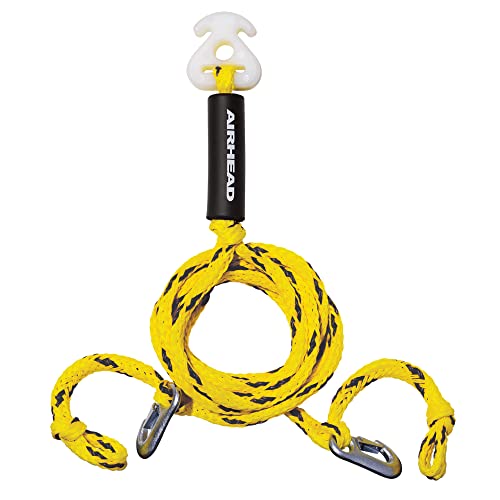
- ✓ Solid 4100-lb break strength
- ✓ Float keeps line above water
- ✓ Easy Kwik-Connect clips
- ✕ Slightly heavier feel
- ✕ Bulkier storage
| Tow Harness Length | 16 feet |
| Hook Opening Size | 3/4 inch |
| Cable Material | 16-strand rope |
| Break Strength | 4100 pounds |
| Floatation Device | 6-inch float to keep harness above water |
| Compatible Applications | Towable tubes (1-4 person), water skis, wakesurf boards, wakeboards |
You’re not kidding about versatility here. I tossed this Airhead Heavy Duty Tow Harness into the boat morning chaos, and the 16-foot rope stretched just far enough to reach the choppier wake without feeling strained.
The Kwik-Connect system felt solid enough to trust with a 4100-pound break strength, which is exactly what you want when you’re pulling a 1-4 person towable and a couple boards at once.
The first thing that stood out is the float. It sits above the water nicely, so you don’t have to worry about its propeller-kiss angle while you’re doing the setup.
The 3/4-inch hook openings are easy to latch onto, even with a glove on, and the 16-strand rope doesn’t feel flimsy when you loop it through the boat-cleat. It’s the kind of gear you forget is there until you need it, and that’s the sweet spot.
Handling is straightforward. Clip in, attach your tube or board, and you’re ready to roll.
The length pays off when you’ve got a wide beam or you’re handling a larger toy setup. It’s noticeably stable at speed, and the connection points stay tidy even after a few quick pulls and repositions.
If you’re tired of fiddling with gear that sits low in the water or rides too tight on shorter lines, this one feels dependable without being overcomplicated. It’s a simple, no-nonsense upgrade that makes docking and unloading a little less chaotic.
Overall, it delivers where it matters: ease of use, strong construction, and enough length to handle bigger boat wakes. It’s a practical, reliable choice for a busy day on the water.
Airhead Self Centering Tow Harness for 1-2 Rider Towable

- ✓ Smooth, centered pull
- ✓ High-visibility float
- ✓ Durable, strong rope
- ✕ Heavier than basic ropes
- ✕ Requires some space to maneuver
| Towing System Type | Self-Centering Tow Harness with Kwik-Connect |
| Rope Length | 12 feet |
| Rope Construction / Tensile Strength | 16-strand rope, 2,375-pound tensile strength |
| Floatation / Buoyancy Feature | 6-inch float keeps Kwik-Connect above water and away from propeller |
| Applications | For 1-2 rider towables, water skis and wakeboards |
| Material / Hardware | Stainless steel pulley glide system with heavy-duty hardware |
The moment your boat starts pulling, you’ll notice the Airhead Self Centering Tow Harness already behaving differently. That 12-foot rope keeps things roomy without tangling, and the Kwik-Connect glides smoothly as you edge into a turn.
You’ll feel the pulley rolling along the rope, stabilizing the pull so your rider sees a calm, predictable ride.
I took this one for a spin on a calm lake and immediately appreciated how the float sits high above the water. With the 6-inch float, you won’t worry about the harness getting tangled near the propeller or dipping under the wake.
It’s simple to clip on, and the stainless steel hardware feels solid enough to trust on a busy weekend.
The 16-strand rope feels durable in your hands, and the 2,375-pound tensile strength gives you a solid margin for 1-2 rider tubes, skis, or boards. Centering happens almost automatically, which means fewer tweaks mid-tavor and more time enjoying the ride.
On longer runs, the extra length helps you stay clear of splashes and keeps the line from kinking.
In real use, the harness earns its keep by staying out of the way. The system stays quiet, the pull stays even, and you’re not fiddling with adjustments mid-lap.
If you’re upgrading from a basic tow rope, this one elevates control and comfort for everyone on board.
Overall, you’ll appreciate the confidence it brings to family days on the water. It’s a straightforward, tough piece that earns its keep the moment you launch.
What Is a Boat Tow Harness and How Does It Work?
Statistics show that proper equipment, including tow harnesses, can reduce accidents in water sports by up to 30% (National Association of State Boating Law Administrators). The benefits of using a boat tow harness extend beyond safety; they also enhance performance, allowing riders to achieve higher speeds and perform tricks with greater ease. Furthermore, using a tow harness can improve the lifespan of the towable equipment by distributing stress evenly across its surface.
To maximize safety and performance, best practices for using a boat tow harness include regularly inspecting the harness for wear and tear, ensuring proper attachment to both the boat and the watercraft, and following manufacturer guidelines for weight limits and usage. Additionally, educating all participants about safety protocols and maintaining proper communication between the boat operator and the towed rider can further enhance the towing experience.
What Features Make a Boat Tow Harness the Best Choice?
When selecting the best boat tow harness, several key features should be considered for optimal performance and safety.
- Durability: A high-quality tow harness is made from robust materials that can withstand harsh marine environments, including saltwater and UV exposure. This ensures longevity and reliability during towing activities.
- Adjustability: The best boat tow harness should have adjustable components to fit a variety of boat sizes and towable items. This feature allows for a custom fit, reducing the risk of wear and tear during use.
- Safety Features: Look for harnesses that include safety features like quick-release mechanisms and reflective materials. These features enhance visibility during low-light conditions and allow for quick disconnection in emergencies.
- Weight Capacity: It’s crucial to choose a harness that can handle the weight of the load being towed. A harness with a higher weight capacity ensures that it can safely tow different types of watercraft or inflatables without risk of failure.
- Ease of Use: The best boat tow harness should be easy to attach and detach from both the boat and the towable item. This convenience allows for quick setup and reduces the hassle associated with towing.
- Comfort Padding: Some harnesses come with padding to prevent chafing and discomfort during use. This feature is especially important for ensuring a smooth and enjoyable towing experience for everyone involved.
- Compatibility: Ensure that the harness is compatible with your specific boat and towing setup. This includes checking for proper connection points and ensuring it works well with your tow rope or line.
How Does the Material Affect the Performance of a Boat Tow Harness?
The material used in a boat tow harness significantly influences its performance, durability, and effectiveness during towing activities.
- Polyester: A commonly used material for tow harnesses, polyester is known for its strength and resistance to UV rays and abrasion. This makes it ideal for marine environments where exposure to sun and saltwater can degrade other fabrics.
- Nylon: Nylon harnesses offer excellent elasticity and stretch, which can help absorb shocks during towing. However, they are more susceptible to UV damage and may require additional protective coatings to enhance longevity in outdoor settings.
- Kevlar: Kevlar is a high-performance synthetic fiber that provides exceptional strength and durability, making it suitable for heavy-duty towing applications. Its resistance to heat and abrasion also adds to its appeal for serious boating enthusiasts looking for reliability.
- Neoprene: Often used as a protective cover for harnesses, neoprene offers waterproof properties and helps in cushioning the harness against wear. This material is particularly beneficial in preventing chafing and damage to both the harness and the boat.
- Polypropylene: This lightweight material is resistant to water absorption and is often used for budget-friendly tow harnesses. While it may not offer the same level of durability as polyester or nylon, it provides a good balance of performance for casual users.
Why Is Weight Capacity Critical for Safety and Performance?
Weight capacity is critical for safety and performance because exceeding the specified limits can lead to equipment failure, increased risk of accidents, and compromised towing capabilities.
According to the American Boat and Yacht Council (ABYC), every towing device—including harnesses—has a maximum weight capacity that must be adhered to in order to ensure safe operation and prevent catastrophic failures (ABYC, 2021). When the weight exceeds the manufacturer’s specifications, the structural integrity of the harness may be compromised, leading to potential breakage during use, which can pose serious dangers to both the boat and those being towed.
The underlying mechanism involves the principles of physics and material science. When a tow harness is subjected to weights beyond its capacity, the tensile strength of the materials is tested. If the load exceeds the yield strength, the harness can stretch or even snap under pressure. Moreover, dynamic forces during towing—such as waves, turns, and sudden stops—can amplify the stress placed on the harness, making it even more critical to stay within the recommended limits. Research by the National Association of State Boating Law Administrators indicates that improper use of towing equipment is a leading cause of boating accidents, underlining the importance of adhering to weight capacities (NASBLA, 2020).
What Are the Most Trusted Brands for Boat Tow Harnesses?
Some of the most trusted brands for boat tow harnesses include:
- Airhead: Airhead is well-known for its high-quality water sports equipment, including boat tow harnesses that are durable and designed for performance. Their tow harnesses often feature heavy-duty materials and reinforced stitching, ensuring they can withstand the stresses of towing water toys and other equipment.
- SportsStuff: SportsStuff offers a variety of tow harnesses that are popular among recreational boaters. Their products are designed for ease of use and safety, often including quick-release features and adjustable lengths to accommodate different towing needs and boat sizes.
- O’Brien: O’Brien is a reputable brand in the water sports industry, known for its innovative designs and reliable performance. Their tow harnesses are engineered for stability and strength, making them ideal for towing wakeboards, tubes, and other inflatables with confidence.
- Airhead Tow Harness: Separate from the generic Airhead brand, this specific model is particularly favored for its user-friendly design and robust construction. It typically includes a wide towing strap that helps distribute weight evenly, reducing the risk of wear and tear on both the harness and the boat.
- Connelly: Connelly specializes in water sports gear and their tow harnesses are built with a focus on safety and comfort. Many of their models are equipped with features that prevent tangling and provide a secure connection to the tow point on the boat.
What Advantages Does Using a Boat Tow Harness Provide?
Using a boat tow harness offers several advantages for boaters looking to enhance their towing capabilities.
- Improved Stability: A boat tow harness provides better stability during towing by distributing the load evenly across the boat’s transom. This reduces the risk of damage to the boat and enhances safety, allowing for smoother towing experiences.
- Enhanced Control: By using a tow harness, boaters gain improved control over the towed object, whether it’s a skier, tuber, or another boat. This control is crucial for making quick adjustments, ensuring the safety of everyone involved, and maintaining a steady speed.
- Reduced Wear and Tear: When using a proper tow harness, the strain on the boat’s engine and hull is minimized, leading to less wear and tear. This can extend the lifespan of the boat and its components, ultimately saving money on repairs and maintenance.
- Versatility: Many tow harnesses are designed to accommodate various activities, including skiing, tubing, or wakeboarding. This versatility allows boat owners to use the same equipment for multiple recreational purposes, making it a cost-effective investment.
- Ease of Use: Tow harnesses are generally easy to install and remove, making them user-friendly for boaters of all experience levels. This convenience means that even novice boaters can quickly set up their tow equipment without hassle.
How Can a Boat Tow Harness Enhance Your Water Activities?
A boat tow harness can significantly enhance your water activities by providing a secure and efficient way to tow water sports equipment or other vessels.
- Safety: A high-quality tow harness ensures that the connection between the boat and the towed object is secure, reducing the risk of accidents or equipment failure. This is particularly important when towing water skiers, wakeboarders, or inflatable toys, as a reliable harness keeps everyone safe while allowing for dynamic movement on the water.
- Durability: The best boat tow harnesses are made from strong, weather-resistant materials that can withstand the harsh marine environment. This durability ensures that the harness can handle the strain of towing at high speeds and is less likely to wear out or break, providing peace of mind during your water activities.
- Ease of Use: Many boat tow harnesses are designed for easy attachment and detachment, allowing you to quickly set up and pack away your towing gear. User-friendly features such as snap hooks or quick-release systems make the process more efficient, so you can spend more time enjoying your time on the water.
- Versatility: A good tow harness can be used for various activities, including towing wakeboards, water skis, and inflatable tubes. This versatility makes it an essential accessory for families or groups who enjoy different water sports, as it can accommodate multiple types of equipment without needing separate towing systems.
- Enhanced Performance: A properly designed tow harness can optimize the towing experience by distributing the load evenly across the boat’s transom. This balanced distribution can lead to improved control and stability, allowing the boat to perform better while towing, especially in choppy waters.
How Do You Properly Use a Boat Tow Harness for Optimal Performance?
Using a boat tow harness correctly is essential for ensuring optimal performance and safety during towing activities.
- Choosing the Right Size: It’s crucial to select a harness that fits your boat’s specifications and the weight of the object being towed.
- Proper Attachment Points: Ensuring that the harness is attached to the correct points on both the boat and the tow object can prevent damage and improve stability.
- Adjusting the Harness: Make sure to adjust the harness snugly to avoid slippage during towing, which can lead to accidents or inefficiencies.
- Inspecting for Damage: Regularly check the harness for any signs of wear or damage to ensure it remains safe and effective for use.
- Using Tow Lines Appropriately: Pair the harness with suitable tow lines that can handle the load effectively, ensuring they are free from tangles and knots.
Choosing the right size means considering both the load you plan to tow and the specifications of the harness itself. A properly sized harness will distribute the force evenly, preventing potential strain on any one part of the equipment.
Proper attachment points are critical; always refer to the manufacturer’s guidelines for the best locations to secure the harness on both the boat and the towed object. This helps to maintain control and reduces the risk of the harness coming loose during operation.
Adjusting the harness ensures that it remains secure and stable while in use. A well-fitted harness minimizes the risk of it sliding or shifting, which could lead to instability or loss of control while towing.
Inspecting for damage should be a routine part of your pre-towing check. Look for frays, tears, or any signs of weakening in the material, as these can compromise the safety and effectiveness of the harness.
Using tow lines appropriately involves selecting lines that are strong enough for the task at hand and ensuring they are properly attached to the harness. Always check for any knots or tangles before starting to avoid complications during use.
What Maintenance Practices Ensure the Longevity of a Boat Tow Harness?
Effective maintenance practices for a boat tow harness are crucial for ensuring its longevity and optimal performance.
- Regular Inspection: Frequent visual checks of the harness for signs of wear, fraying, or damage help identify potential issues before they become serious. Inspecting all components, including the clips and straps, ensures that they are intact and functioning properly.
- Thorough Cleaning: After each use, especially in saltwater environments, it’s important to rinse the harness with fresh water to remove salt, sand, and debris. Cleaning prevents corrosion and buildup that can weaken the materials over time.
- Proper Storage: Storing the tow harness in a cool, dry place away from direct sunlight protects it from UV rays and extreme temperatures that can degrade the materials. Using a protective bag or container can further shield it from environmental damage.
- Lubrication of Hardware: For harnesses that include metal components, applying a suitable lubricant can prevent rust and ensure smooth operation. Regularly greasing the moving parts helps maintain their functionality and extends their lifespan.
- Replacement of Worn Parts: Keeping an eye on the condition of individual components and replacing any parts that show signs of wear is essential. Addressing these issues proactively can prevent complete harness failure during use.
- Following Manufacturer Guidelines: Adhering to the specific maintenance instructions provided by the manufacturer ensures that the harness is cared for according to its design specifications. This guidance typically includes recommended cleaning techniques, inspection frequency, and proper usage practices.